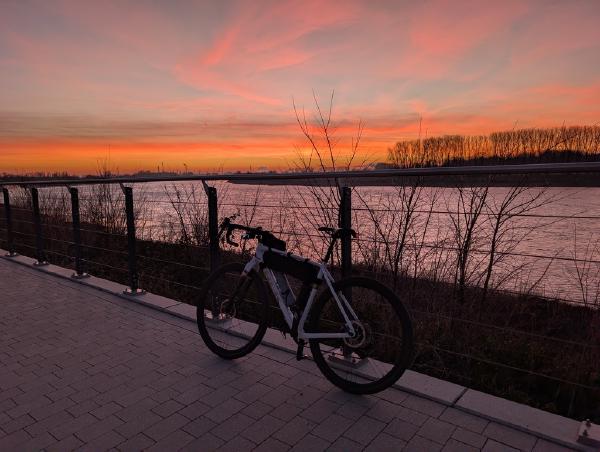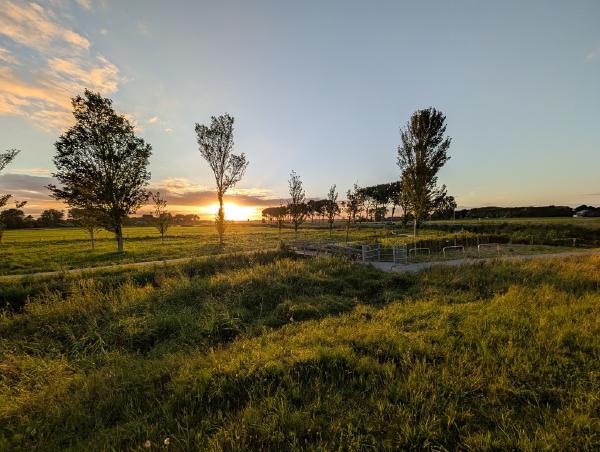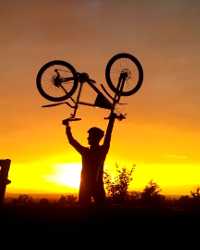
Day 1: Low Water, Time Constraints, and a Lost Place on the Rhine (Solingen – Bingen, ~200 km) #
September 22, 09:42 AM. Massively behind schedule. A slow, relaxed breakfast with my partner is non-negotiable, even when 200 kilometers and a strict 18:00 hotel check-in deadline (welcome to the German Rhine area, a real-world time-travel) in Bingen are waiting at the other end of the day.
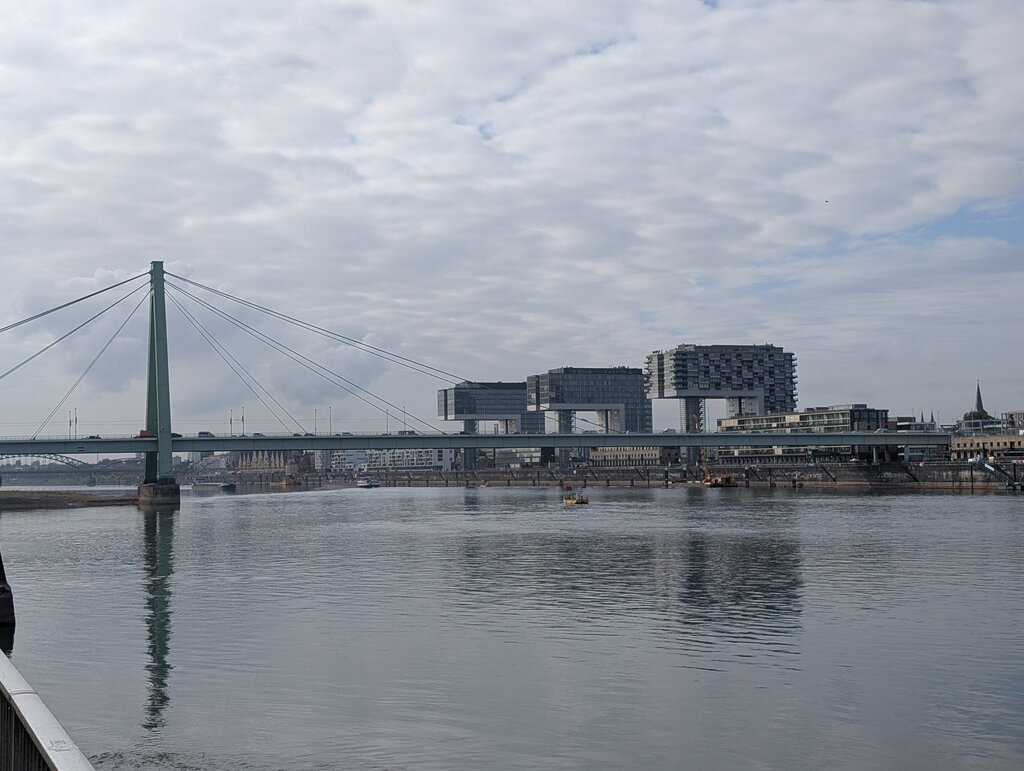
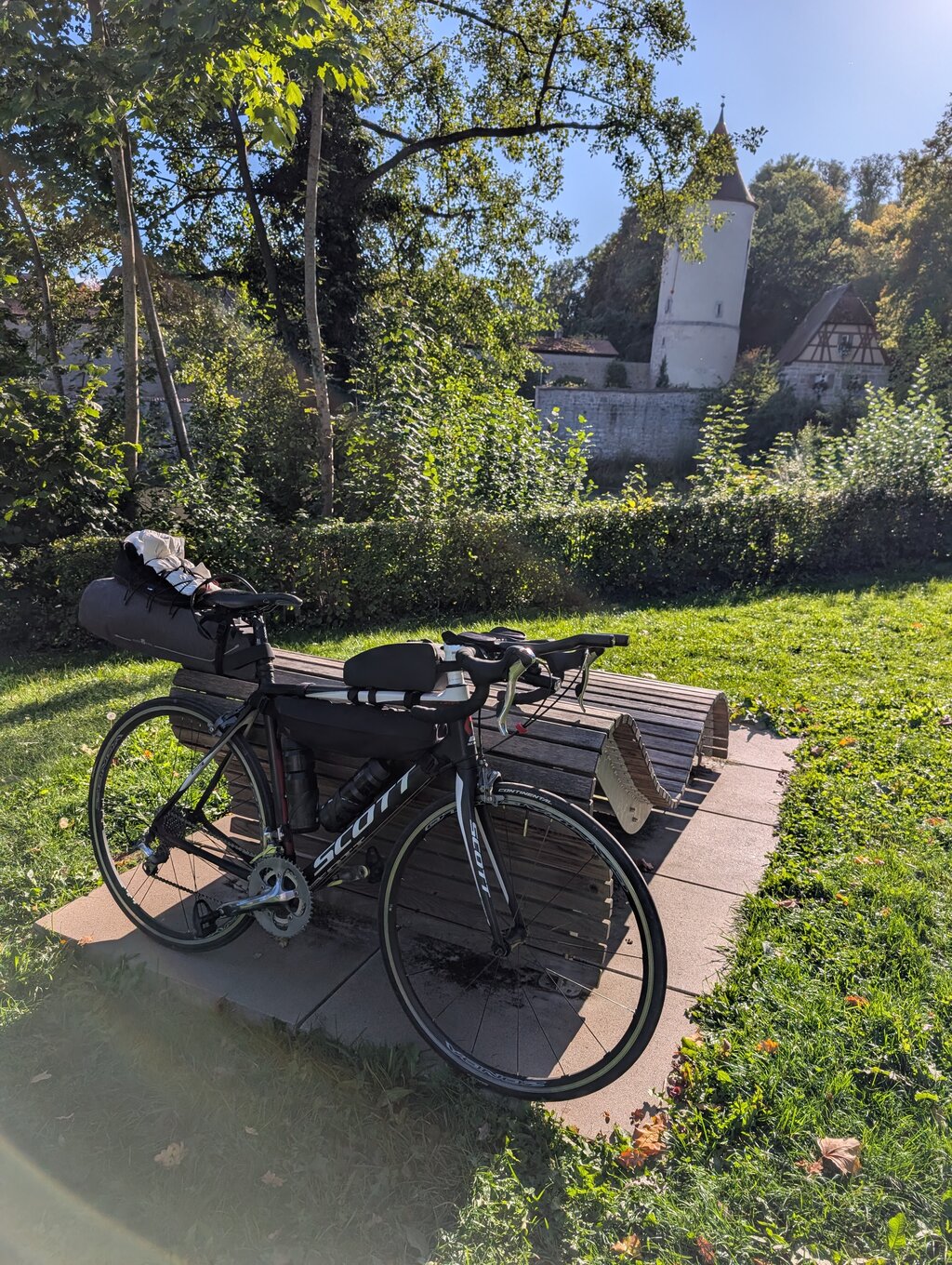
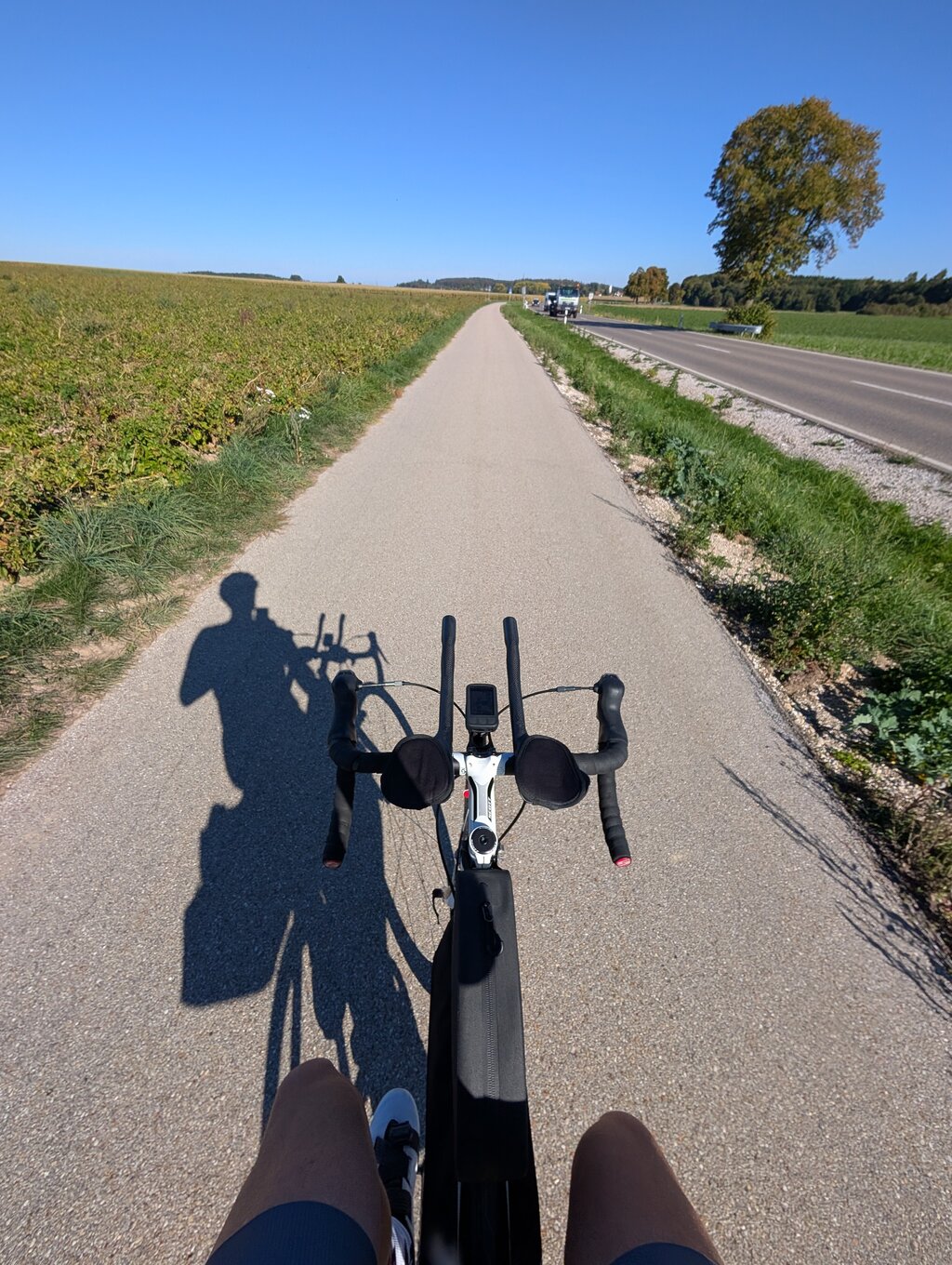
The setup is proven and familiar: my trusted endurance road bike, aero bars mounted for long, windy sections, a large saddlebag, top-tube and frame bags, and two bottles. I roll out on my familiar standard instrument departure route toward Cologne. Usually, I bypass the city via the outer suburbs, but today I test the right-bank Rhine path, entering Cologne near Mülheim and heading to the bridge near the central station. Even in a city whose traffic usually resembles an apocalyptic scenario, there is now a surprisingly seamless bike path leading from the station right out into the southern fields.
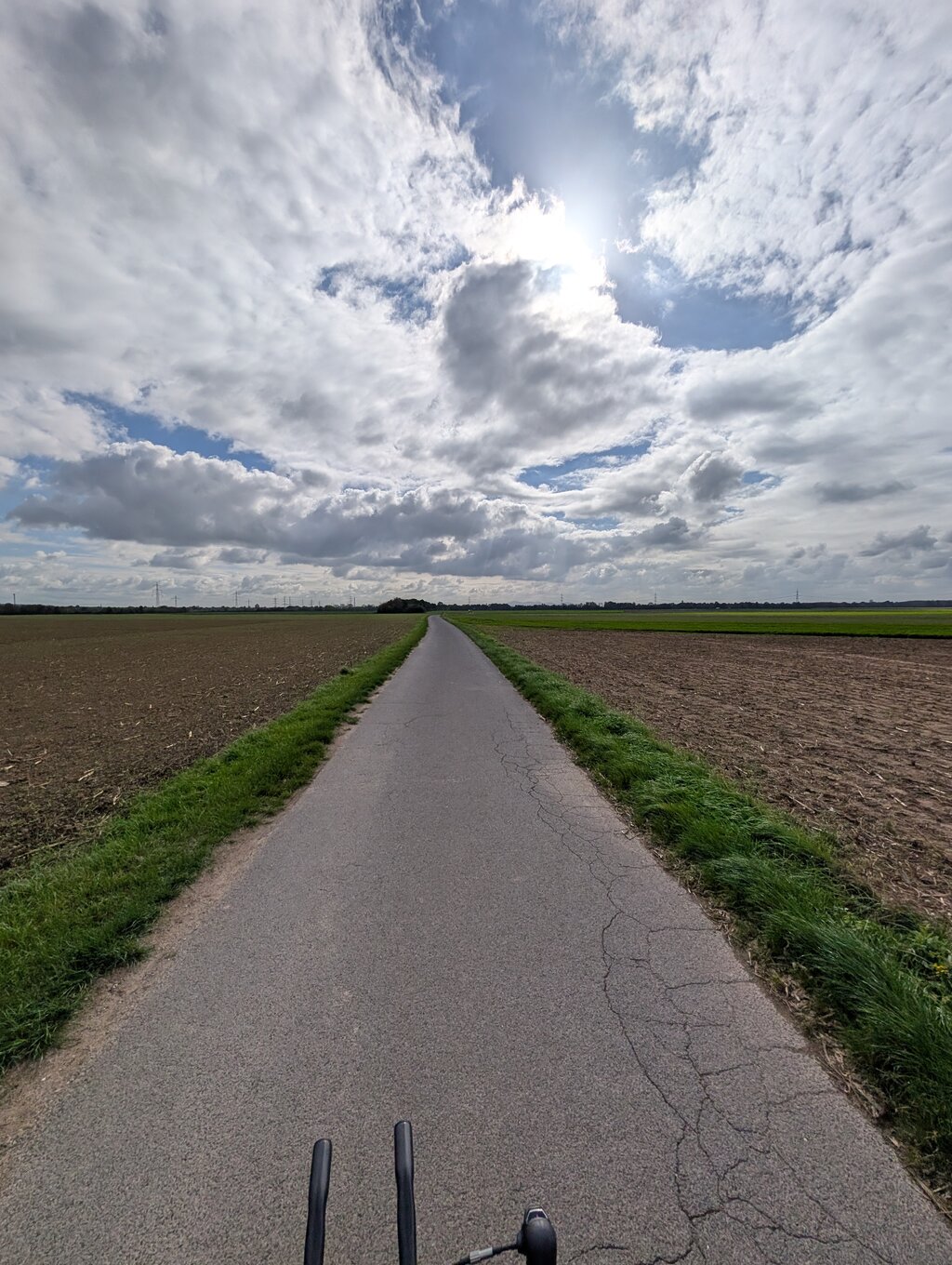
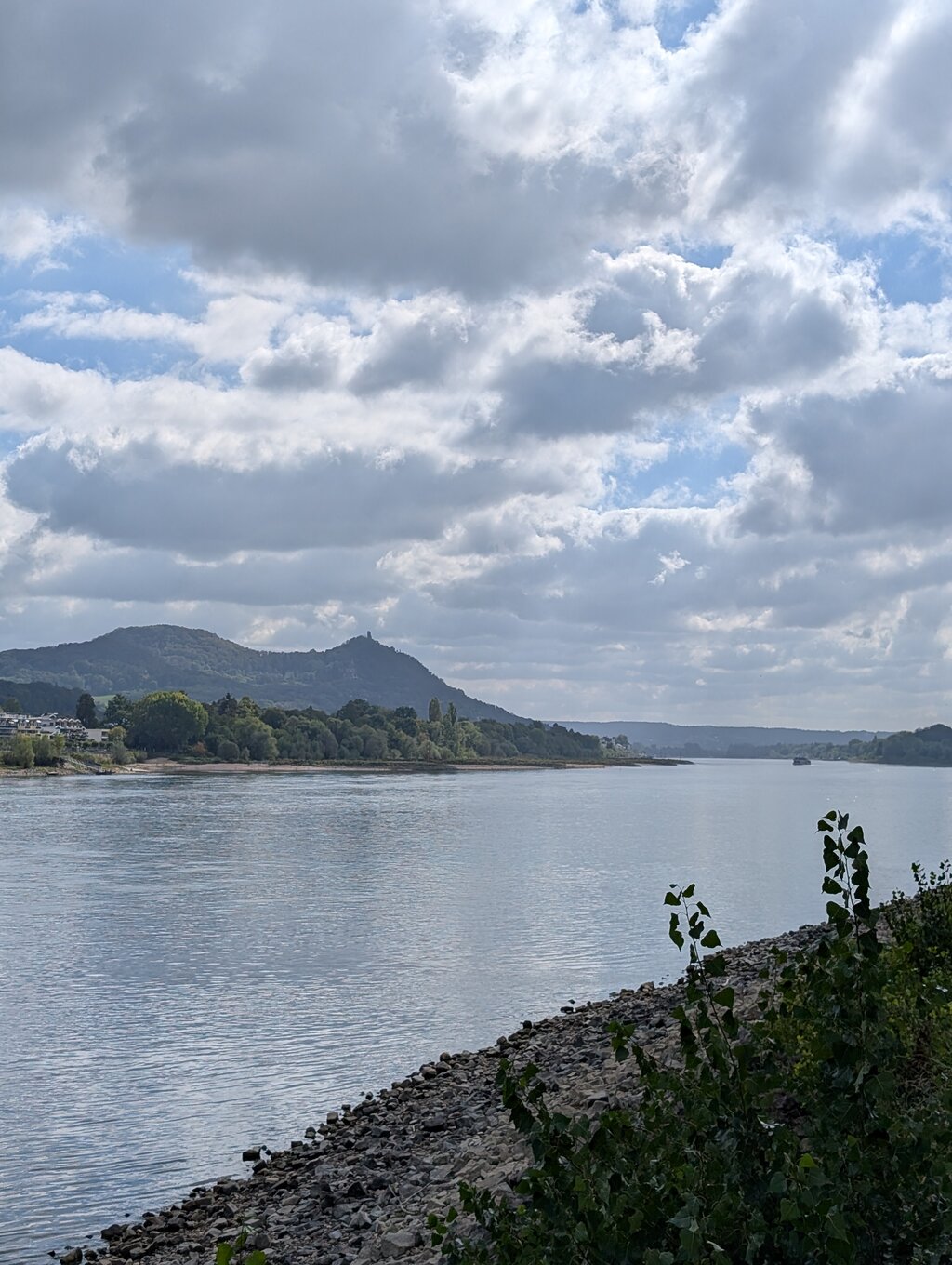
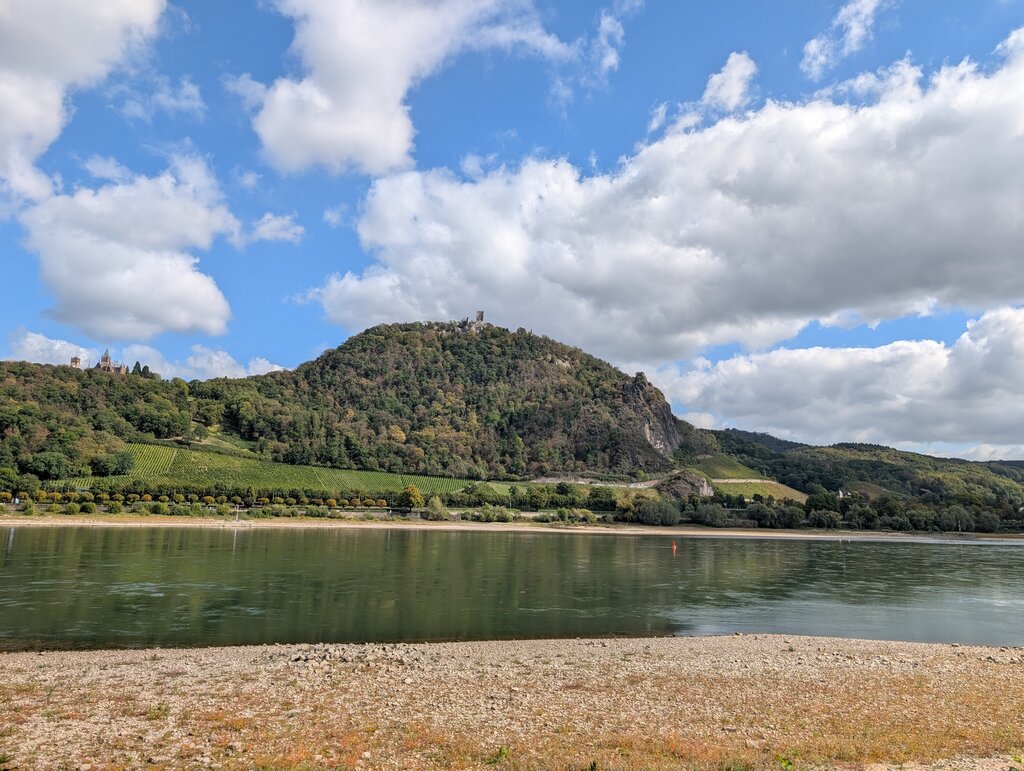
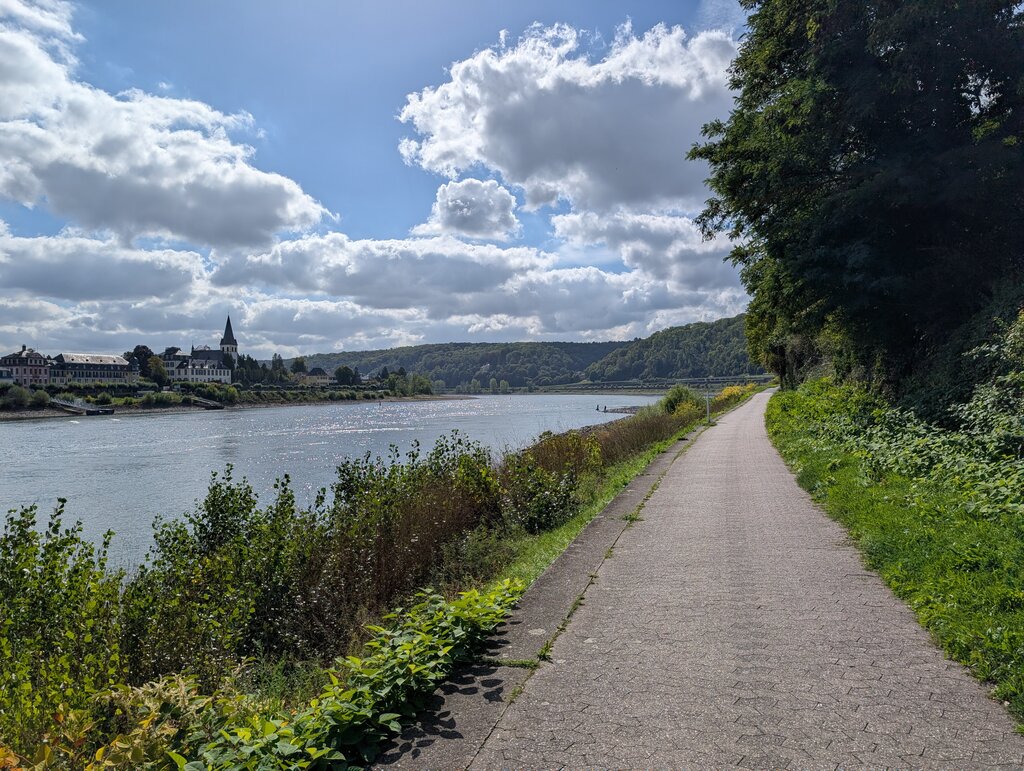
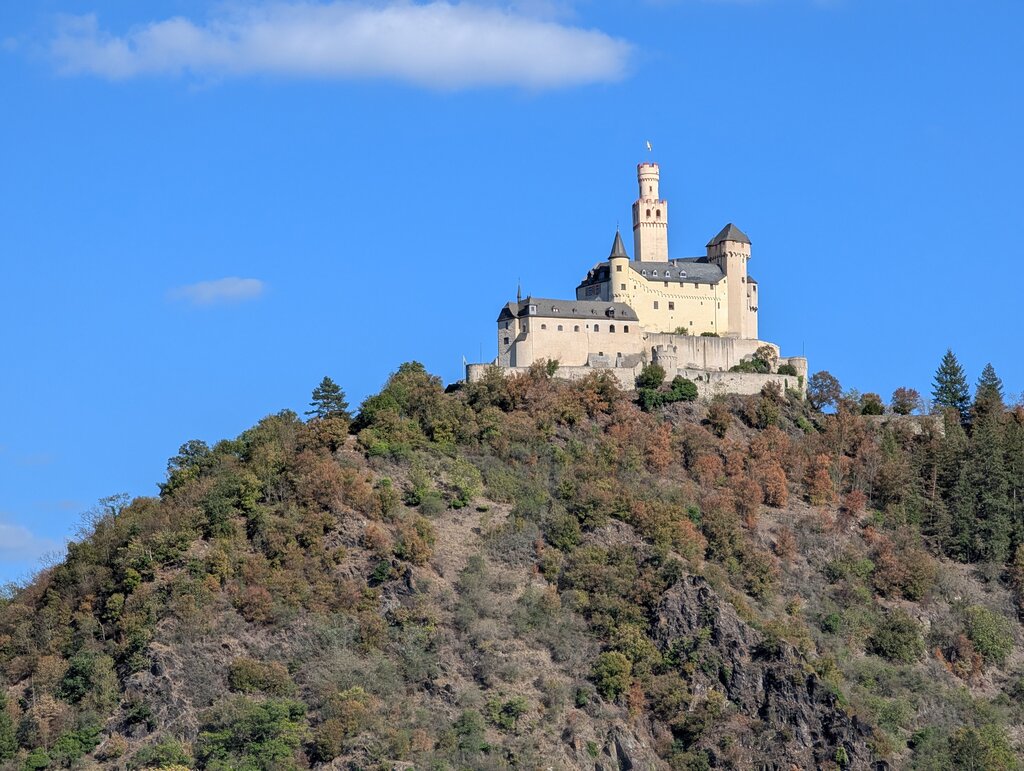
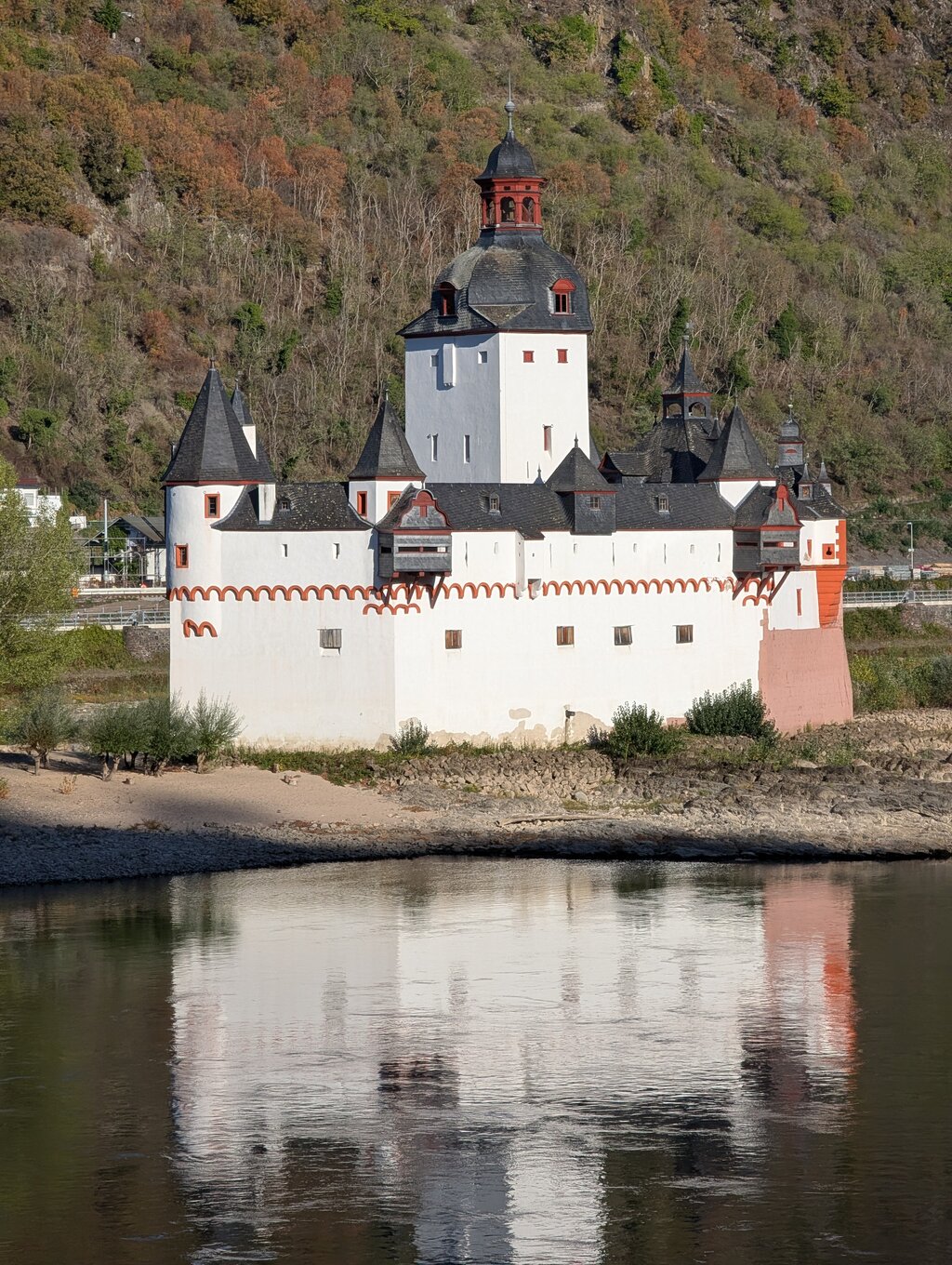
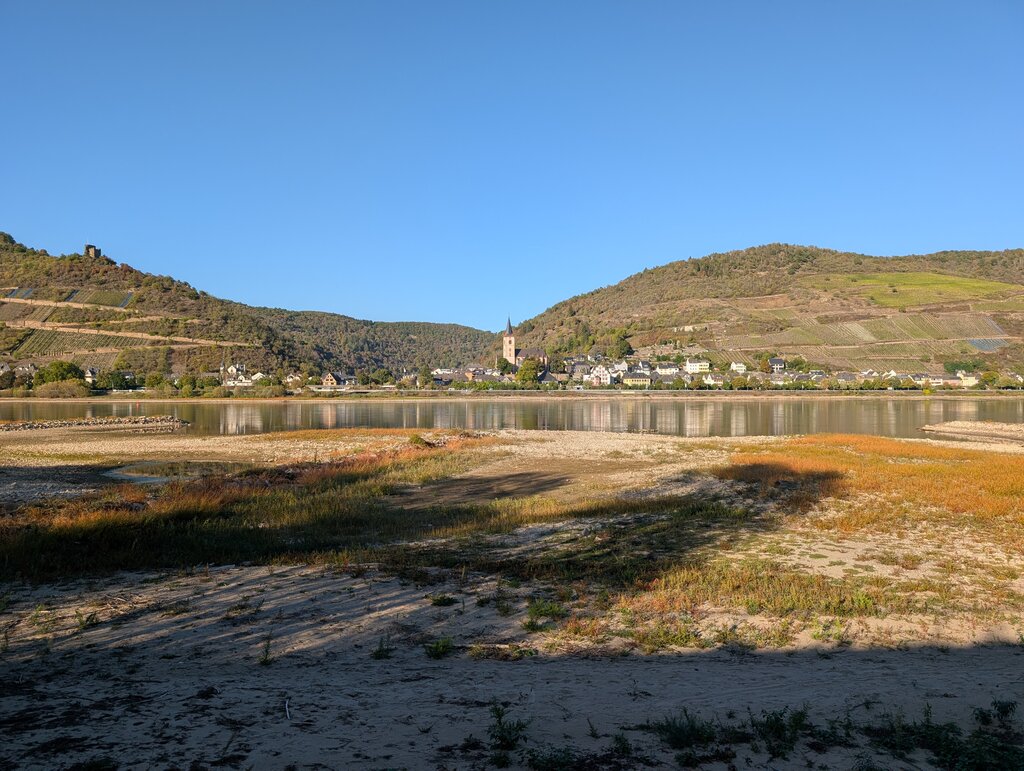
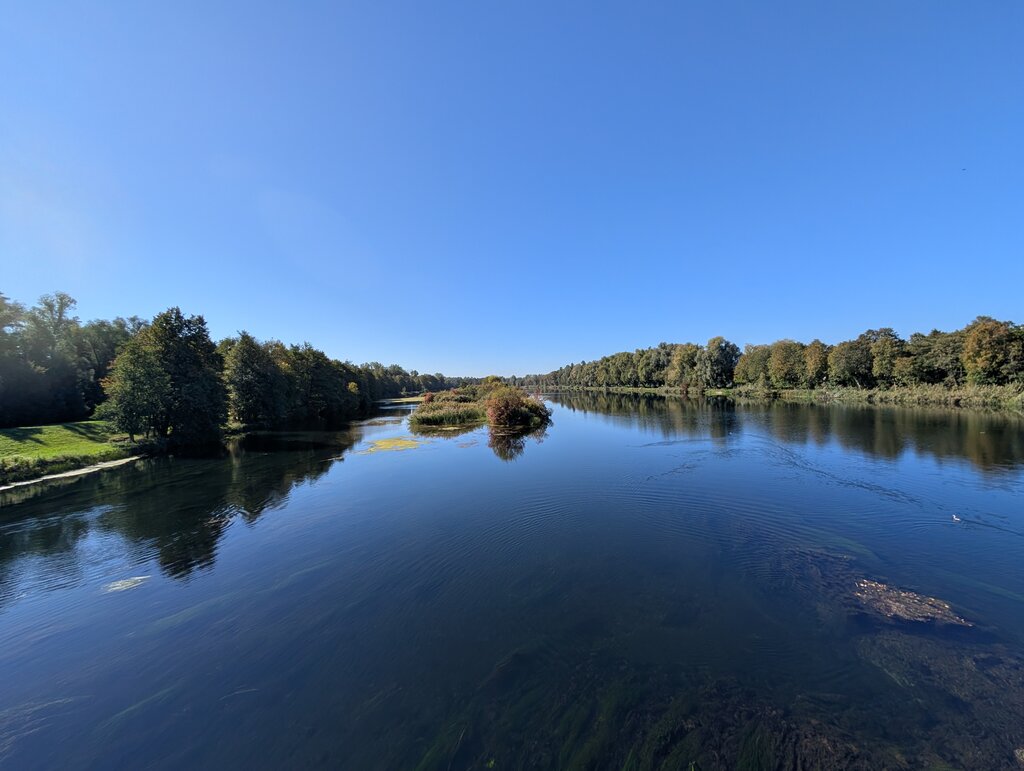
Underneath a stubbornly overcast sky, I push through the agricultural lanes between Cologne and Bonn. Just before noon, the clouds finally tear open. By 12:30 PM, passing Königswinter, the sky turns a crisp, deep blue. The Rhine is running remarkably low—wide stretches of riverbed lie exposed, looking more like a beach ready for a barbecue than a major shipping lane.
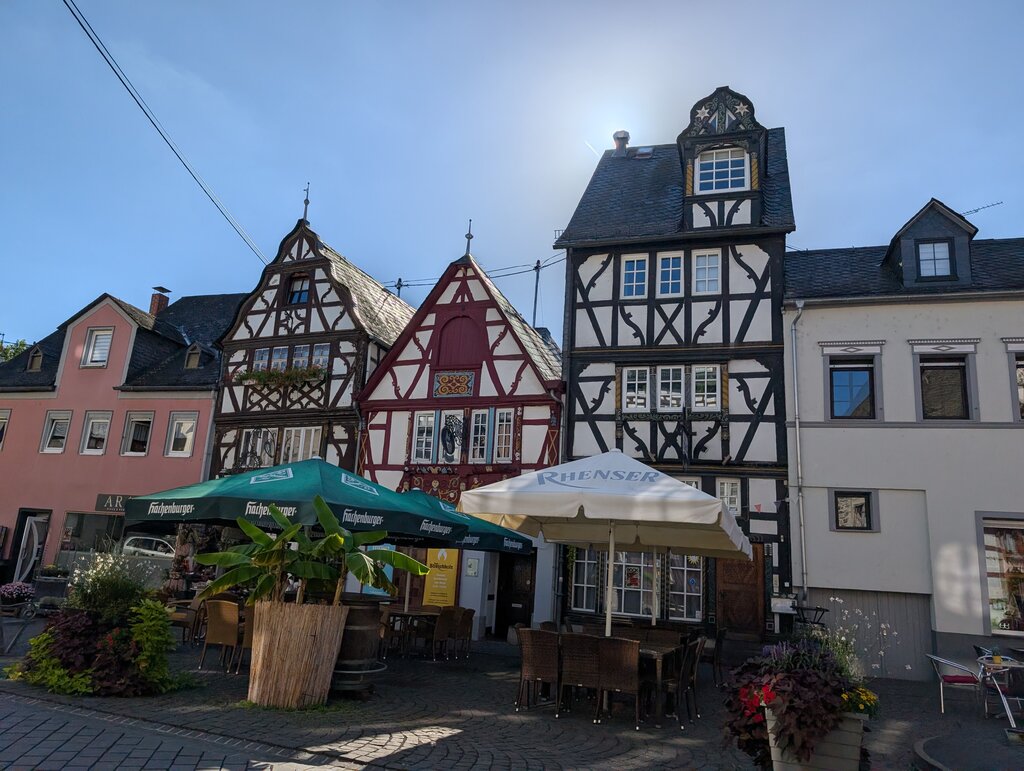
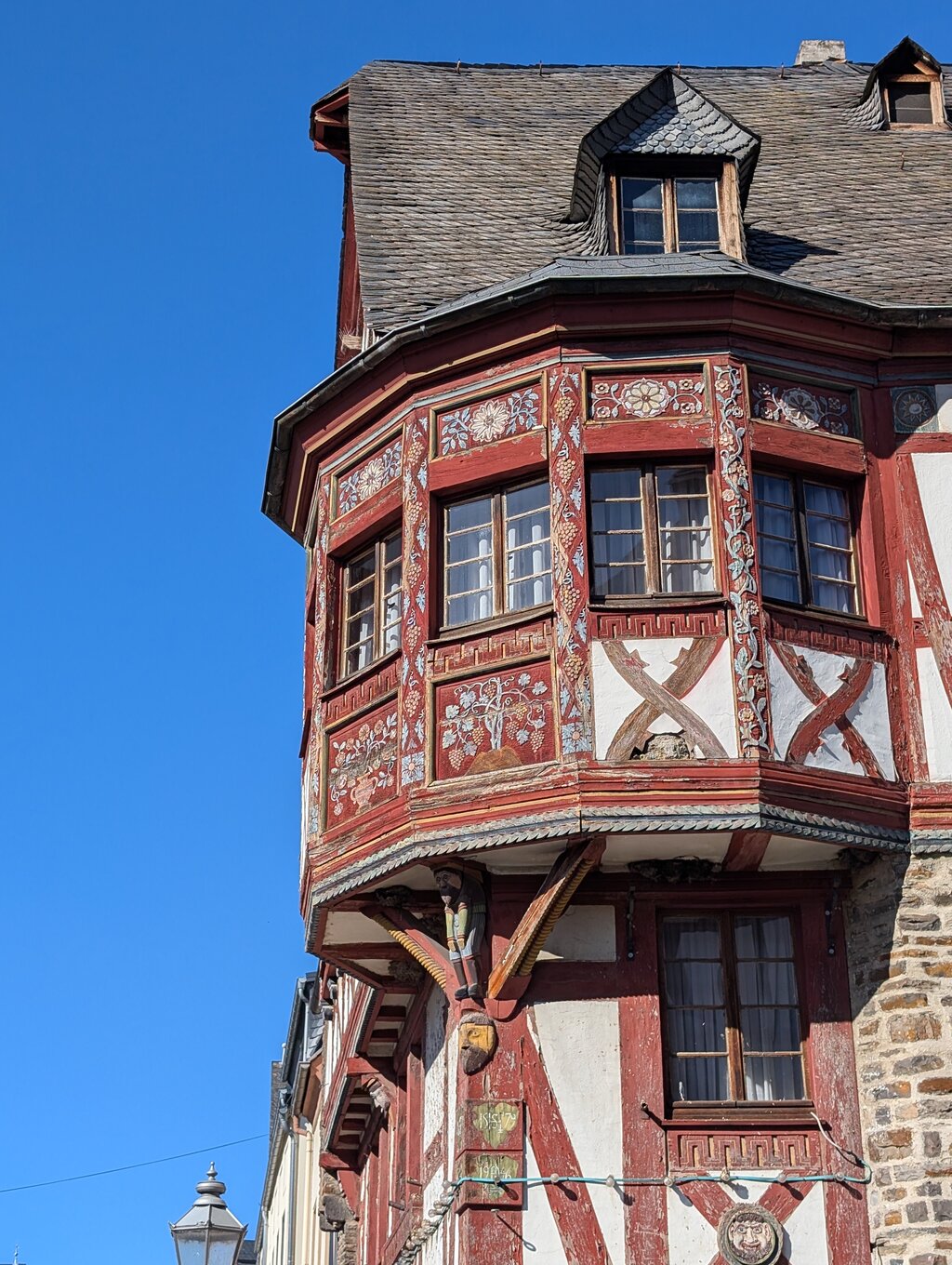
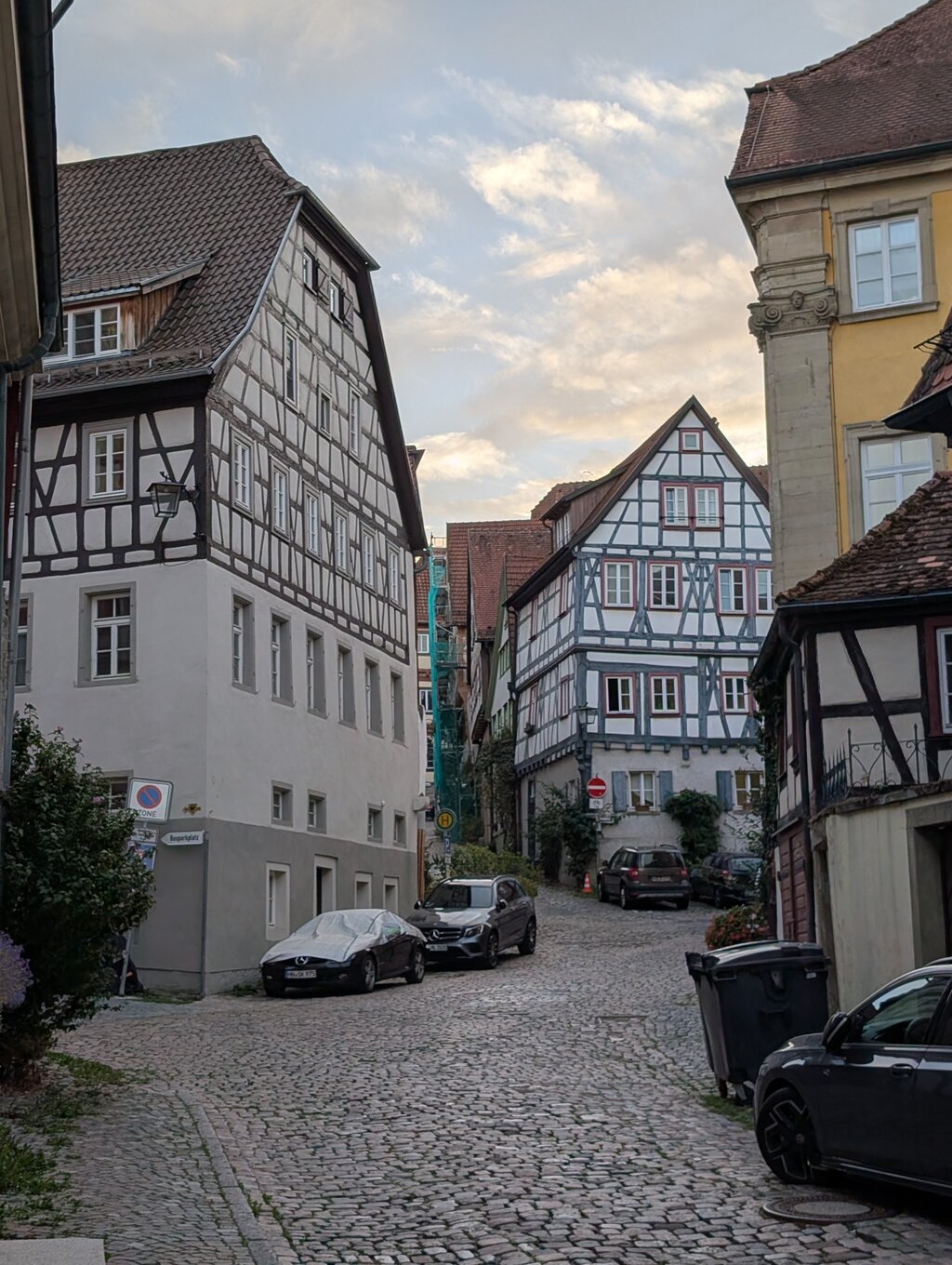
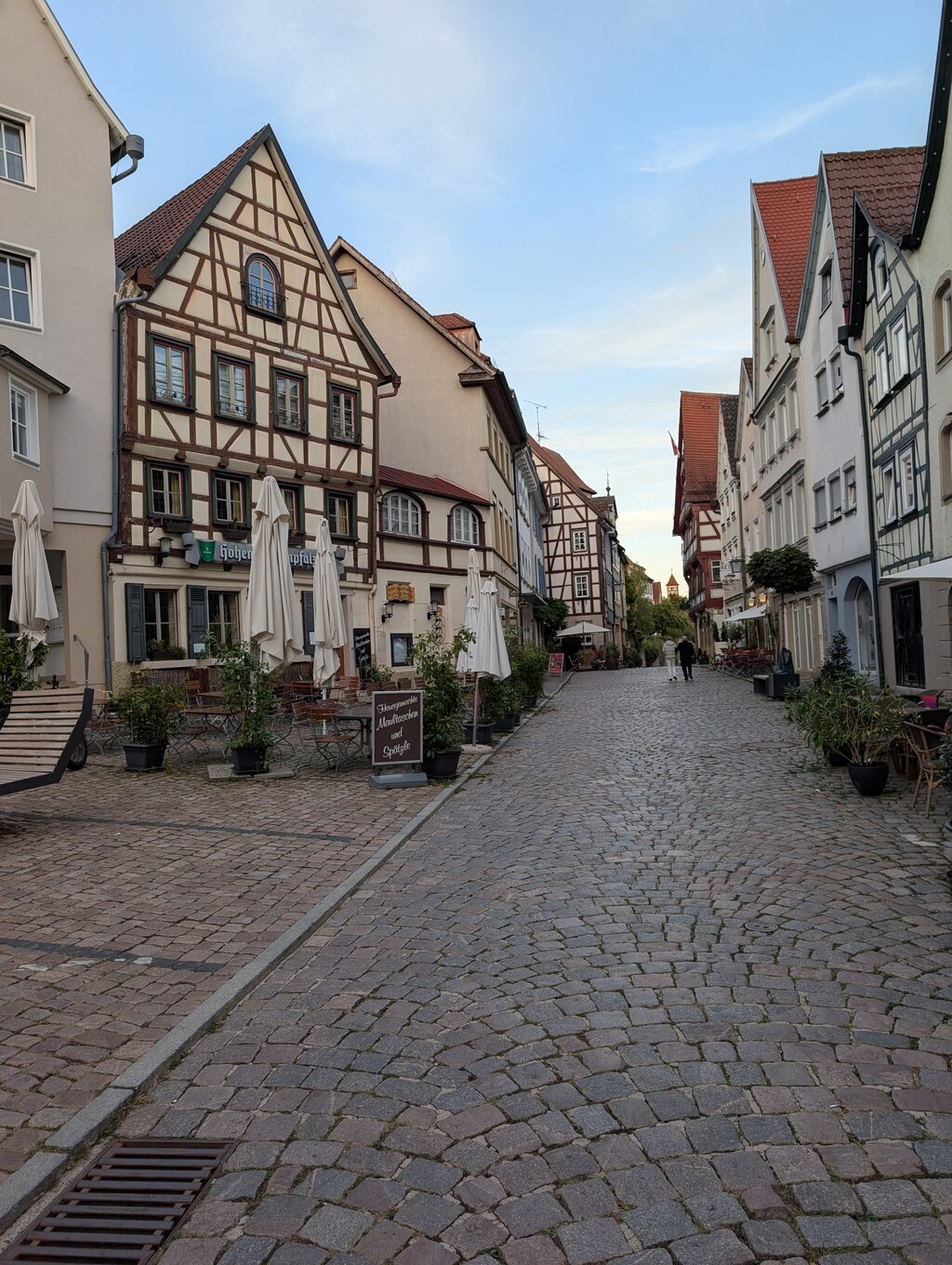
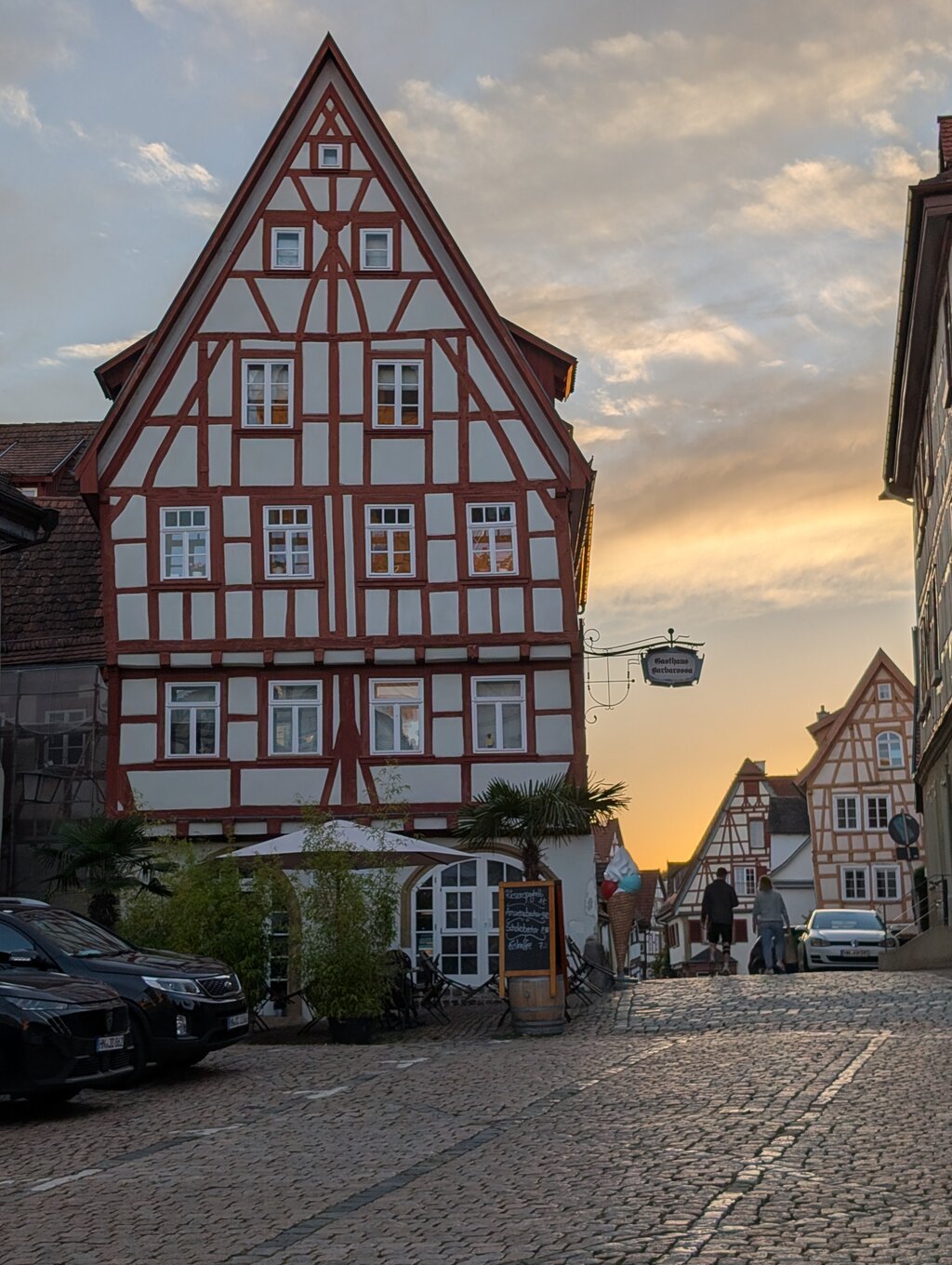
Spoiled by Dutch cycling infrastructure, I have to be honest: the Rhine cycle path is scenic, with its half-timbered villages frozen in time like a view from a delayed ICE train, but the surface is an erratic mix of smooth asphalt, cobblestones, and sudden gravel patches.
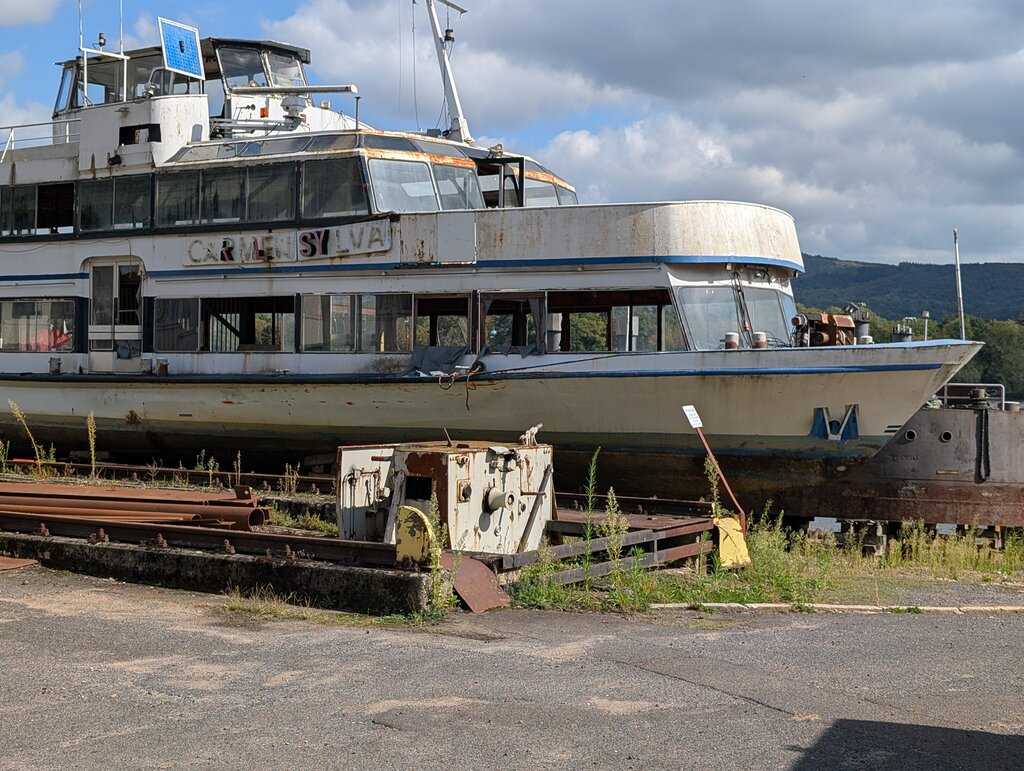
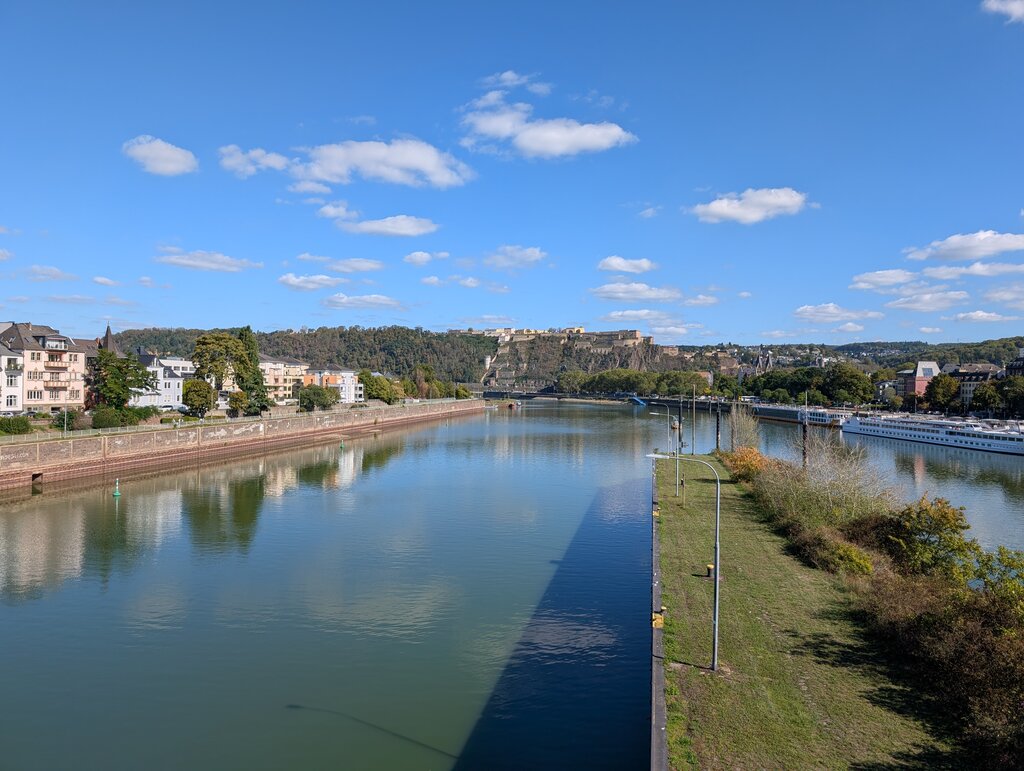
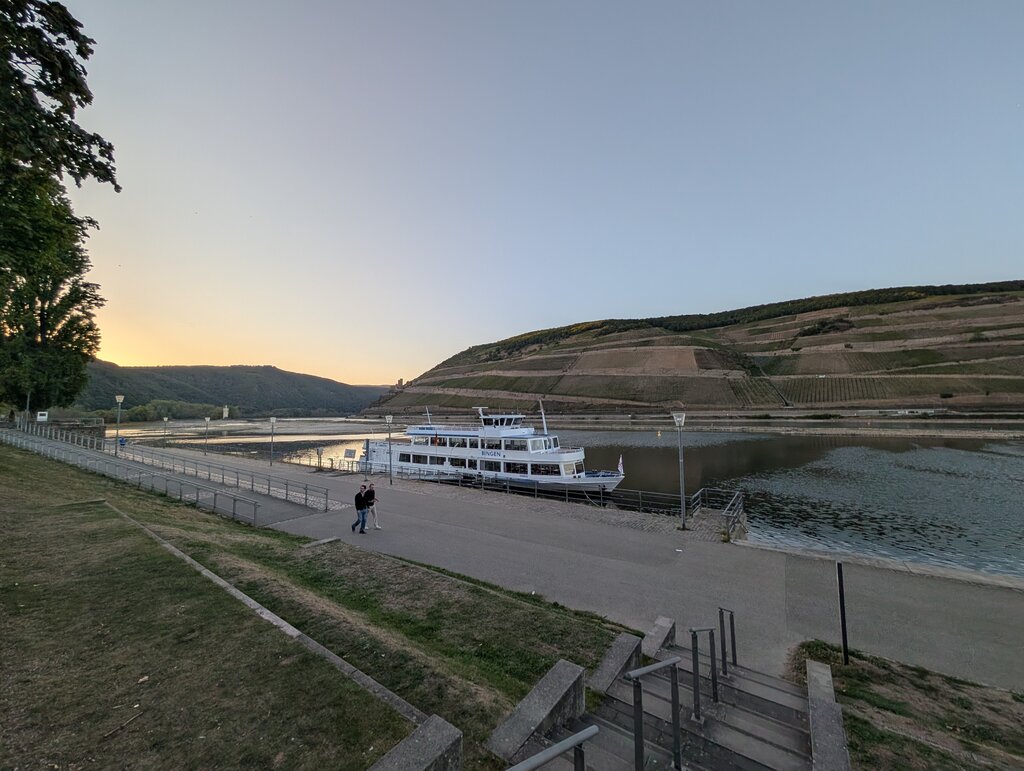
On the route to Koblenz—where I take a brief breather at the Deutsches Eck—I pass a ship graveyard. Resting there is the rusting hull of the Carmen Silva, a former pleasurecraft decommissioned after running out of funds and a place to dock. A photogenic Lost Place. Normally worth a closer look, but the clock is ticking. After a quick bakery stop and a chat with a cheerful Dutch cyclist riding back from Stuttgart to Utrecht simply because he didn’t feel like taking the train, I cross spaghetti junction bridges bridges and railway lifts into Bingen, hitting the hotel reception with five minutes to spare. A quick walk through town, a massive plate of Asian food to replenish the glycogen stores, and Day 1 is in the books.
Day 2: Frosty Morning, Vineyards, and the Sound of Salt (Bingen – Bad Wimpfen) #
Day 2 greets me with a crystal-clear sky and a sharp chill—barely 8 °C at rollout. Parked cars show the exact thermal split I feel in my legs: windshields half-covered in hoarfrost in the shade, completely thawed where the morning sun hits.
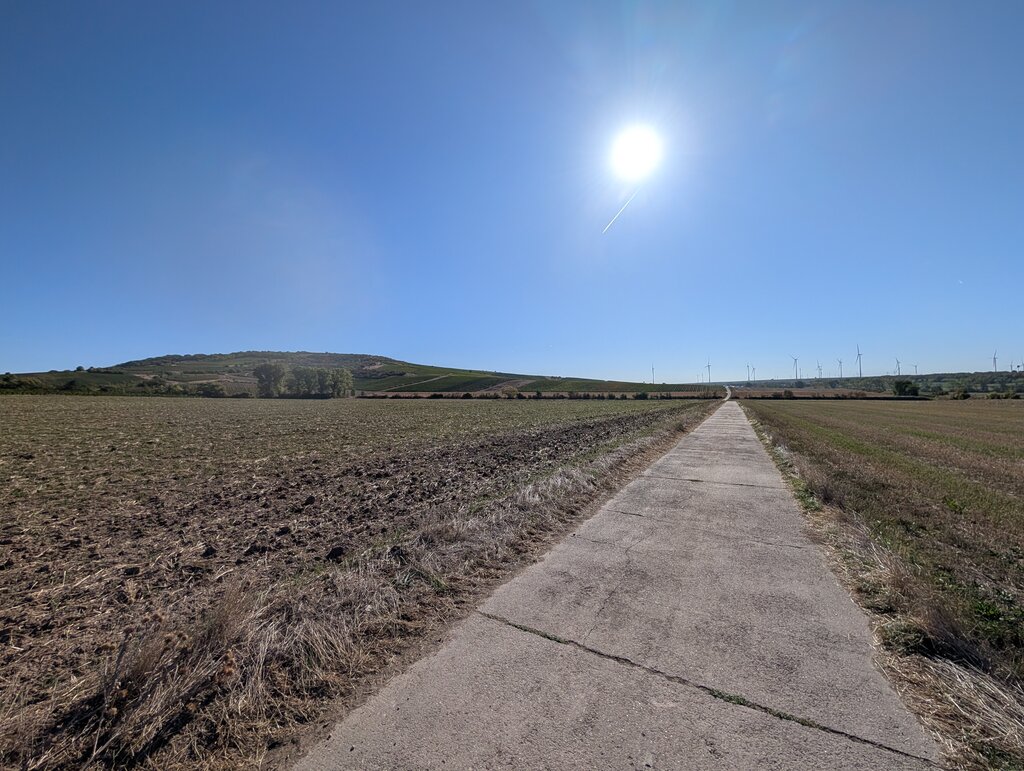
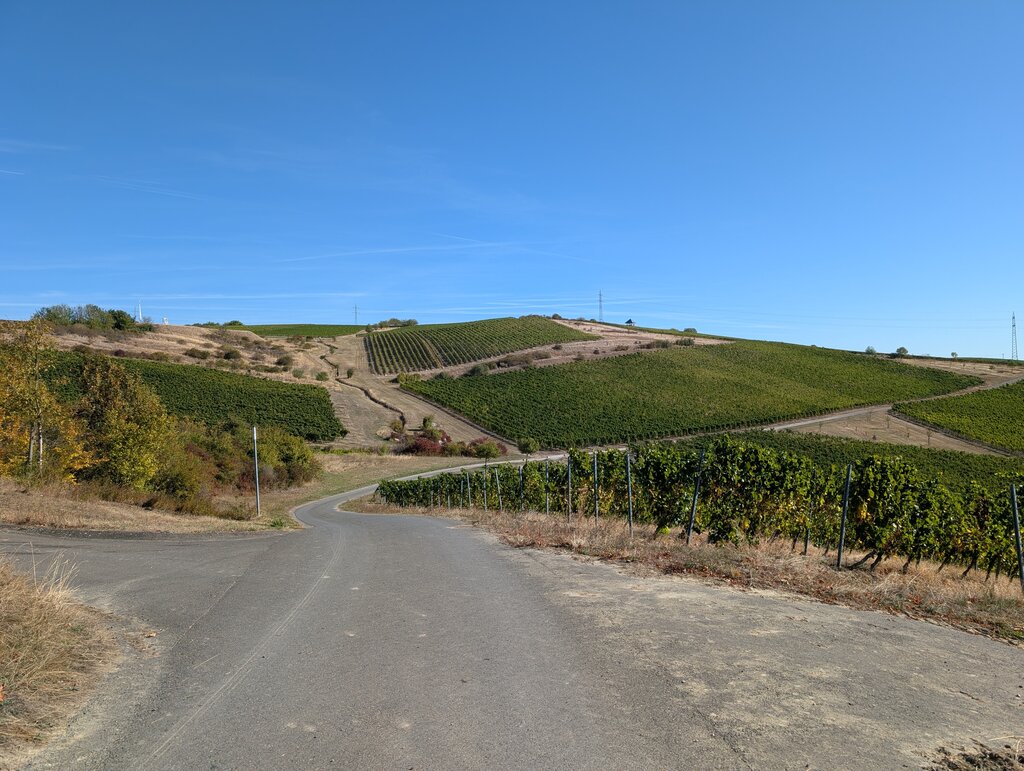
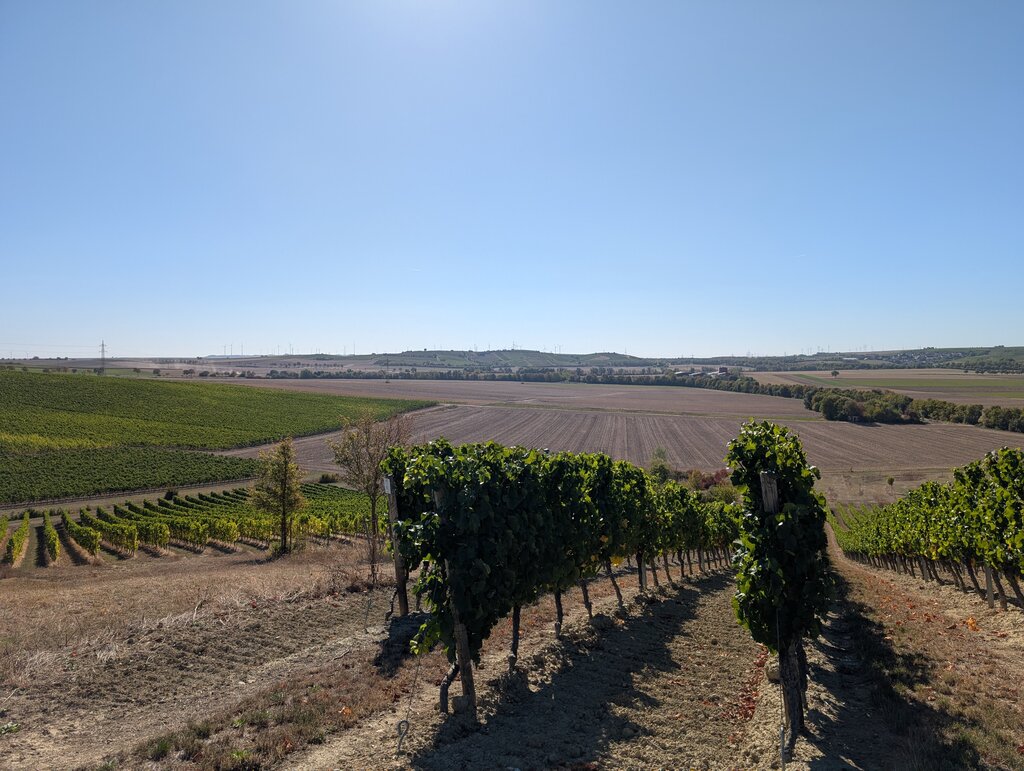
Leaving the busy country roads behind, I dive into empty farm tracks and concrete slab paths cutting through freshly mown fields. By 11:00 AM, the landscape shifts into rolling vineyards. For an hour, it is pure climbs and descents through sun-drenched hills that could easily pass for Tuscany.
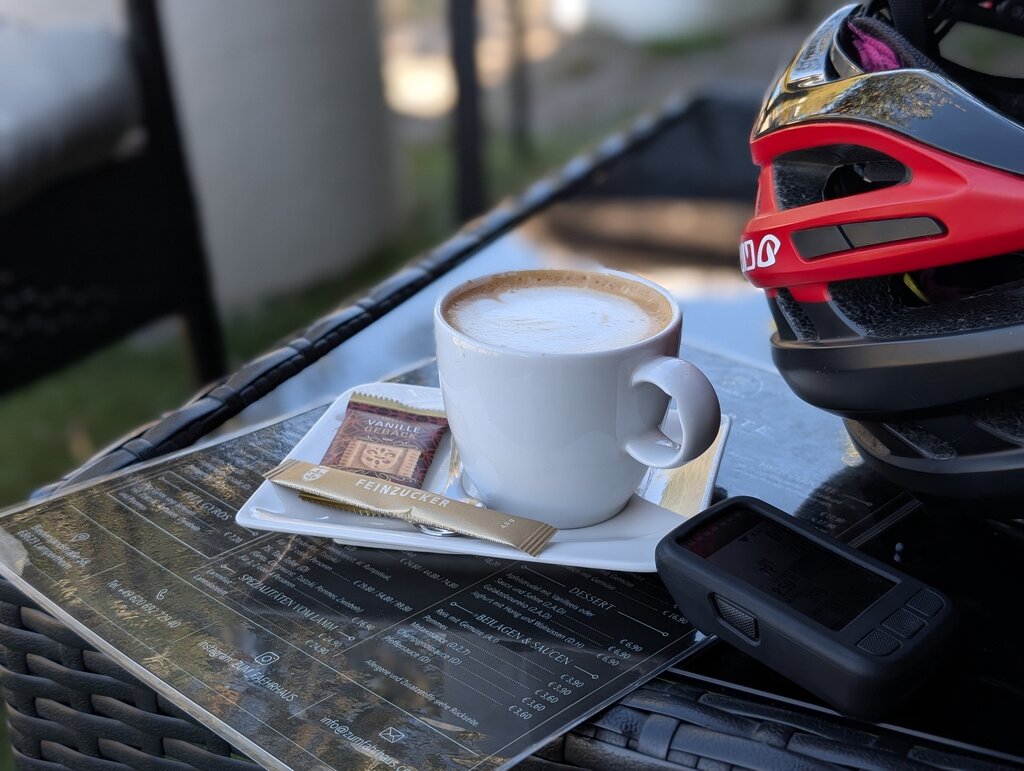
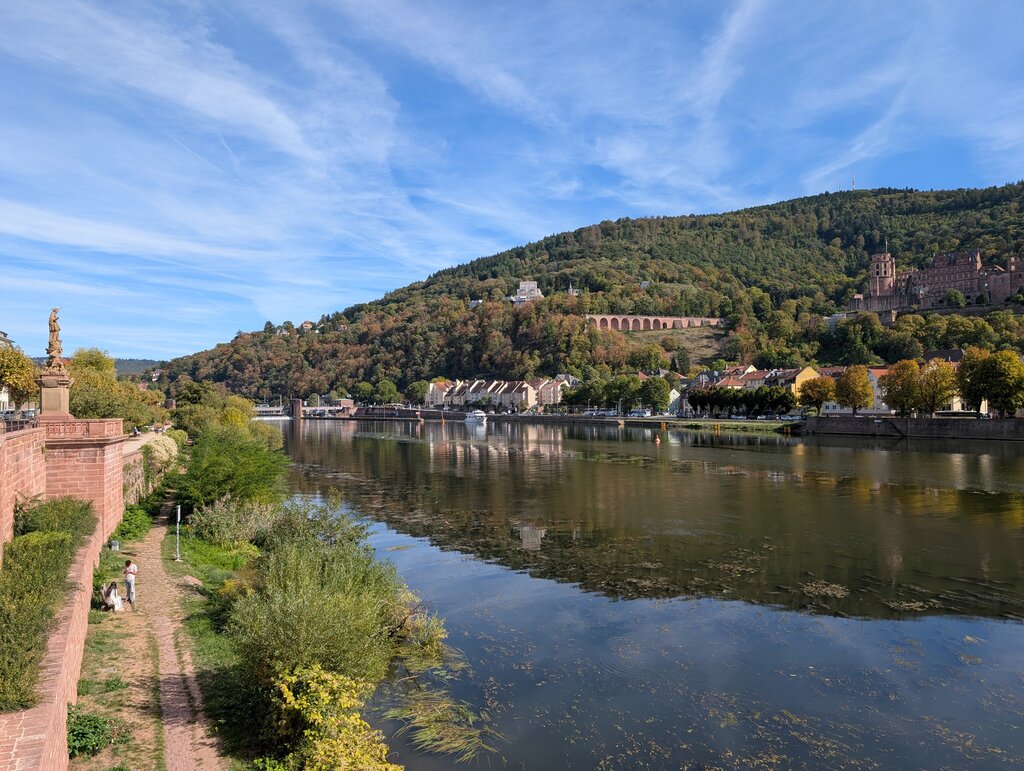
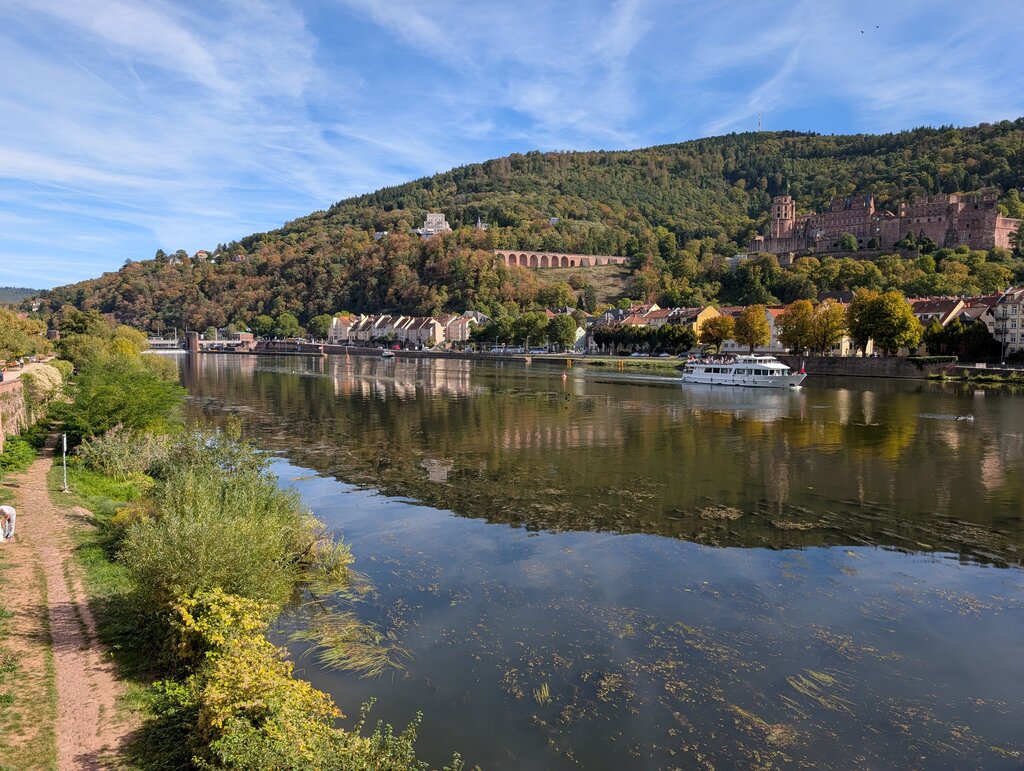
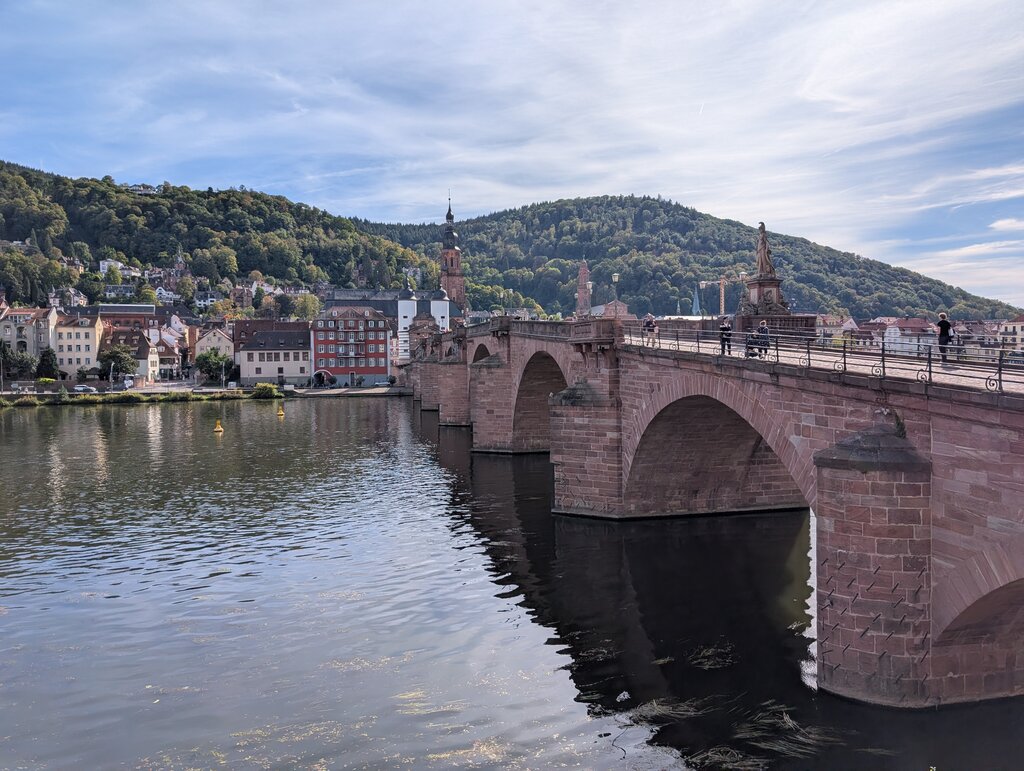
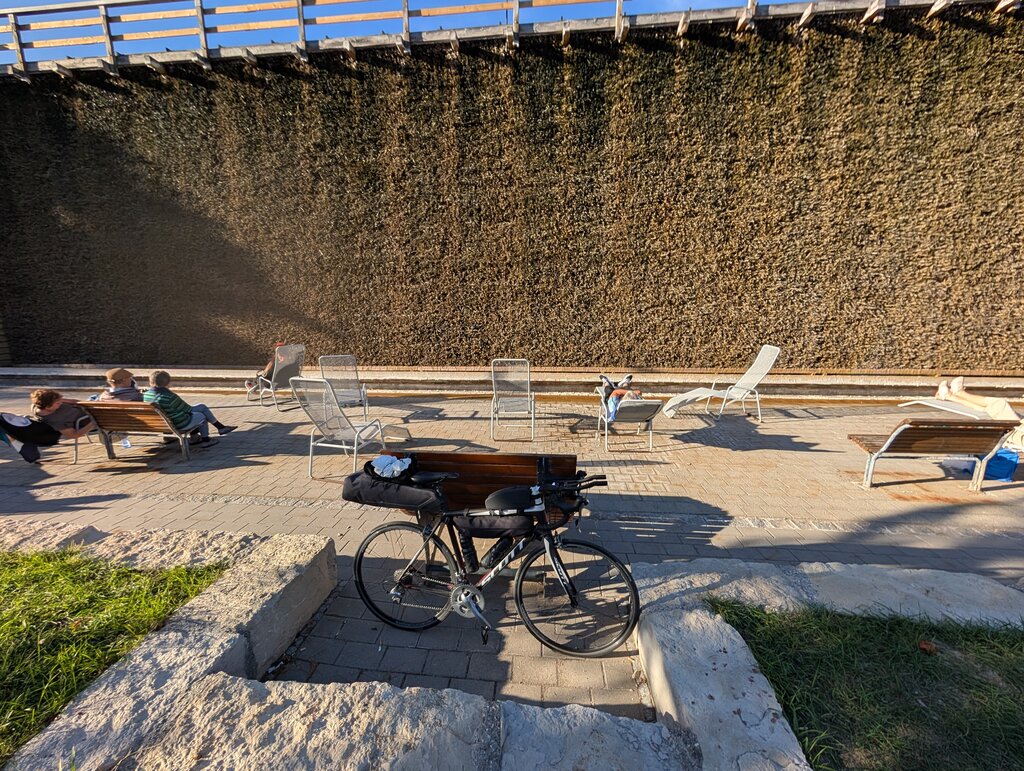
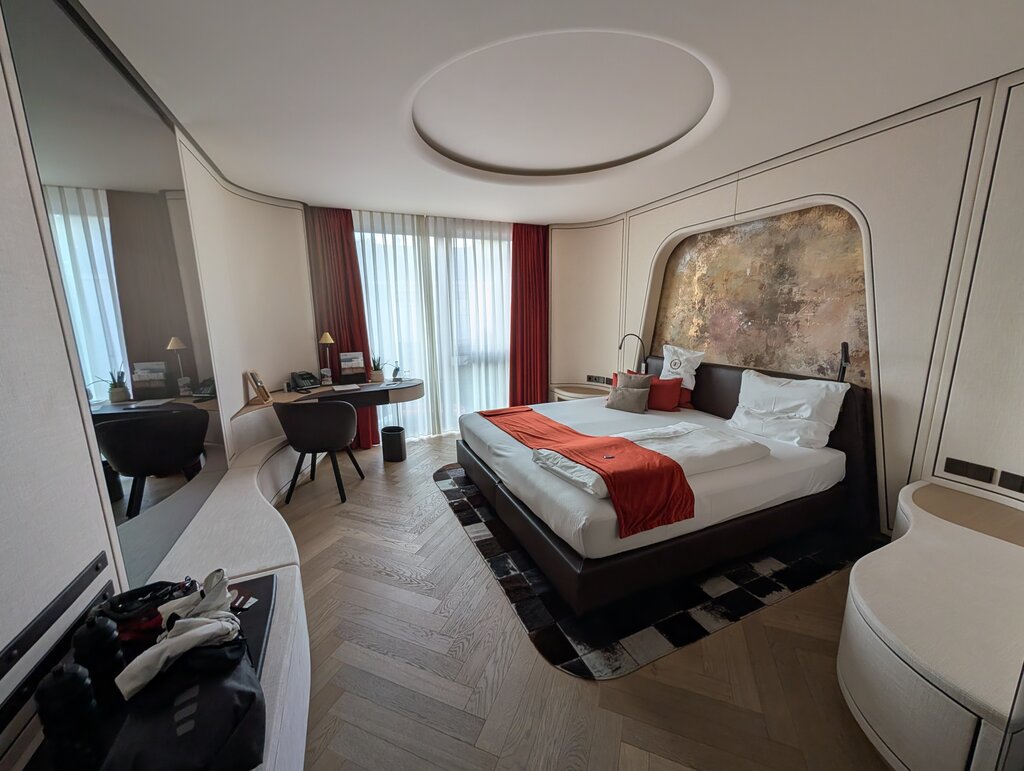
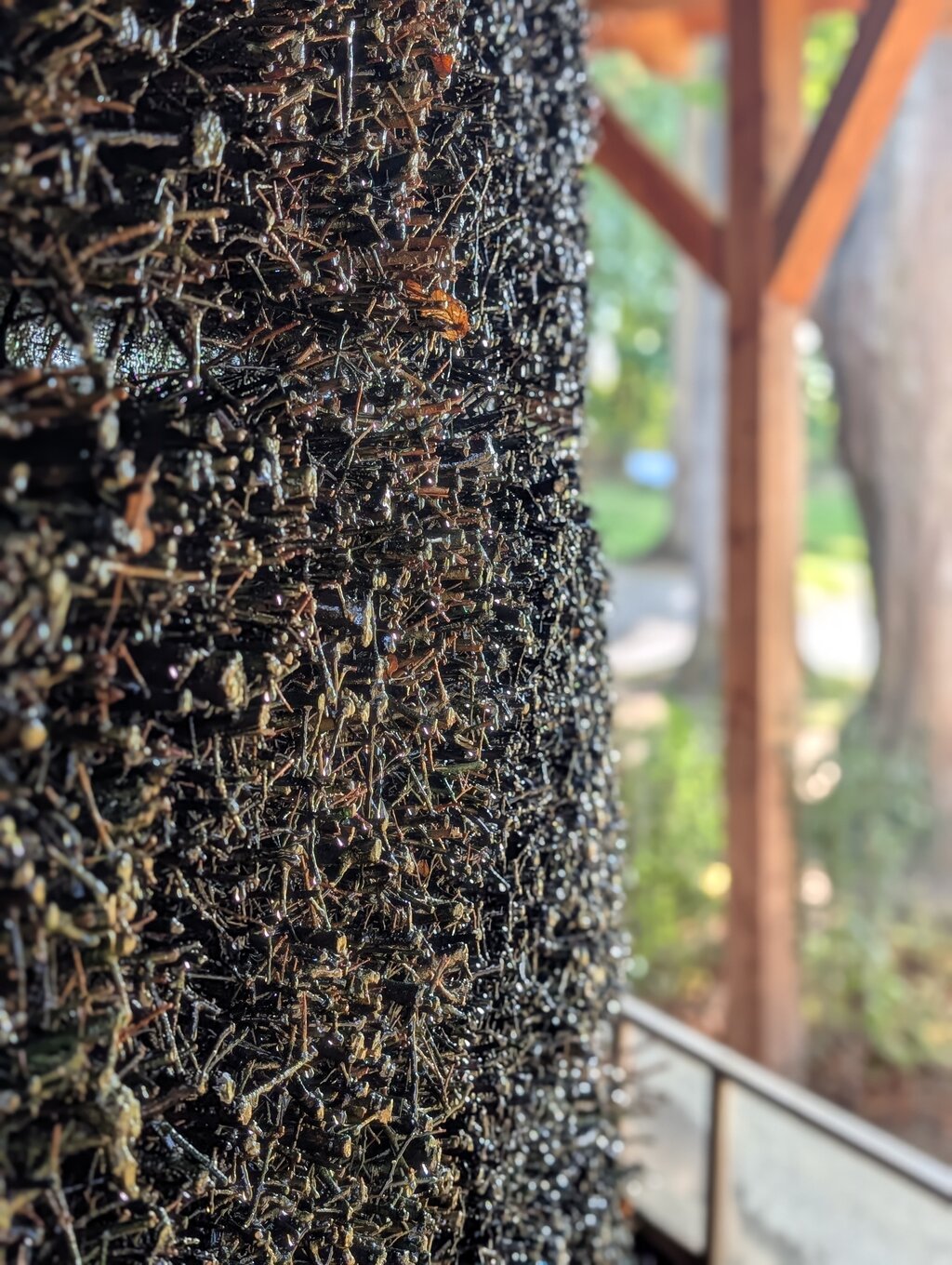
A quick cappuccino stop along a busy bike corridor acts as a mini-vacation before I roll into Heidelberg around 15:00. I know the city well, so I don’t linger. Pushing deeper into the rural hills, I reach Bad Rappenau by 17:00. Before checking in, I make a mandatory detour to the Gradierwerk (graduation tower) in the spa park. Ever since a tour through the Taunus mountains, I have had a soft spot for these historic salt-extraction structures—the gentle trickling of brine and the crisp, salty air are pure recovery. My hotel tonight features a sauna and a room the size of a mini-suite, so I kept the stop short and headed to todays final destination, Bad Wimpfen. Dinner, sauna, deep sleep.
Day 3: Monkey Island Detours, Meteorite Craters, and Passive Relays (Bad Rappenau – Nördlingen) #
Under a cool, slightly overcast sky, I cross the river toward Heilbronn and set a direct course east into Bavaria. The route cuts through endless green meadows, and as the afternoon sun breaks through, the rolling hills take on the idyllic, untouched look of a 1960s Heimatfilm (“selbstverständlich ist das eine Flöte!”).
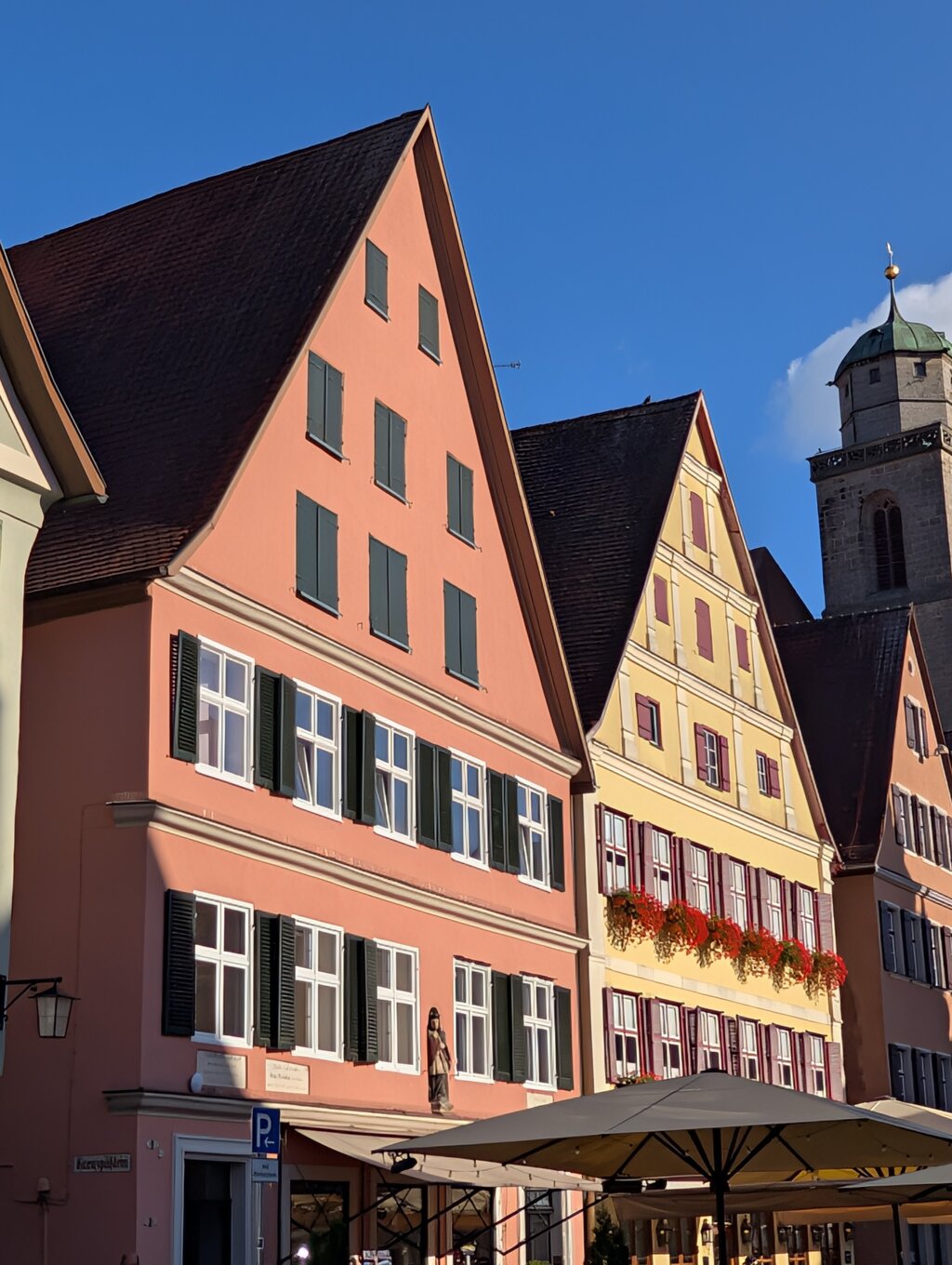
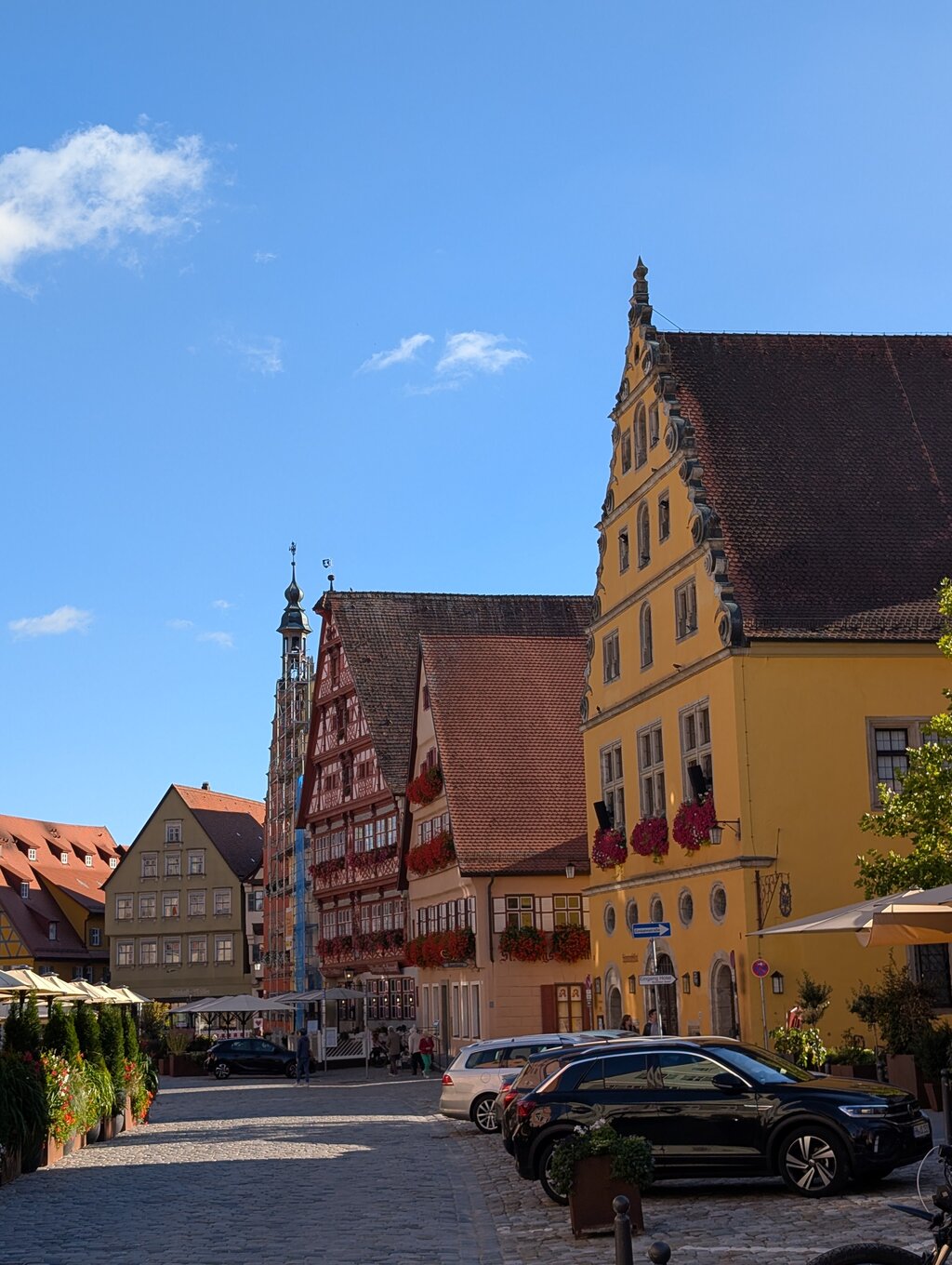
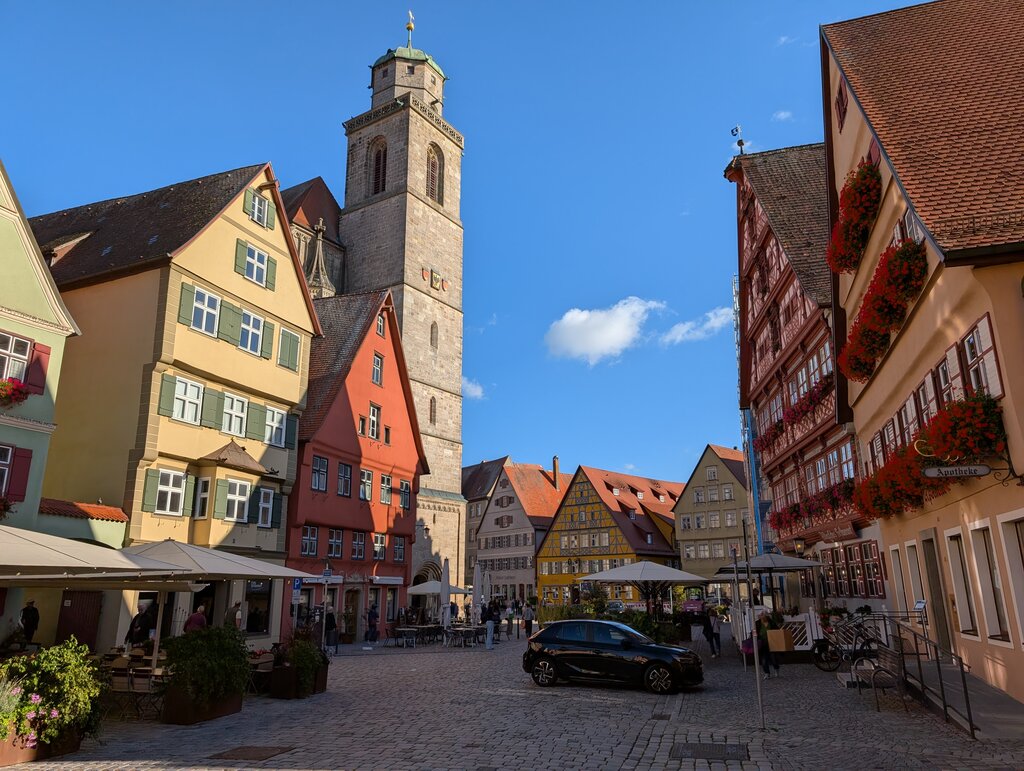
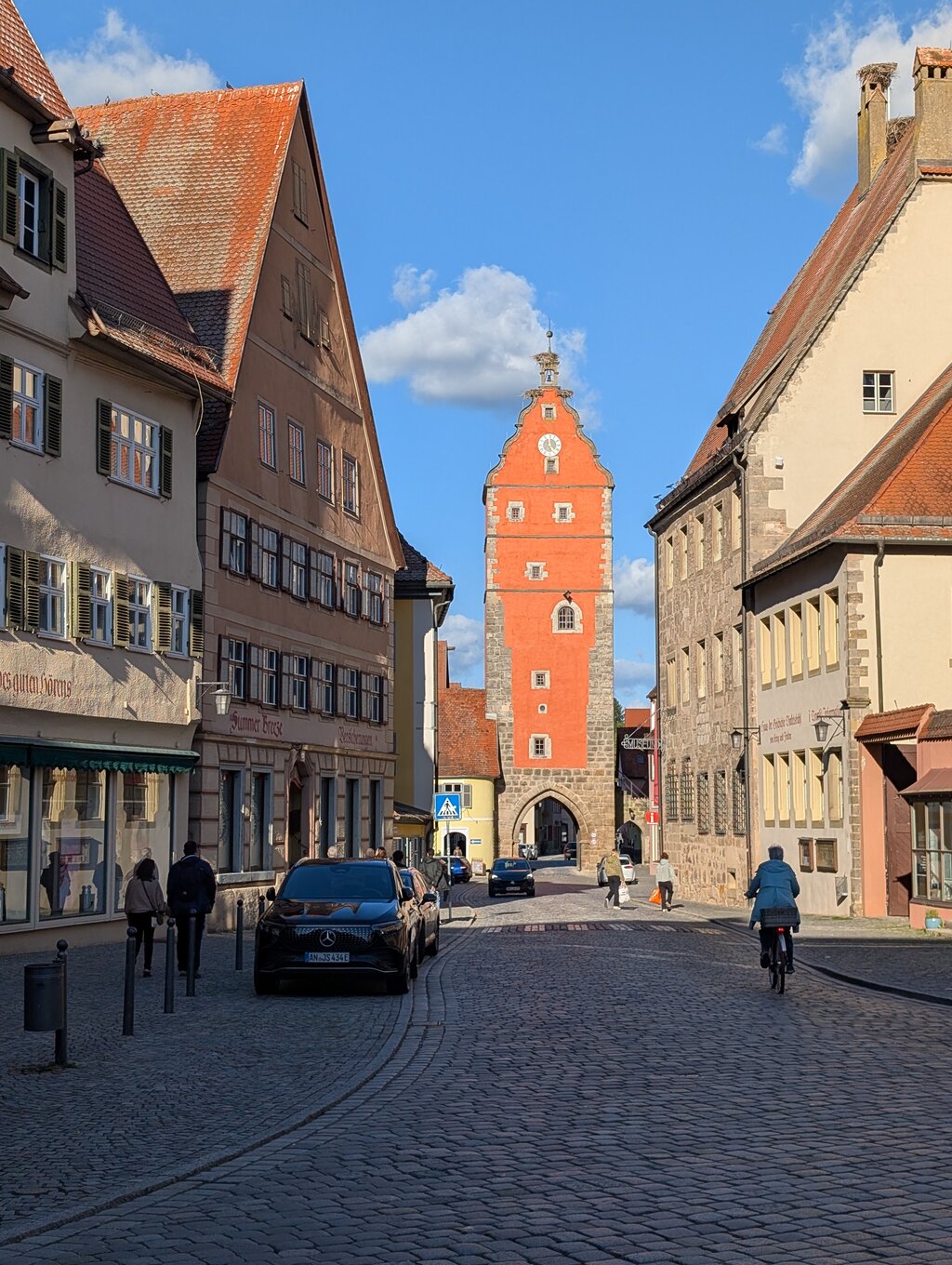
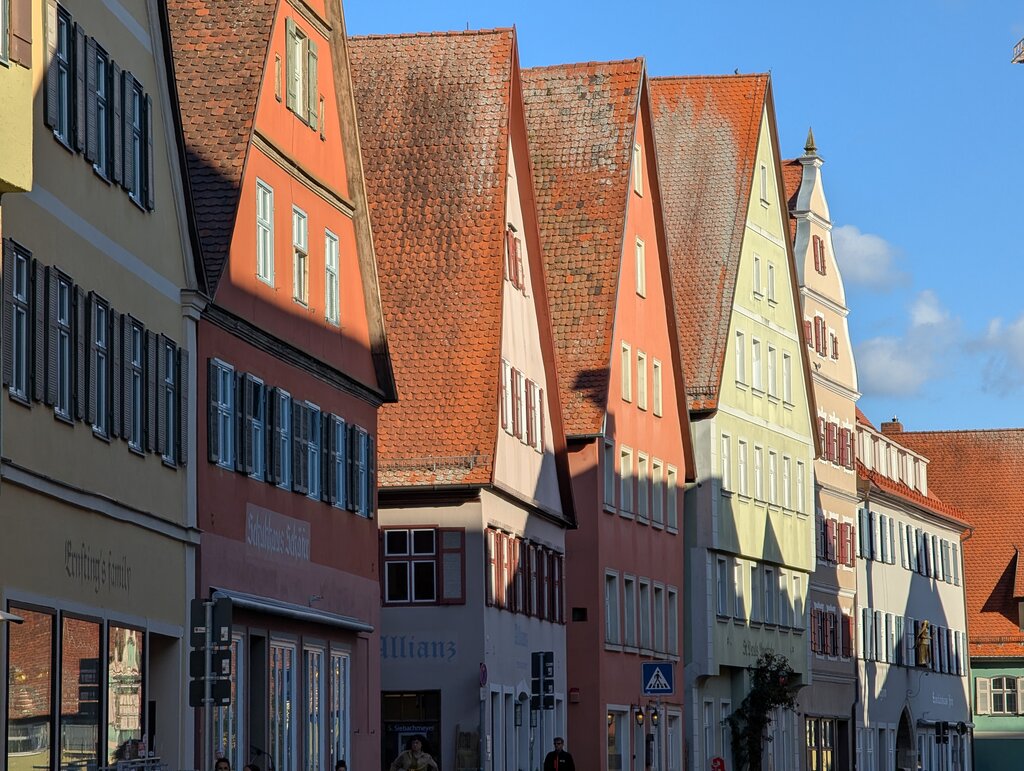
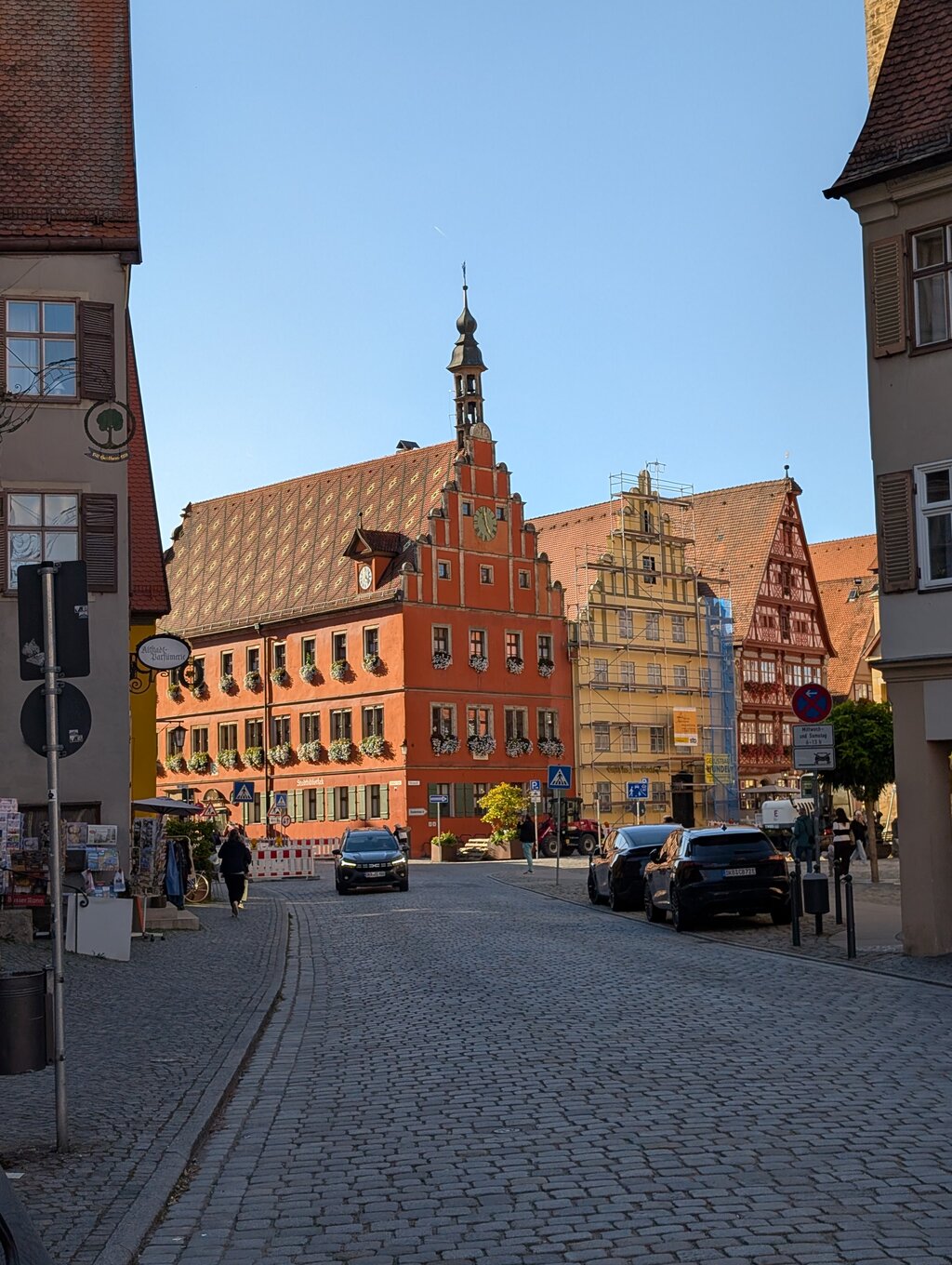
Crossing into Bavaria, I hit Dinkelsbühl—another town with a charming graduation tower in its park and a medieval old town so well preserved it looks like a movie set. Originally, I had considered taking a detour north to Rothenburg ob der Tauber to visit the real-life inspiration for Mêlée Island from the classic Monkey Island video games. Looking around Dinkelsbühl’s historic walls, I decide to save the kilometers: the scenery here is more than good enough to practice the art of pirates insult sword fighting, if I ever needed to.
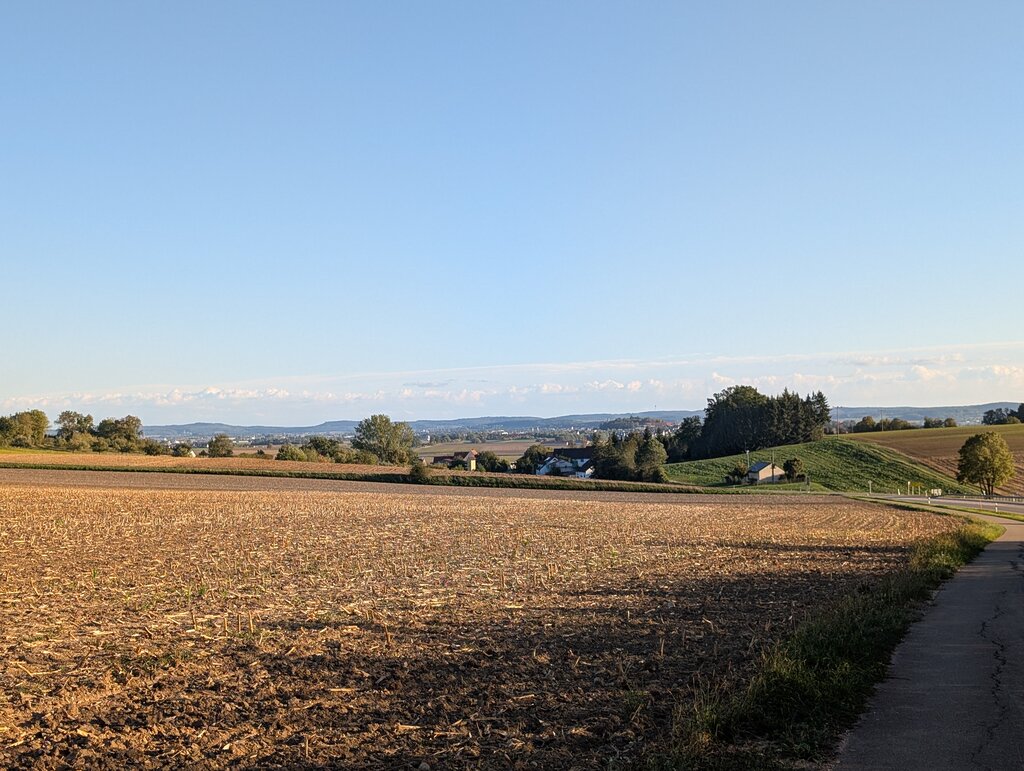
With a grin, I drop back into the aero bars, digging regularly into my top-tube stash of bars and chocolate, flying south toward Nördlingen. The town sits squarely inside the Nördlinger Ries, a massive crater left by a meteorite impact millions of years ago. As you approach, the terrain suddenly drops off, revealing the vast circular basin below.
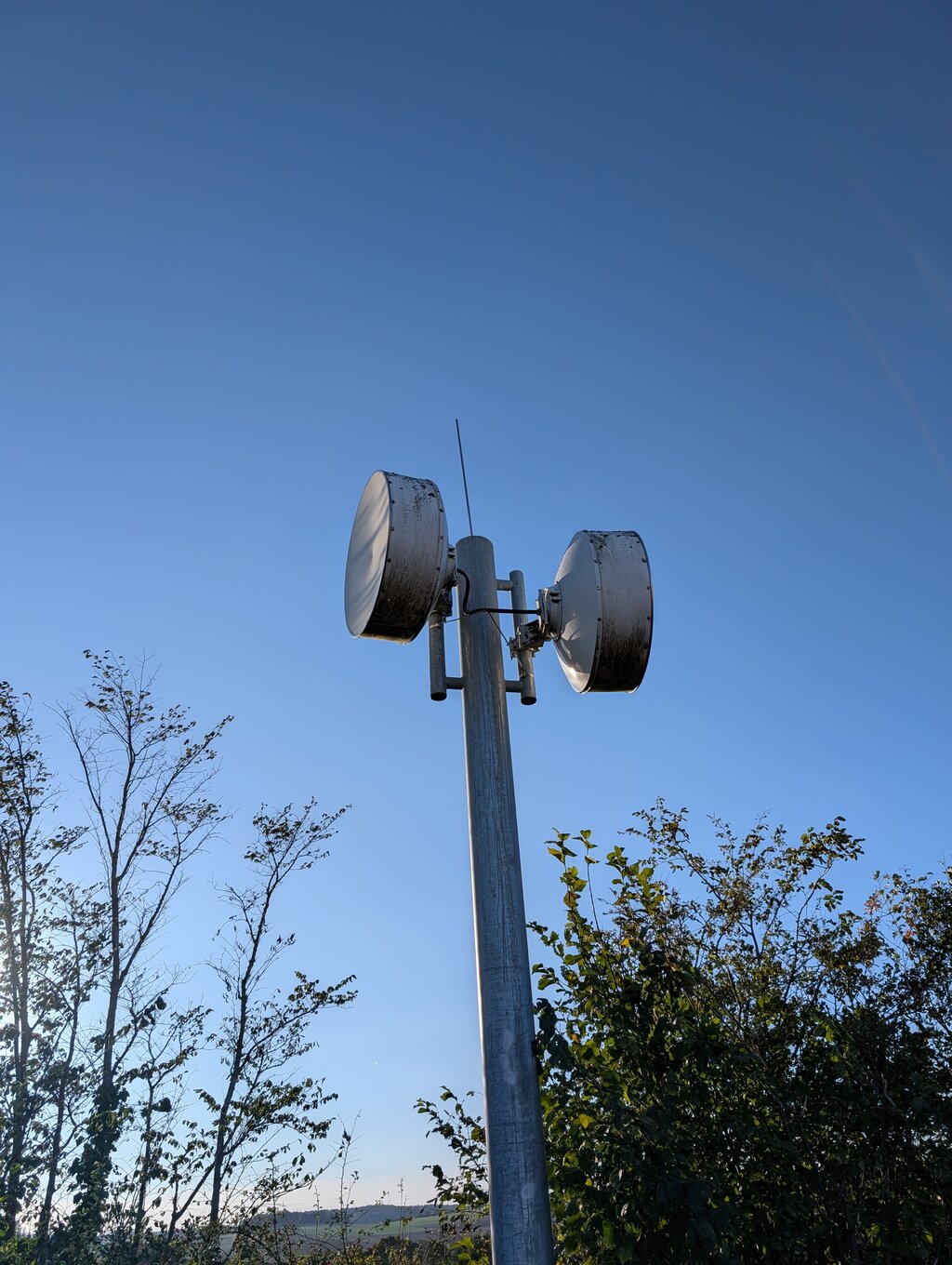
Right on the crater rim, a piece of infrastructure catches my telecom-nerdy eye: a passive microwave relay. Just two directional antennas mounted back-to-back, linked by a short coaxial cable, bouncing signals from distant transmitters without a single watt of external power. Simple, elegant engineering.
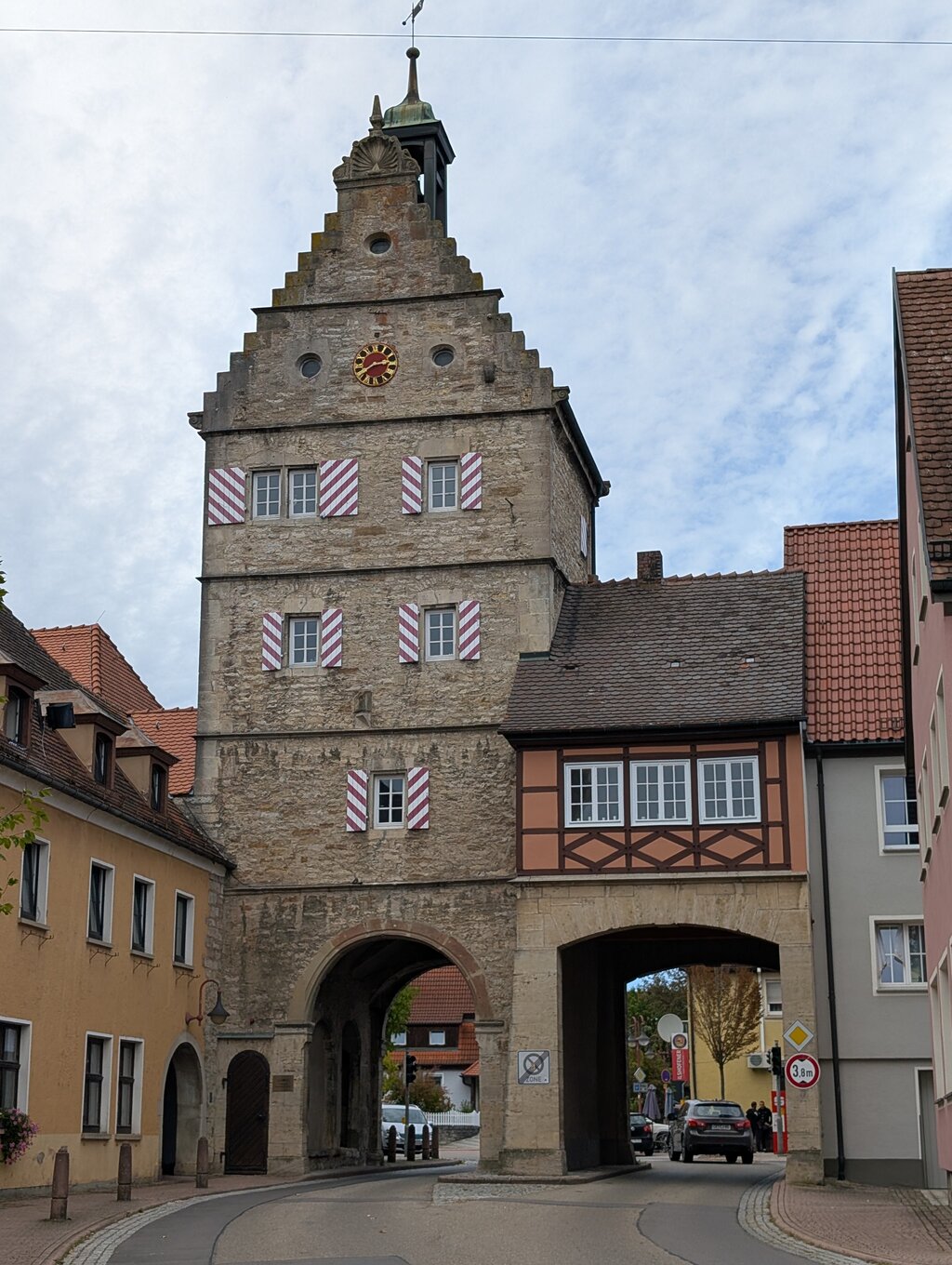
I roll down into Nördlingen, passing through the city wall—famously built from suevite rock containing microscopic impact diamonds—lock the bike in a sturdy cage at the hotel, and pull on my compact down jacket for dinner. The autumn evenings are getting cold; that jacket just earned its packing volume twice over.
Day 4: Bavarian Fairy Tales and the Oktoberfest Plot Twist (Nördlingen – Munich Suburbs, 124 km) #
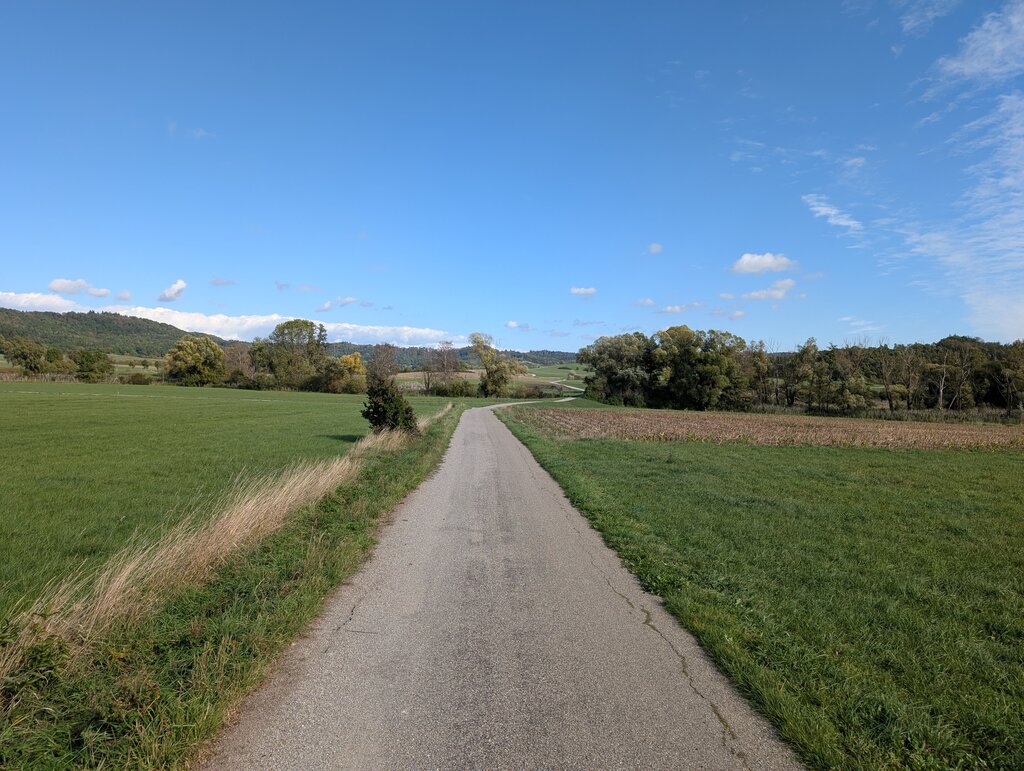
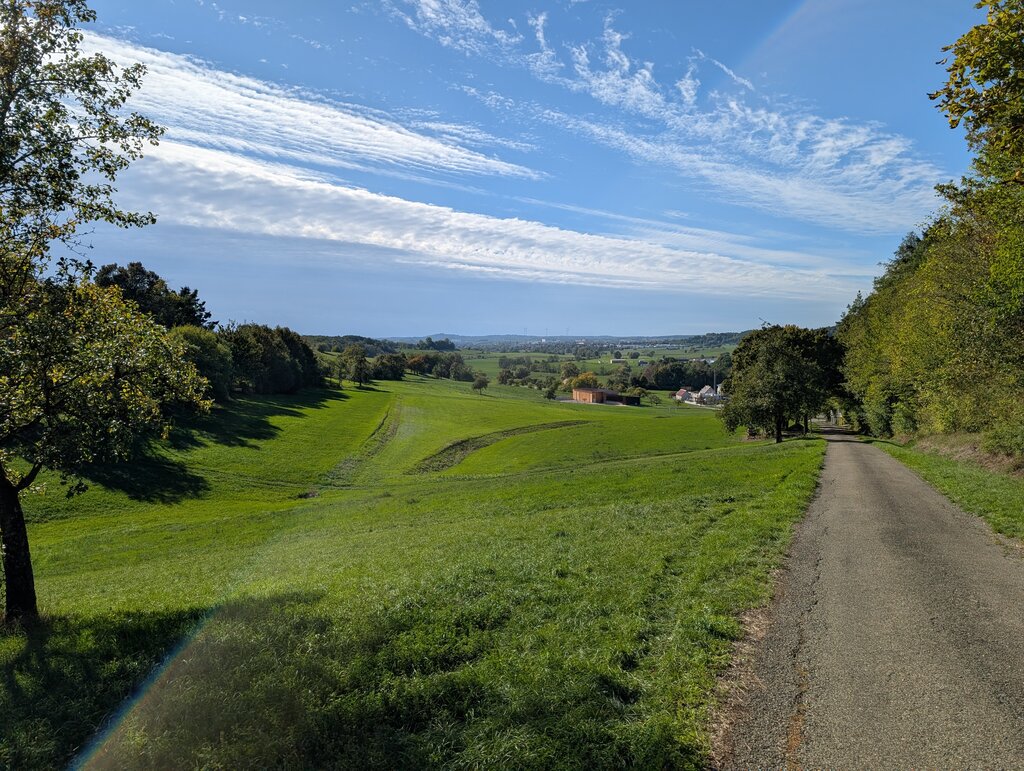
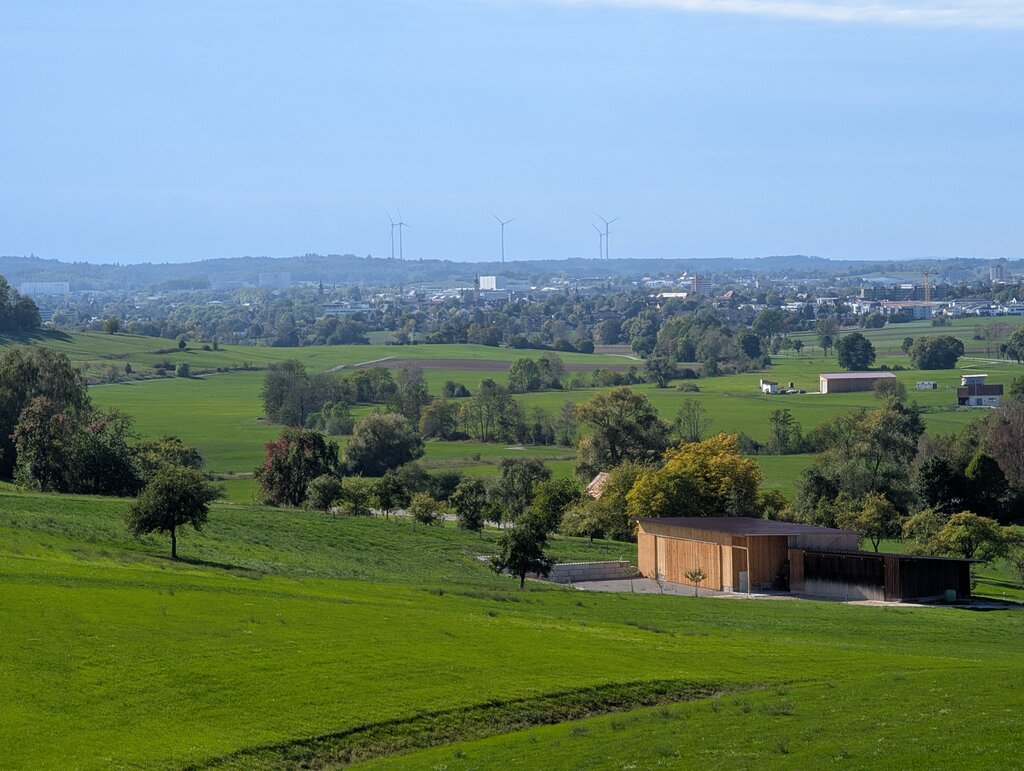
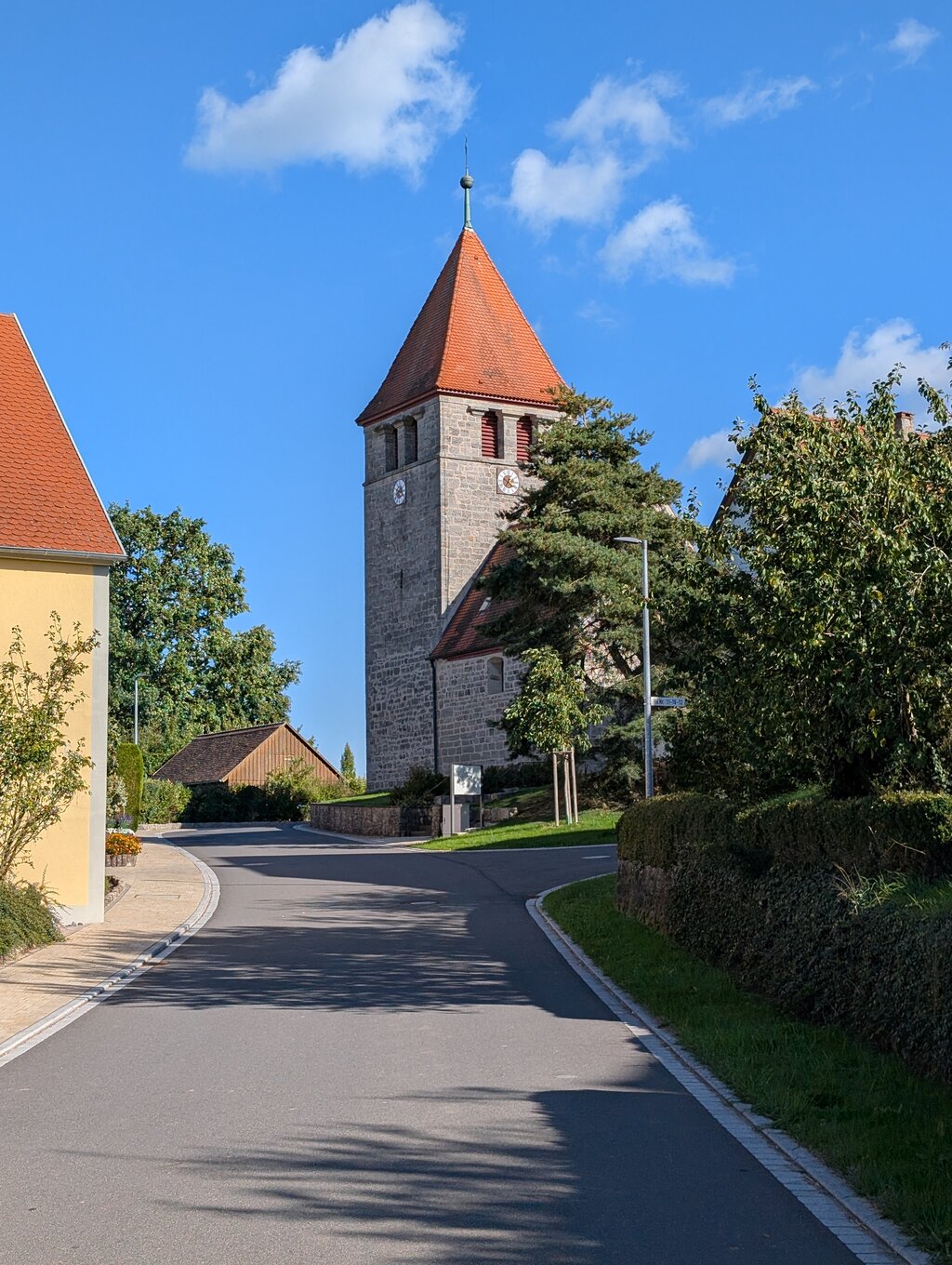
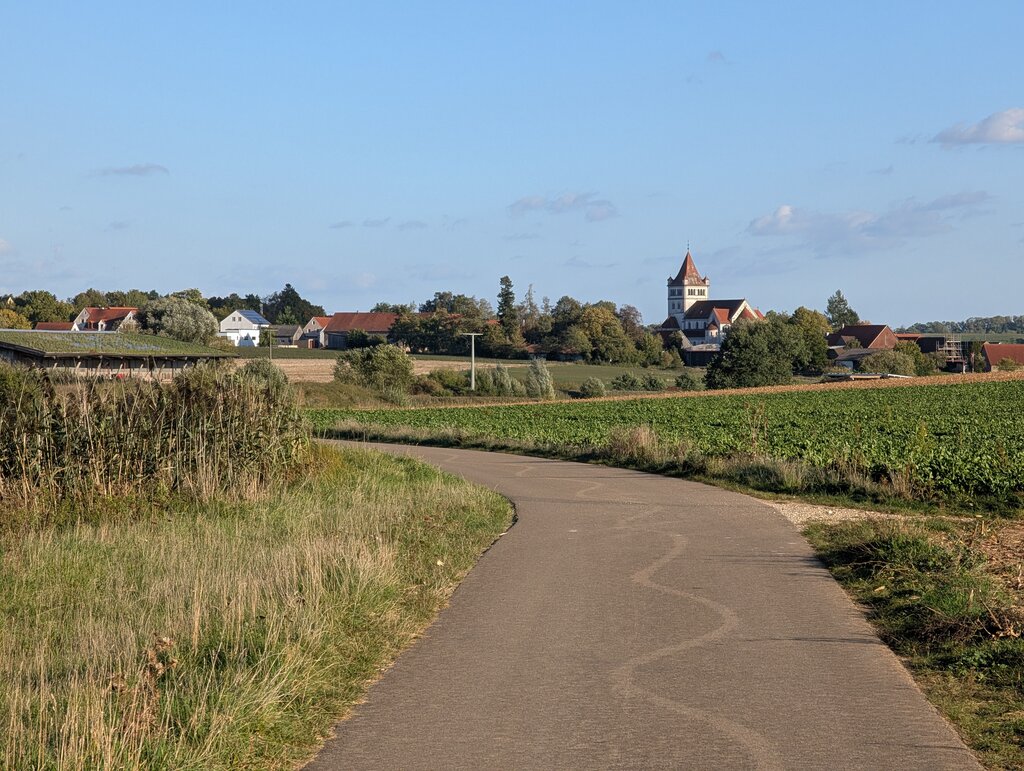
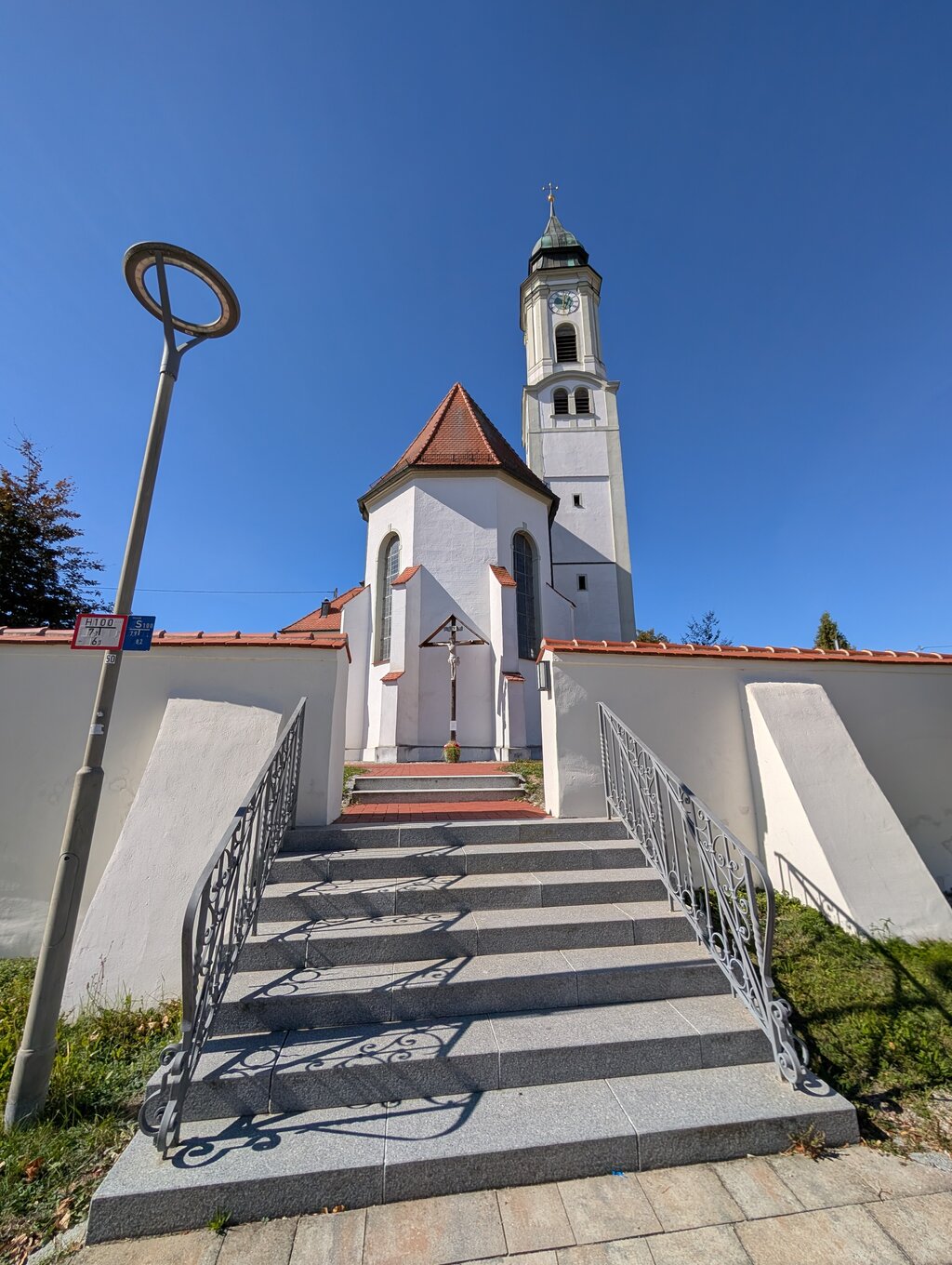
Icy blue skies and biting morning air. Arm warmers go on; bib shorts just barely make the cut, banking on the open, sunlit fields ahead to warm me up. Twenty minutes in, the strategy pays off. Riding in Bavaria is a joy—wide, fast bike paths running parallel to quiet roads, passing tiny churches and villages straight out of a storybook. It is very tempting to add another quote from a bavarian Heimatfilm I was tortured with as a kid, but I think the impression does not require and details.
Originally, I had planned to ride straight into Munich today and meet up with my old Trans-Alp cycling crew for dinner. However, my spontaneous scheduling overlooked one minor local detail: Oktoberfest. Munich was completely booked out, loud, and chaotic.
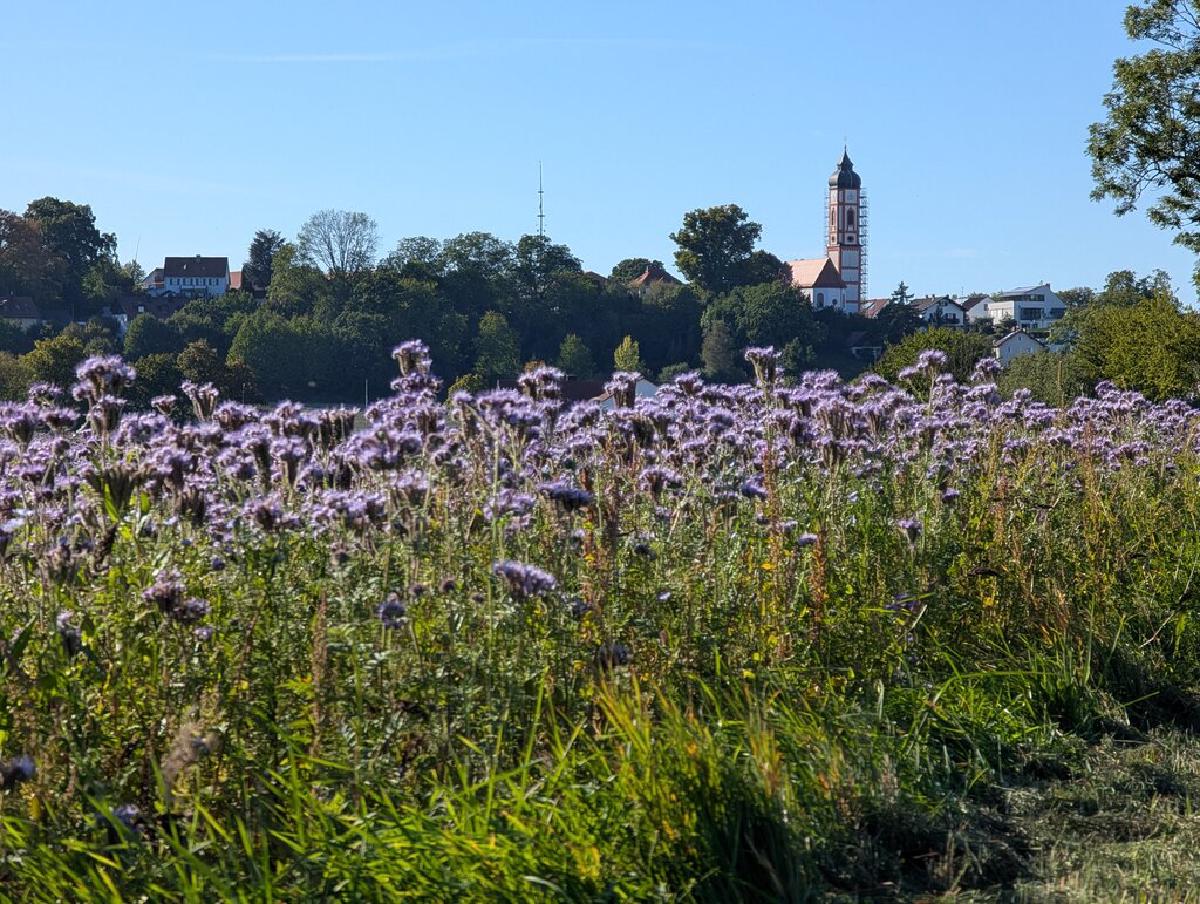
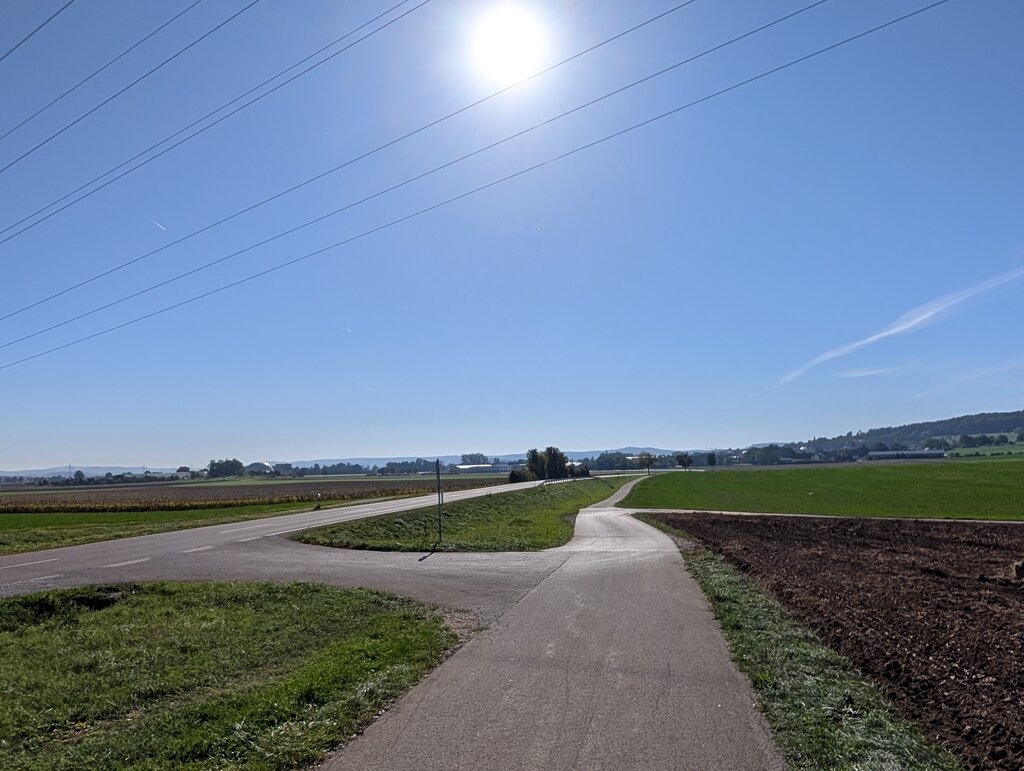
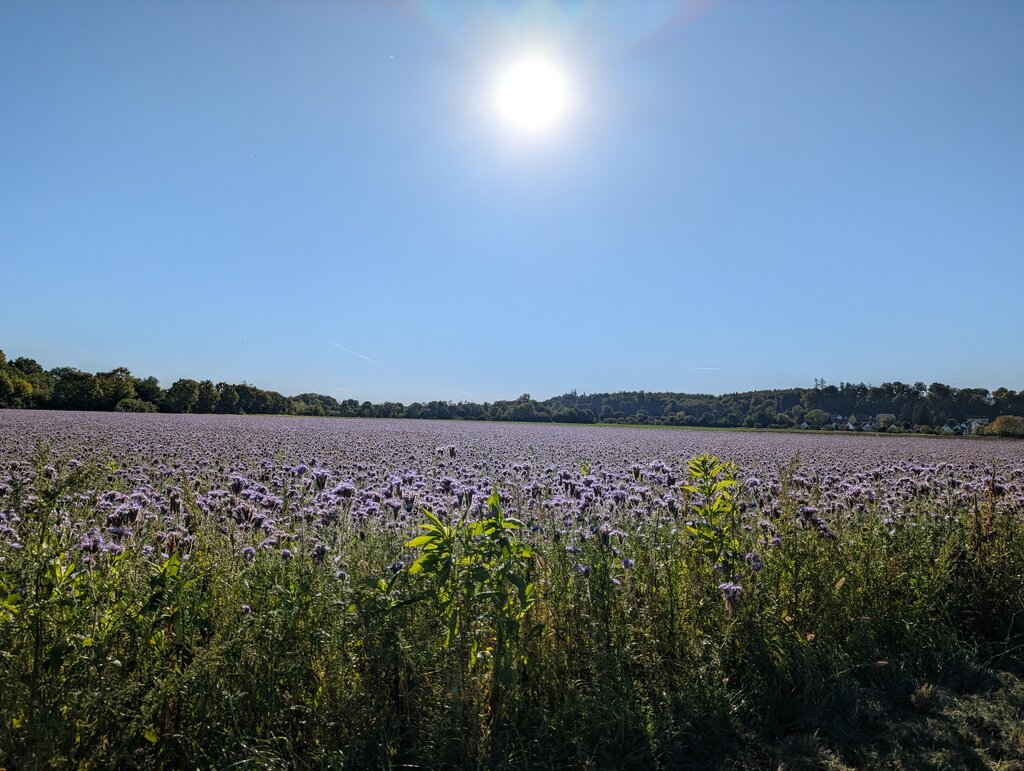
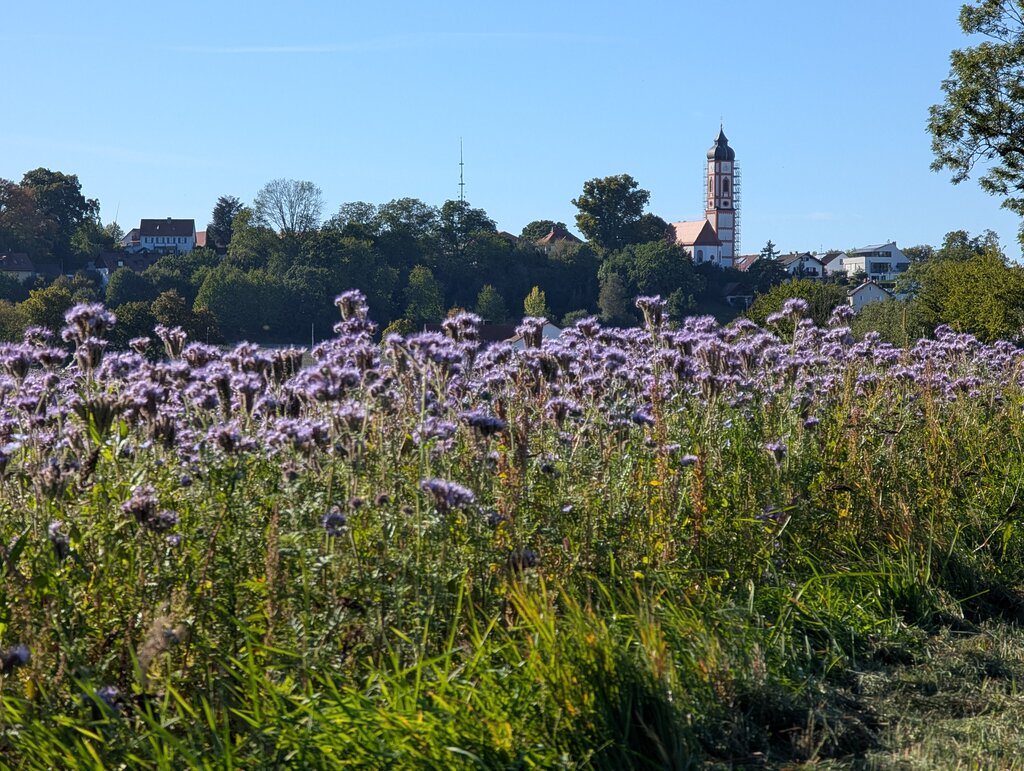
Thankfully, a cycling buddy offered me a sofa in a quiet suburb just outside the city. With a relatively short 124-kilometer stage ahead, I settle into the aero bars and cruise south at a steady 35 km/h. By 16:00, after riding past a field that looked and smelled unexpectedly like lavender, I reach my friends doorstep. A hearty Bavarian dinner and plenty of bike talk wrap up the final full day in the saddle.
Day 5: Dirndls, Marienplatz, and the Deutsche Bahn Adventure (Munich) #
Day 5 is essentially a Victory Lap. After a relaxed breakfast, a walk, and a deep dive into nerd topics, I roll out just before noon for the final few kilometers into Munich.
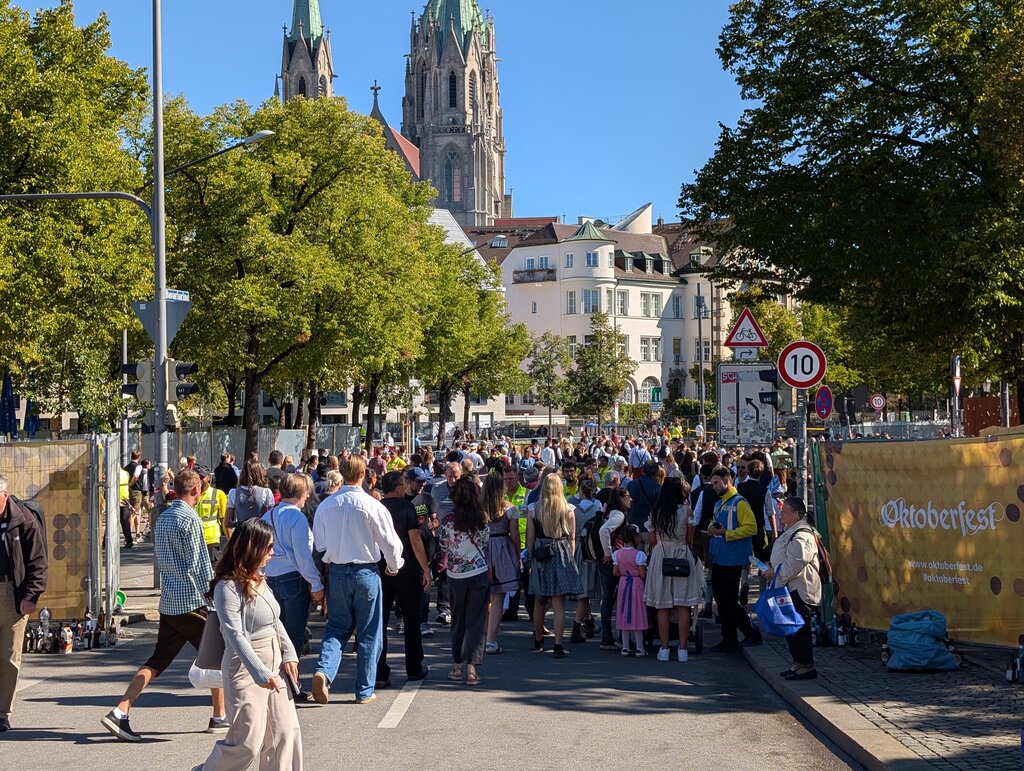
Minutes later, I snap the mandatory city-limit sign photo. The closer I get to the city center and the Theresienwiese, the higher the density of Dirndls and Lederhosen becomes. It feels like walking onto an American film set depicting every German cliché at once. At one point, I pass a grand hotel staircase swarming with brightly dressed festivalgoers—and standing right in the dead center, completely unfazed in a sharp black suit, is a striking hotel receptionist acting as the calm eye of the storm. It would have been the photo of the trip, though I kept rolling.
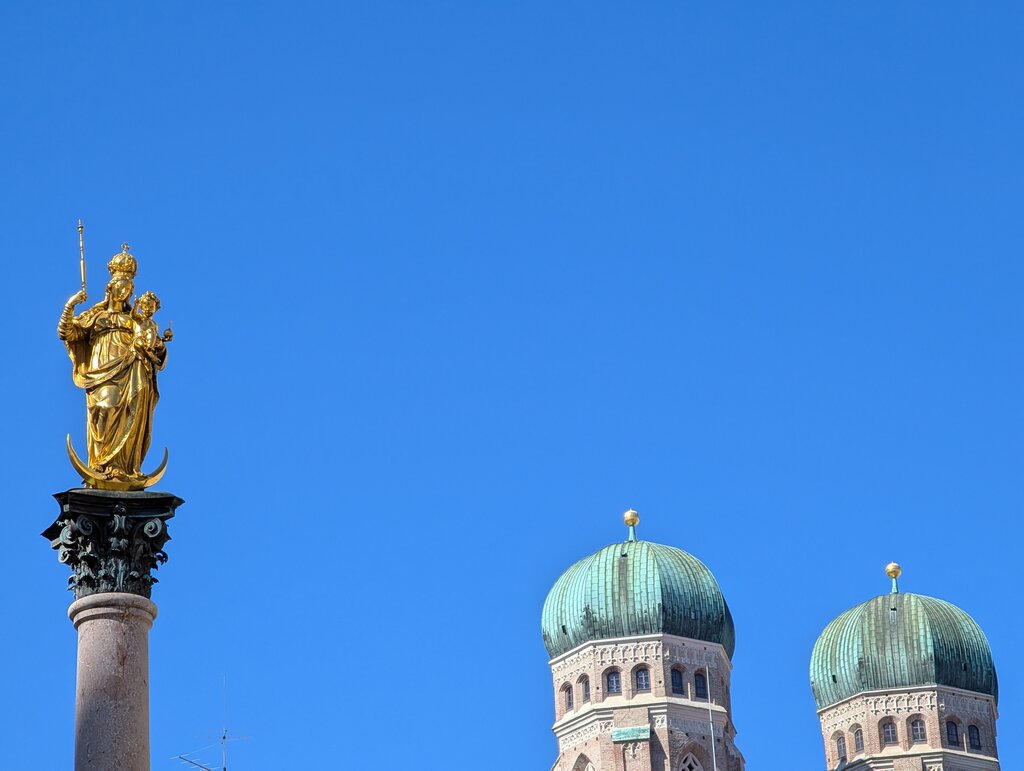
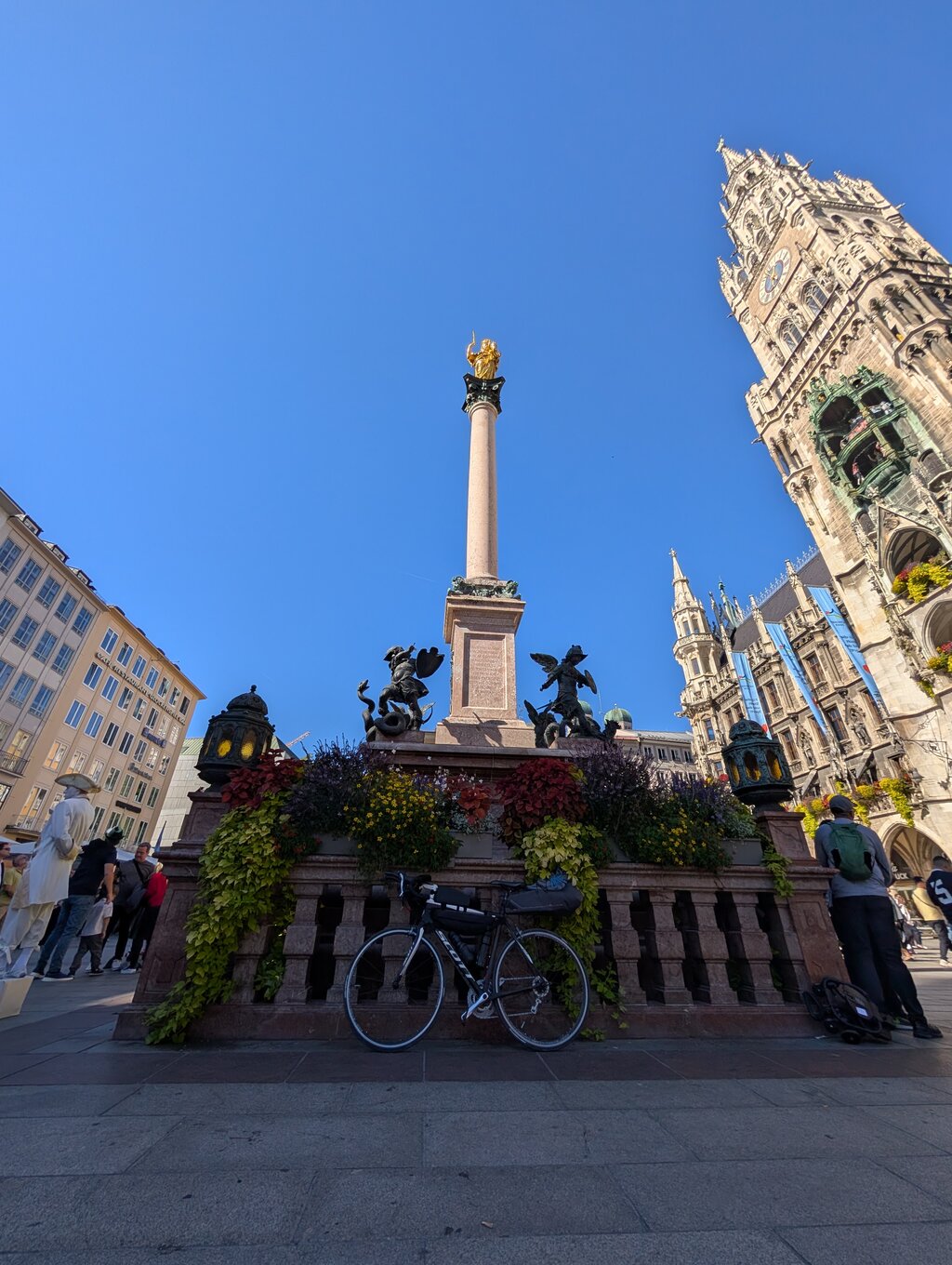
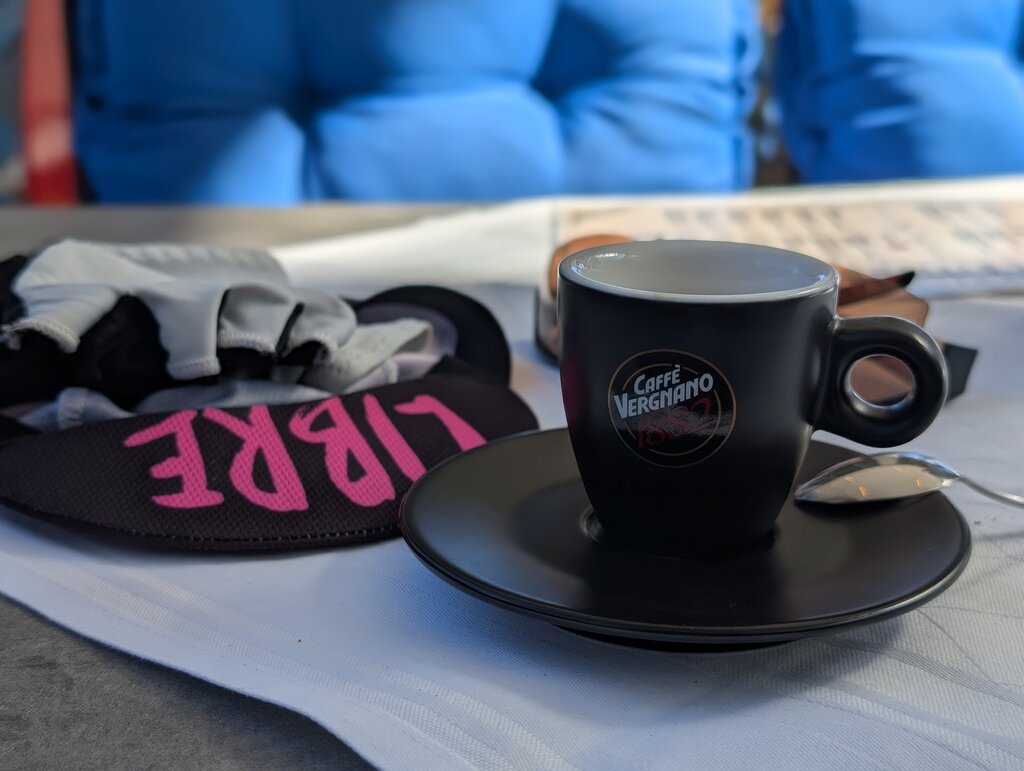
Surprisingly, Marienplatz is relatively calm. I take my official finisher photo in the heart of the city, grab a quick pizza and an espresso, and roll the final meters to Munich Central Station. On the platform, I pull out my ultralight transport bag, disassemble the bike to comply with luggage rules, and board the train.
Navigating a long-distance journey with Deutsche Bahn is always an adventure in its own right—but today, I couldn’t care less. Leaning back and watching the landscape blur past the window, the mission is complete.
The graph is connected. The gap is closed. From the northern lighthouse on Texel all the way across the Alps to lake Garda, it is now one continuous line. Rumor has it that Dijkstra came up with the idea for his algorithm while shopping with his wife in Amsterdam, utterly baffled by her—let’s say—recreational route through the stores. When he pitched his optimization concept to her over a coffee break, she was reportedly less than impressed. With a smile on my face, the train pulls out of the station.