Day 1 : Solingen - Ossendrecht (from the Rhine to the gates of Zeeland) #
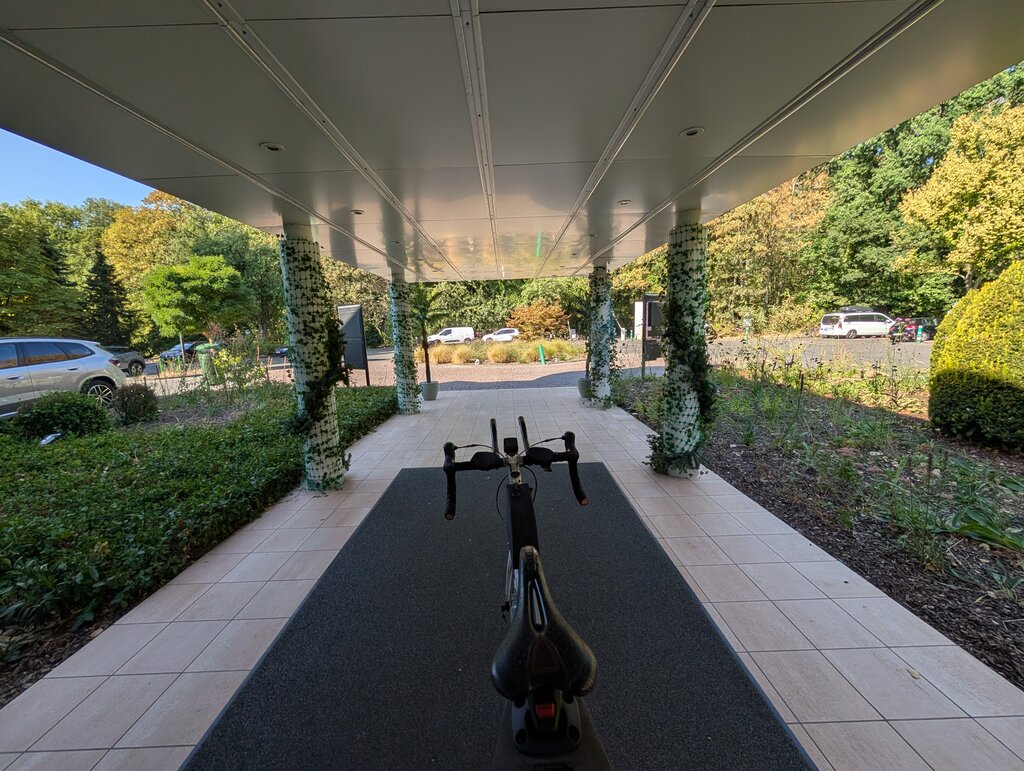
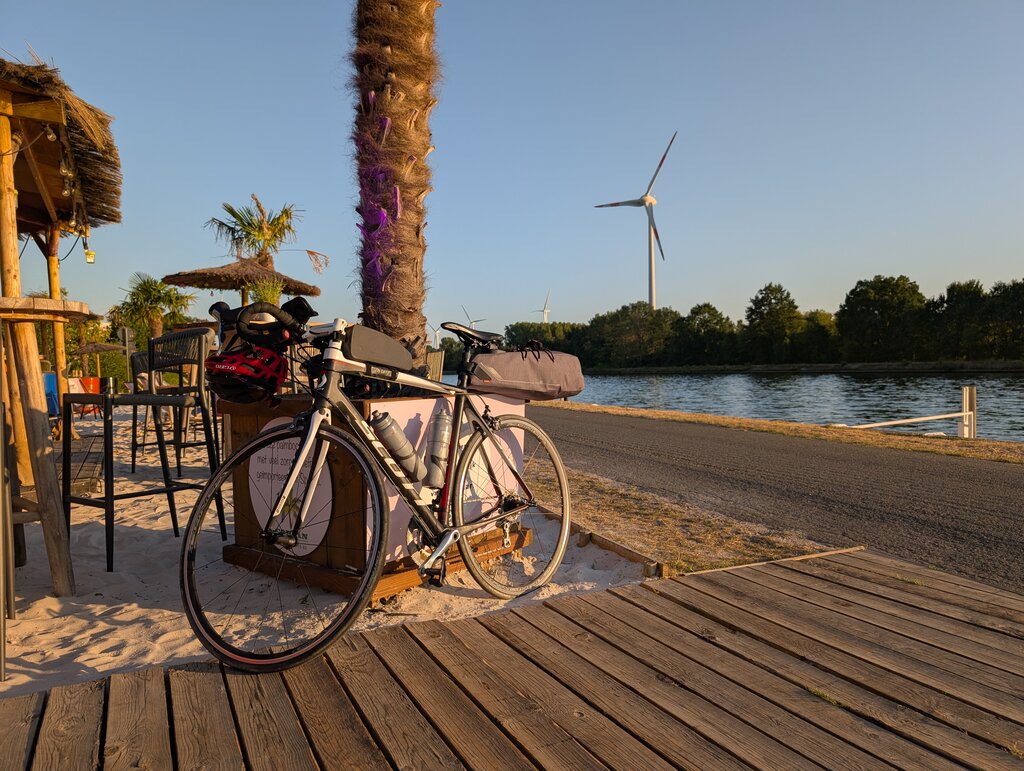
It was a rather spontaneous decision to head towards the ocean to watch the eclipse. The route was clear instantly - lets head to the Netherlands, have a trip across Zeeland, catch the Ferry at Vlissingen harbor and set sails towards Oostende, Belgium. Consequently, the morning was spent doing what always happens on short notice: final checks and squeezing the last essentials into my bike bags. Around 10 AM, I finally rolled out of Solingen, heading west towards the Dutch border.
The destination for the day was set: a small, quiet village right at the gates of Zeeland, with a reasonably priced hotel - a not-so-frequent event in the Zeeland province.
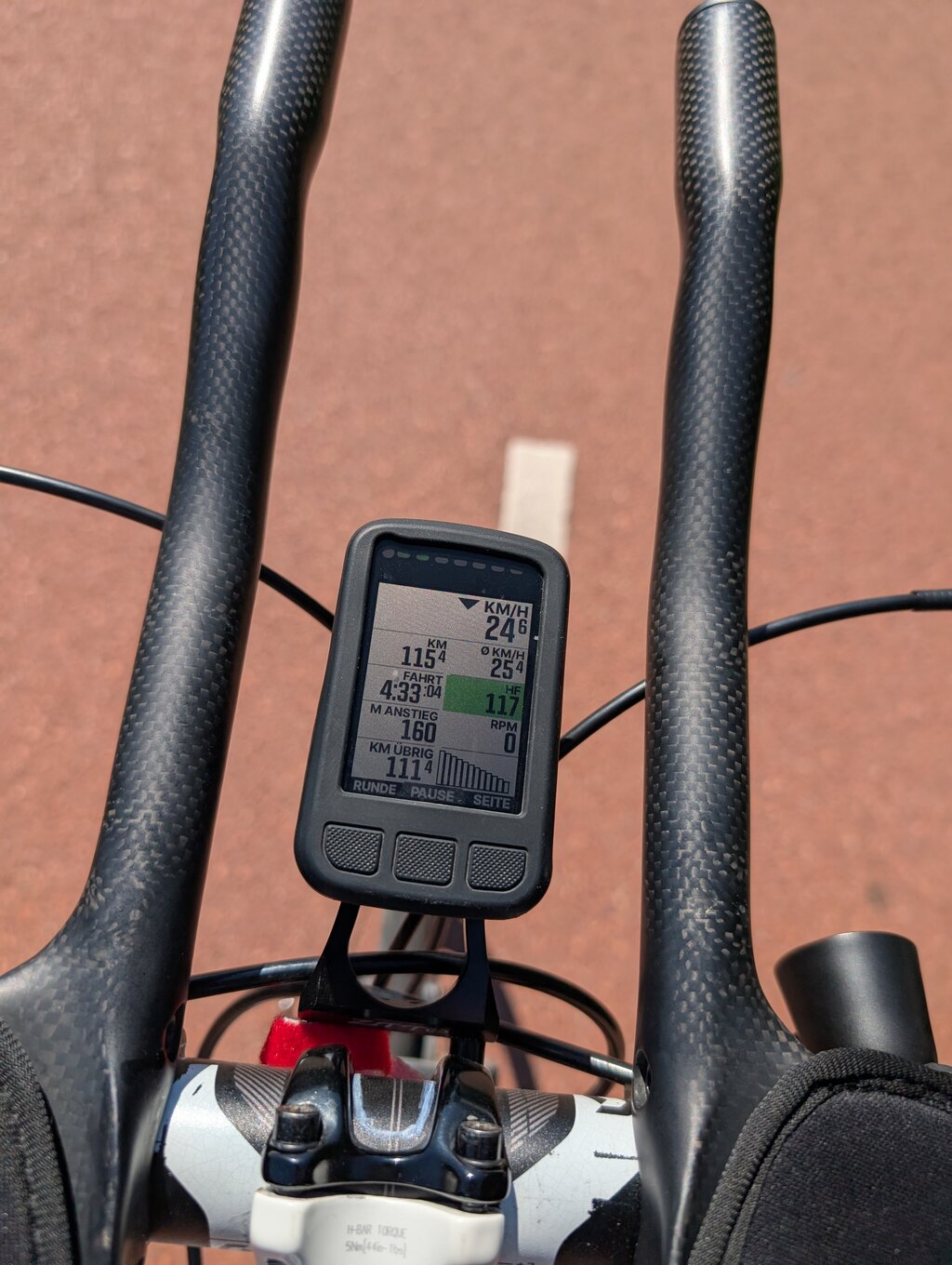
Just a few turns away from home, that familiar, addictive feeling set in—the point of no return. Time to dial in the strategy for the day. A steady pace of around 26 km/h felt like the sweet spot: fast enough to make progress, but conservative enough to save enough energy while accounting for the headwind that is almost guaranteed when heading west. With temperatures hovering around 28°C, the assignment was clear: maintain a high cadence, manage the effort, and stay on top of fueling and hydration. Do not forget about sunscreen. Today, the roads towards the city limits are not supposed to bring me to the forest, the mailbox or a restaurant - they mark the start of a 230km journey towards the ocean.
Starting at 10 AM meant I was on a somewhat tight schedule. To shave off a few kilometers on familiar tracks and save time for exploring new roads in the Netherlands, I decided to cut directly through Düsseldorf instead of taking the long scenic detour. A decision I almost instantly regretted upon first contact with the local traffic and its 1960s cycling infrastructure. After resorting to my usual coping mechanism for urban German bike paths—ignoring them entirely and taking the lane—I eventually made it to the bridge crossing the Rhine towards Neuss.
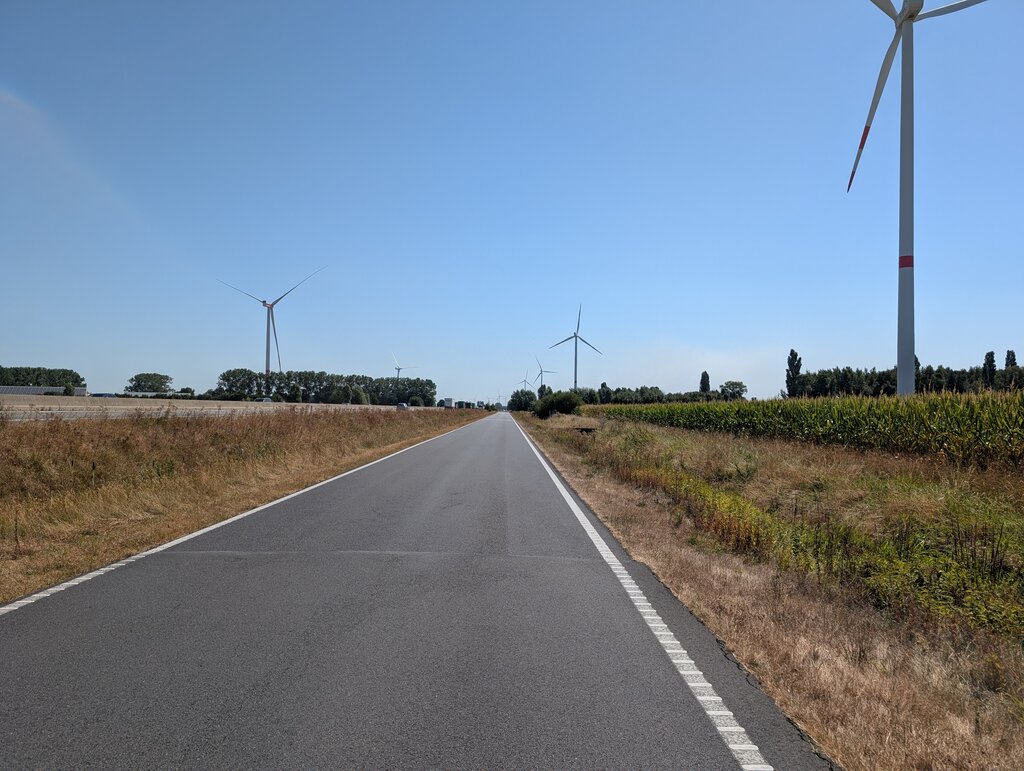
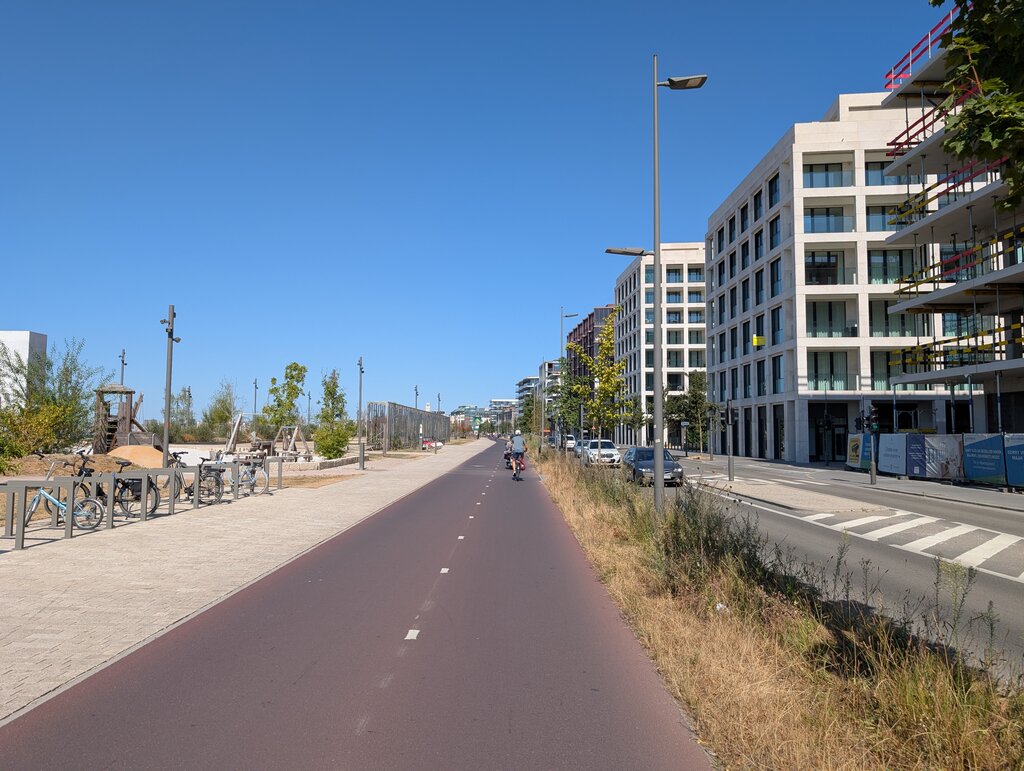
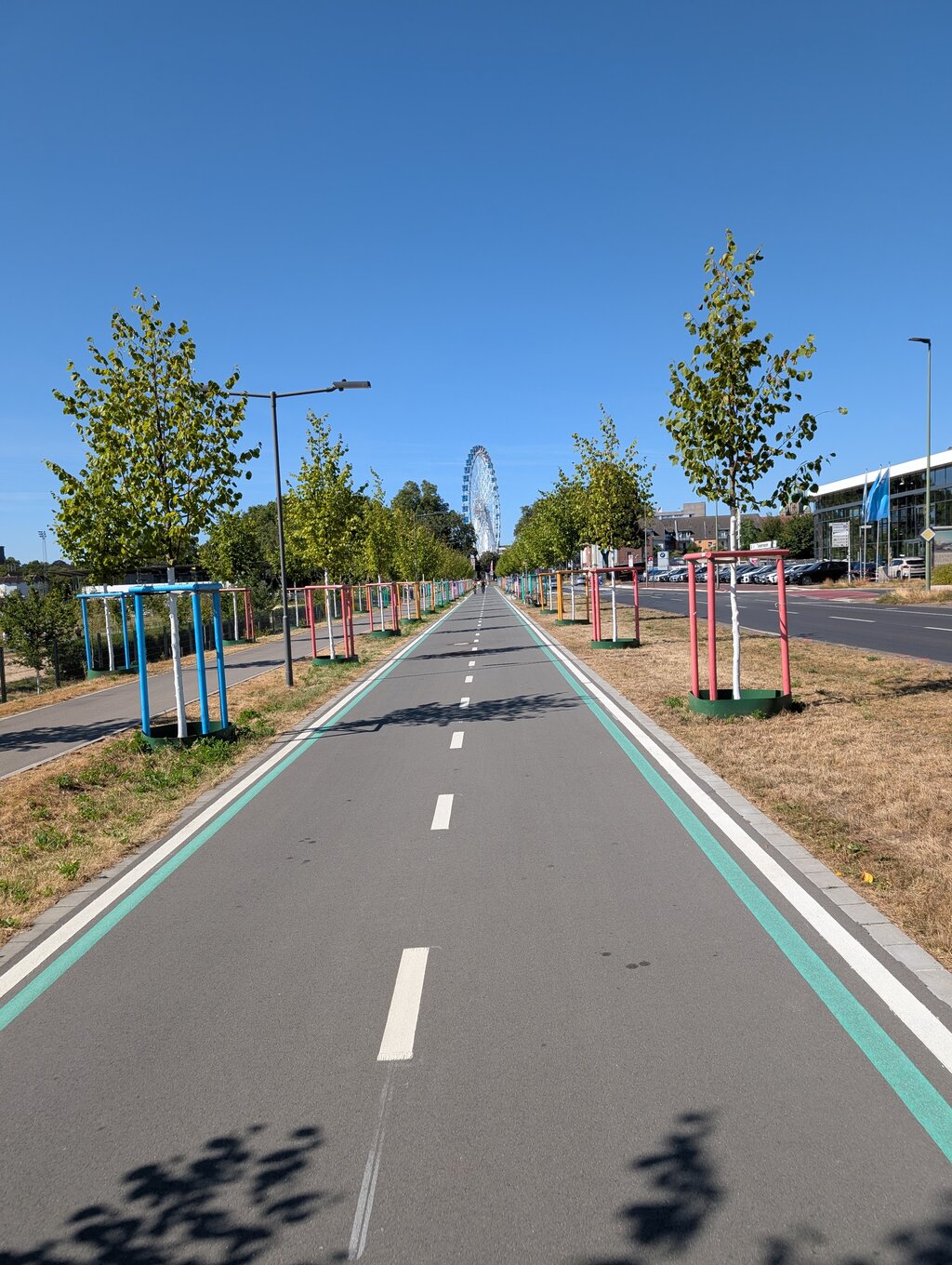
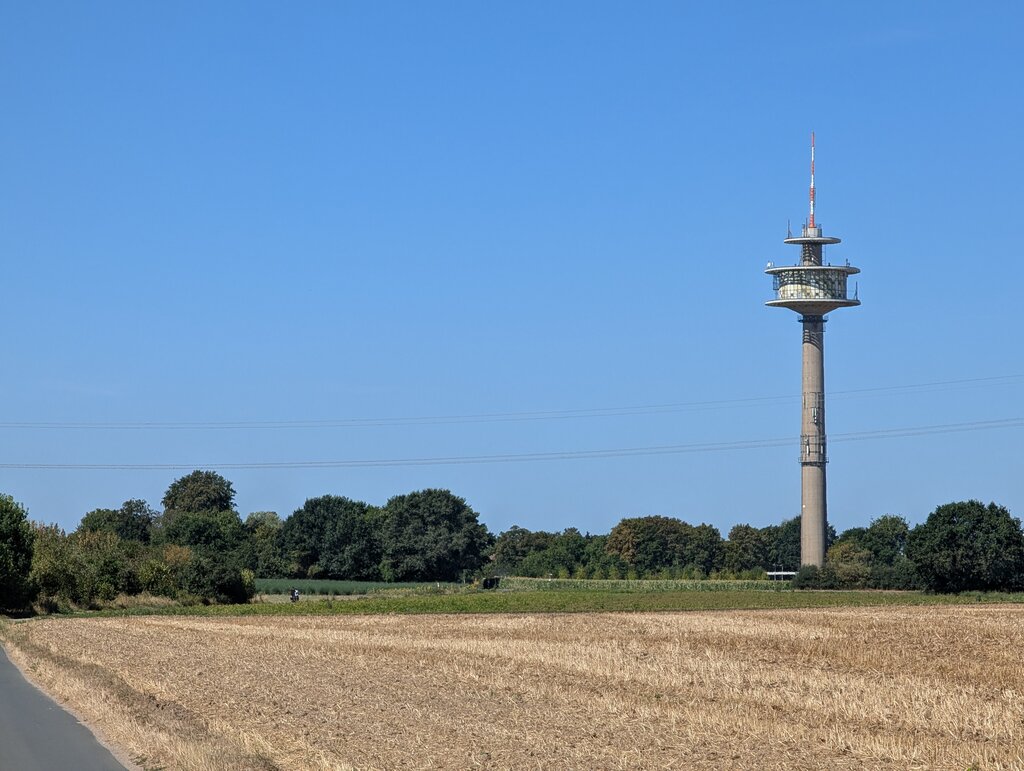
Interestingly, Neuss delivered a pleasant surprise. In my memory, riding through town had always been a, lets say, unpleasant affair. But they’ve done their homework: a newly established bike highway guided me from the river right into the city center. A few minutes later, the urban congestion faded away, giving path to open country roads pointing towards the border. The number of traffic light stops went down towards zero, the roads went through open fields, and some stretched out long enough to have a 10-minute ride in the aero bars. The trip counter on my bike computer started to slowly approach the remaining kilometers counter - from a far distance though.
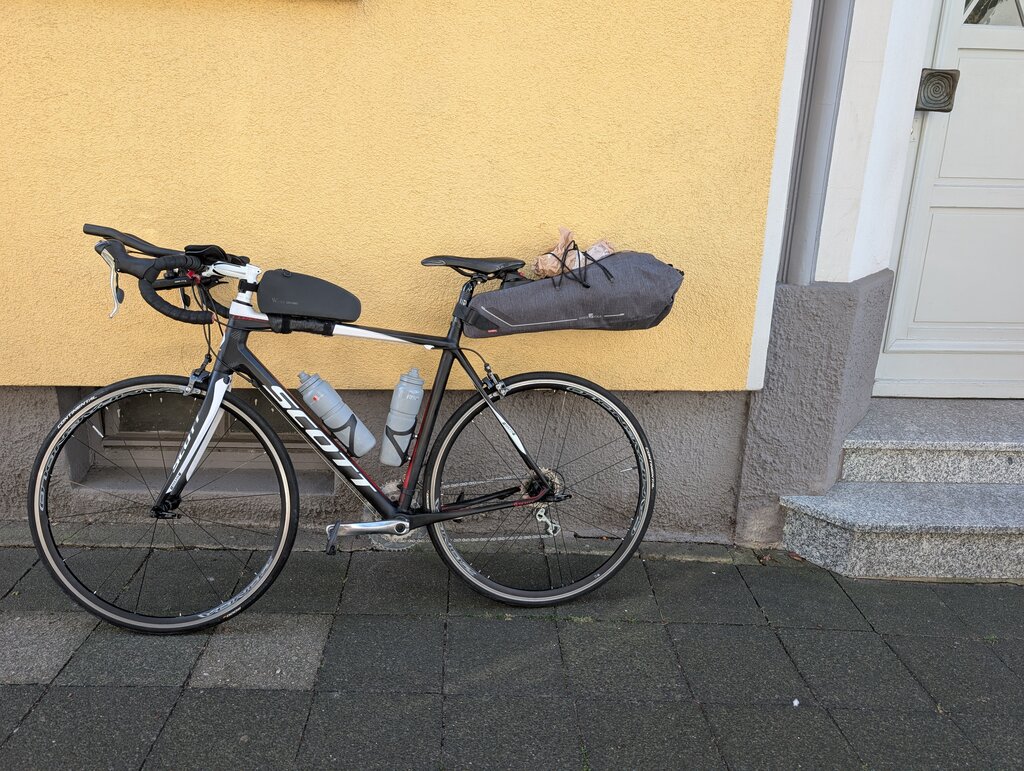
Just outside Viersen, I pulled over for a quick sanity check. Something felt off with the rear wheel, and I wasn’t sure if it was a slow puncture or just a terrible road surface. Fortunately, it was neither—just the massive cantilever effect of a fully loaded saddlebag altering the handling of my road bike. While checking the tire, a curious local dropped by for a chat, genuinely fascinated by the setup and the idea of riding to the coast. He wished me a great trip and good luck before he jumped back on his electric bike on his way to the bakery.
Back on the road, the quirky encounters continued: I briefly shared the road with a recumbent rider on a modified classic Baron recumbent, towing a custom trailer—a literal rolling micro-home on a European tour. His final destination for this summer: Lake Garda, via the Brenner. After a chat about the Brenner transalpine route from Munich, which I rode last year, each of us continued on their route.
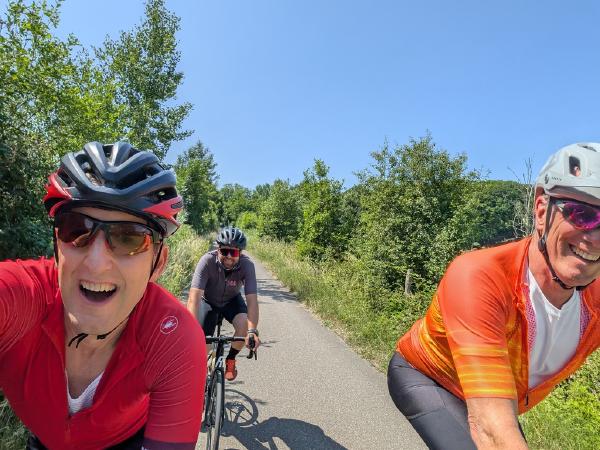
Just some minutes later, I picked up a fellow cyclist who had also started in Düsseldorf. Exhausted on what was meant to be a test ride, he kindly asked if he could draft behind me for a few kilometers. I happily took the front, pulled him all the way towards the last railway station in Germany, Kaldenkirchen.
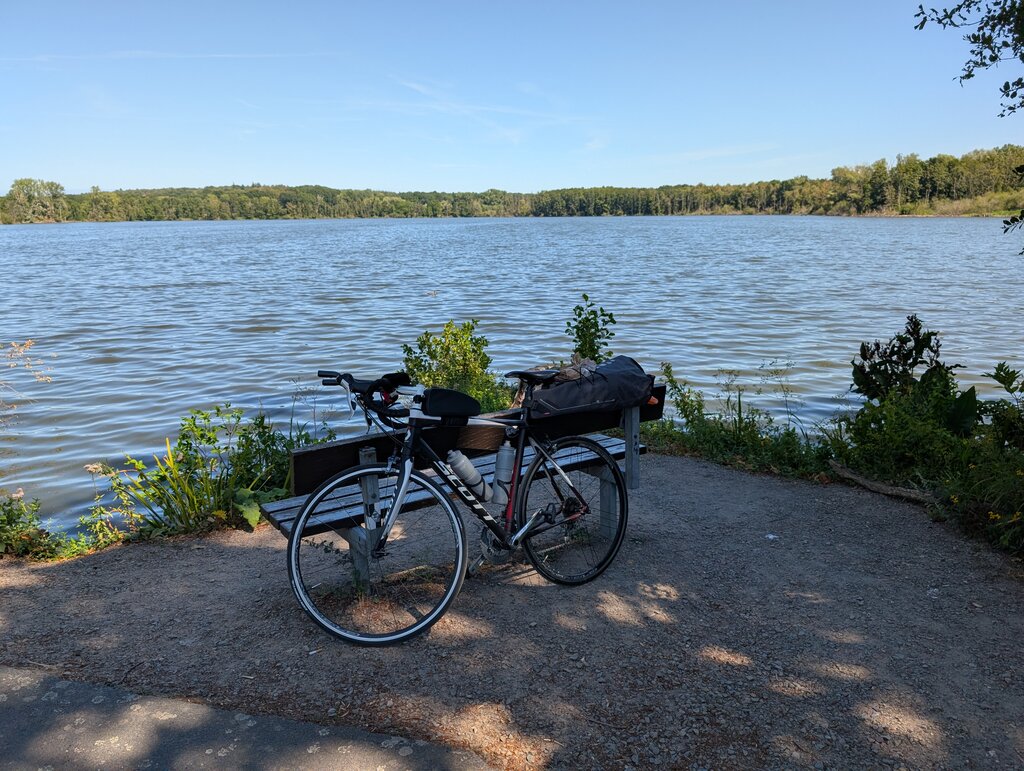
After a little stop on a lake next to Nettetal, where I happen to stop nearly every time when I ride in this area, chatting with a local who ditched his engineering job early before pension to volunteer as an ornithologist, I took a let bend through a forest section—where the tarmac suddenly degraded into military-grade concrete slabs—and before I knew it, the gliders of Venlo airfield appeared on the right.
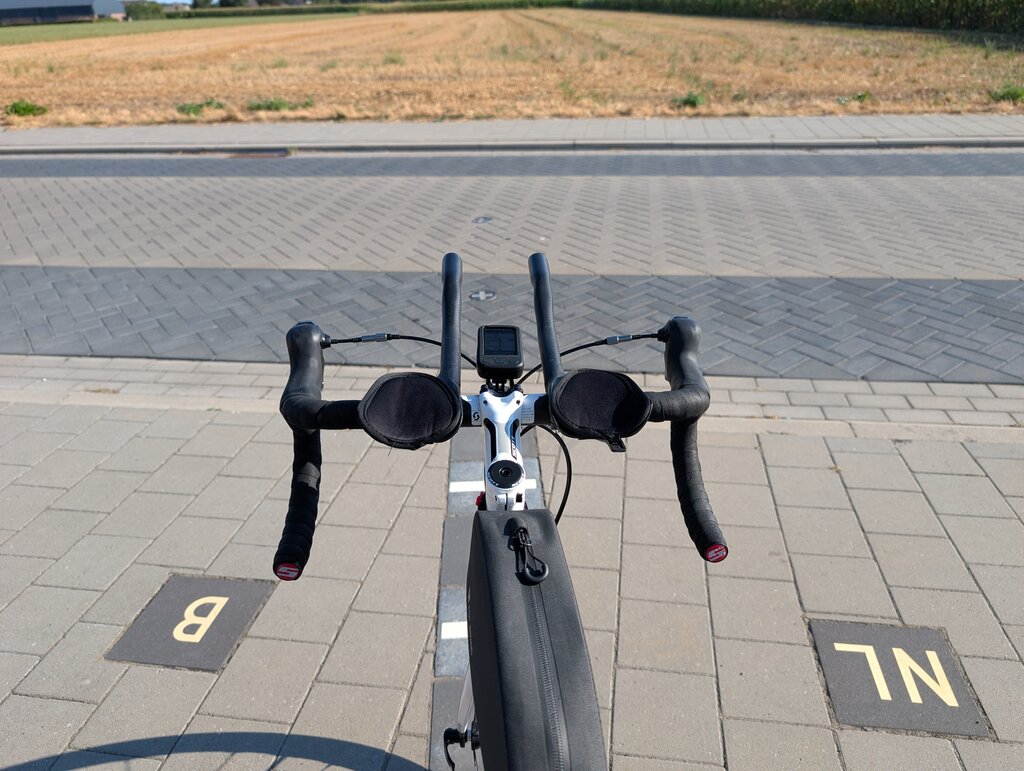
Just like that, I was back in the Netherlands. Although I grew up in Aachen and customs never were an issue to me, it still feels both strange and fascinating to cross a border with absolutely no hassle. Smiling, I remember a German politian joking about how a bad deal is to vote for extremist parties - one wants to close the borders, the others want to steal your car.
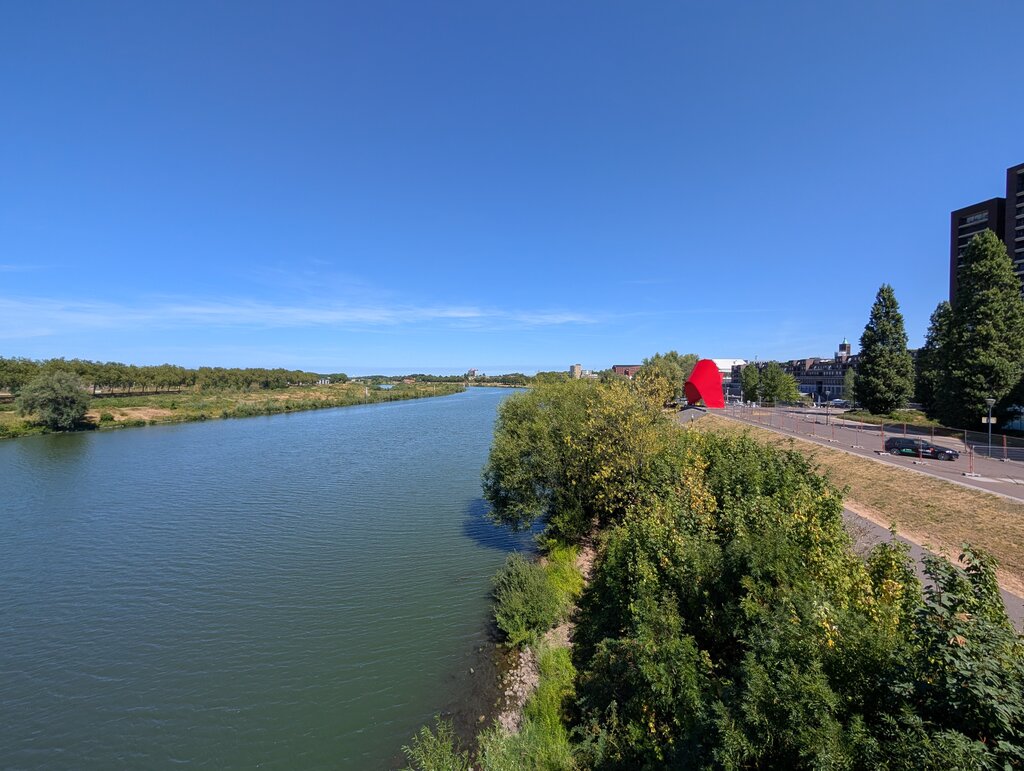
Venlo is familiar territory, and the routine is muscle memory: navigate through the city center towards the railway station, ride past the fries place I usually stop at on a day ride, hop onto the excellent cycle paths, cross the River Maas, and hit the fietssnelweg heading towards… Amerika (yes, that is an actual town in the province of Limburg).
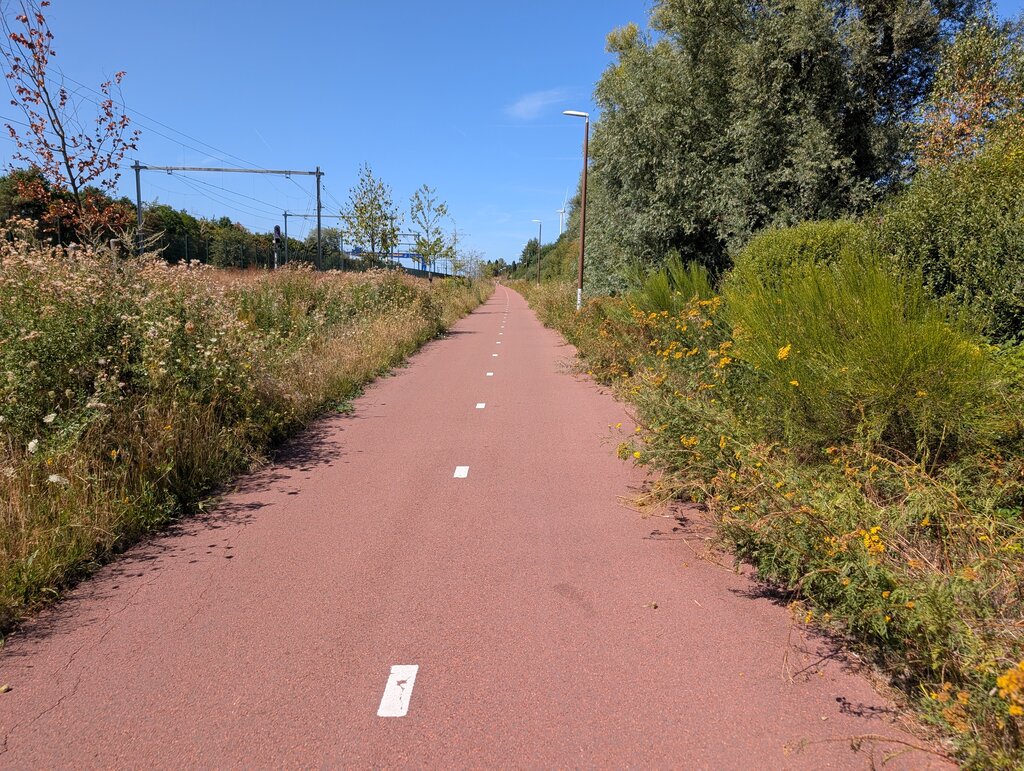
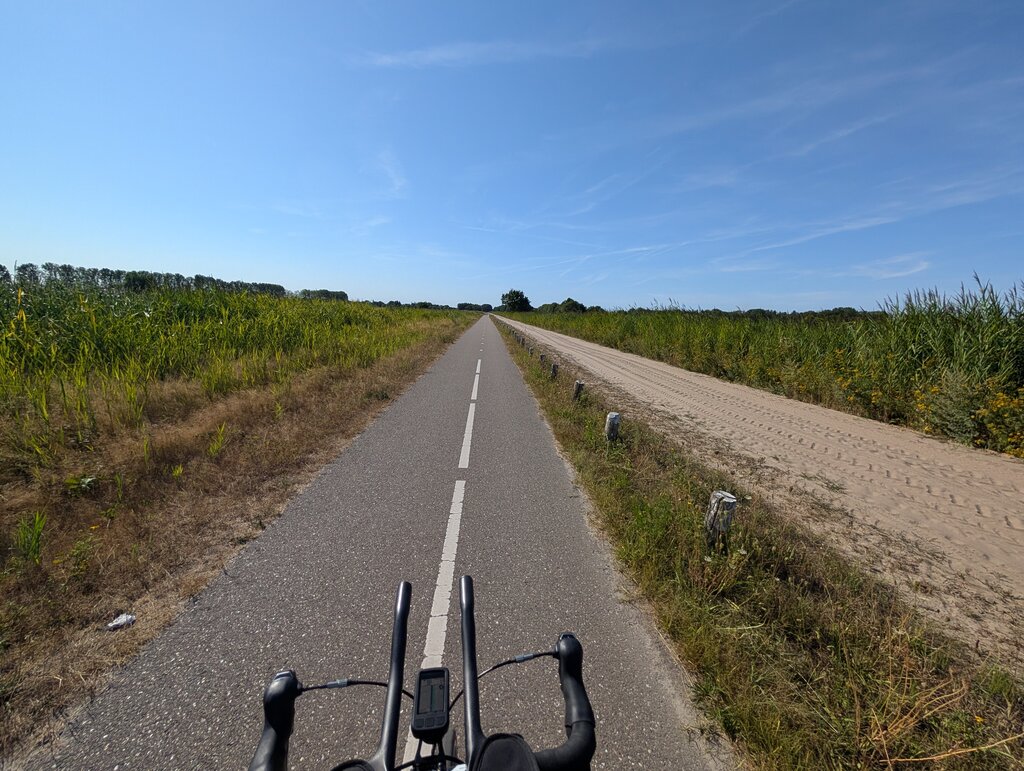
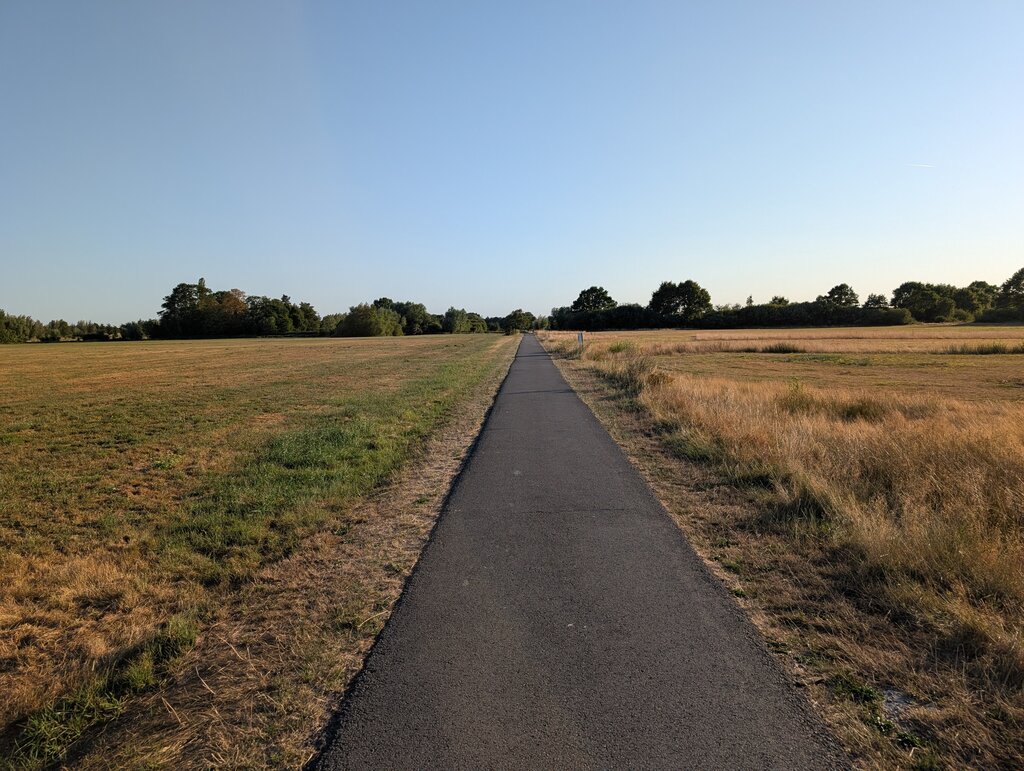
From this point on, it became the quintessential Dutch cycling experience. Excellent asphalt, the steady hum of my tires, and a favorable wind shift. Most of the time, I was cruising well above 30 km/h on the aero bars without spending too much energy. The hours melted away, only interrupted by quick photo stops and brief refills at public drinking fountains (a piece of infrastructure Germany desperately needs more of!).
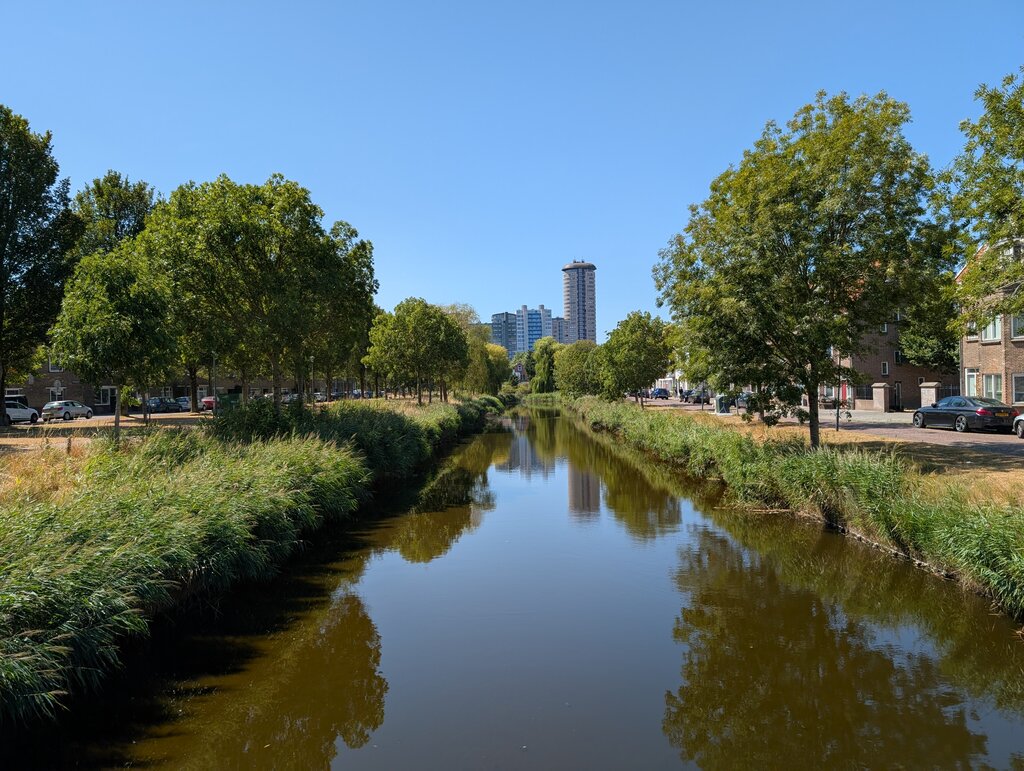
Some small towns passed by, some typical dutch channels, too. Riding through Eindhoven went like a charm.
Late in the afternoon, I reached Baarle-Hertog, a place famous for its mind-bending enclave border situation between Belgium and the Netherlands. While the complex history of the town is well worth a deep dive, the town center itself felt a bit depleted—quiet streets and empty storefronts waiting for new life.
After another stretch of crossing back and forth between Dutch and Belgian territory, I finally rolled into Ossendrecht—a small town right on the border and essentially the last stop before entering Zeeland.
The stats for Day 1: 230 kilometers, a 28 km/h average pace, and a very satisfied rider.
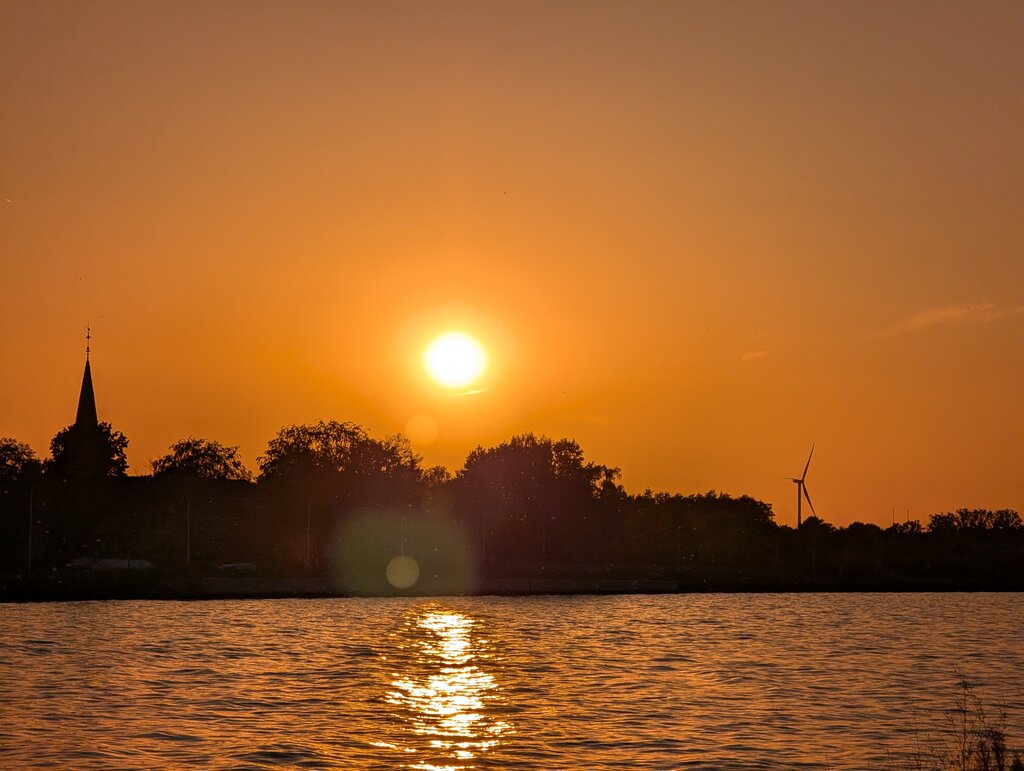
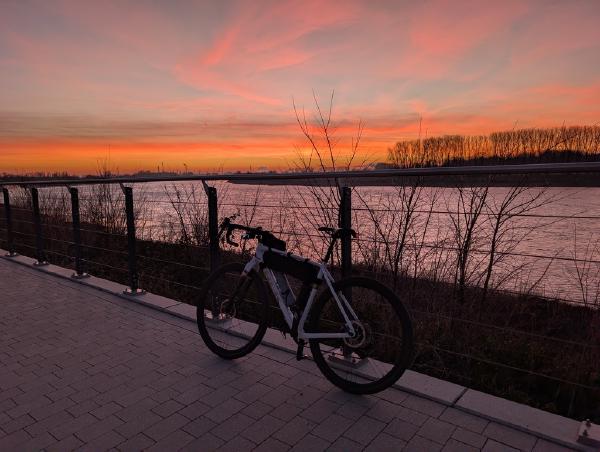
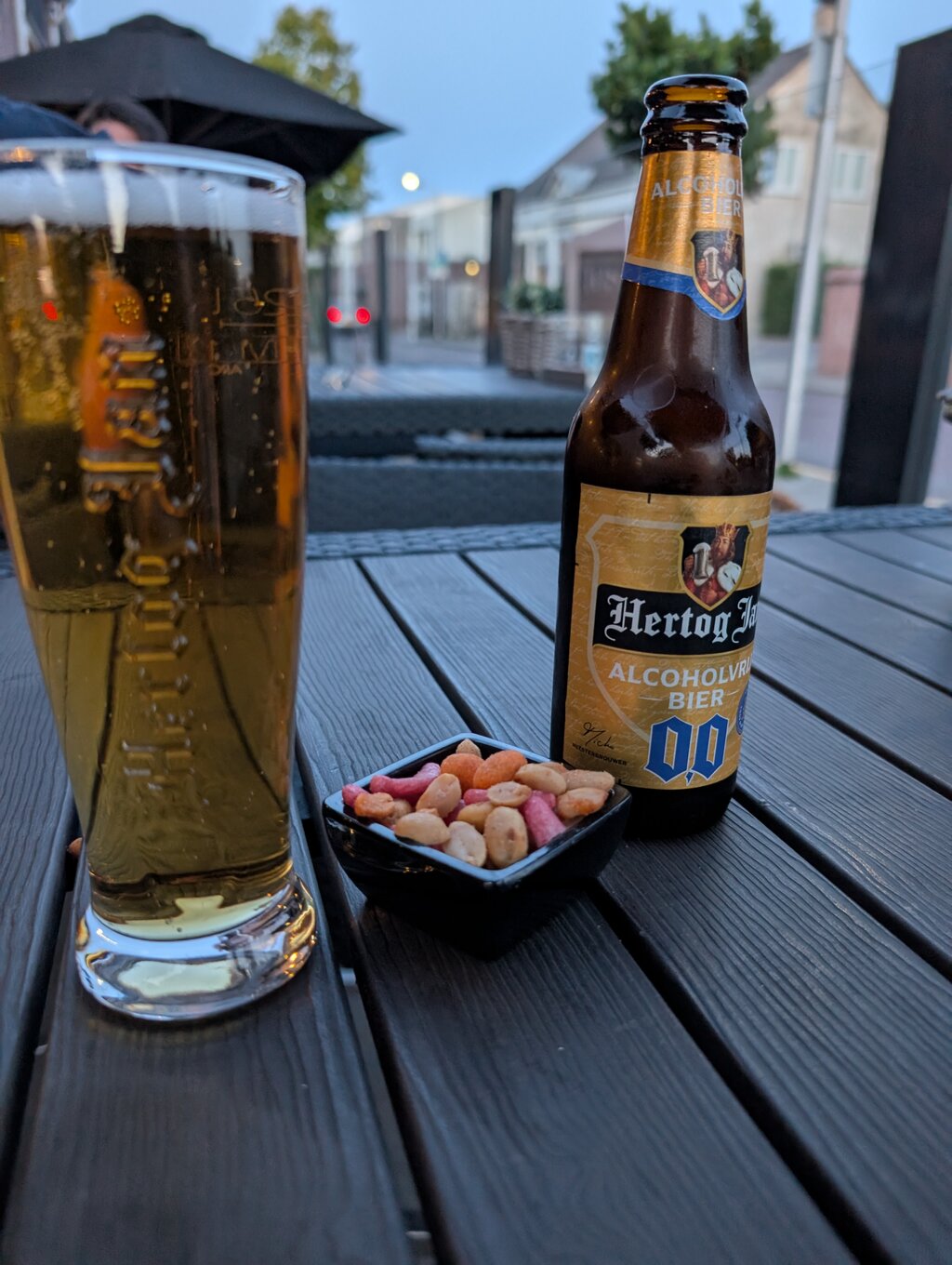
I called it a day over a massive plate of pasta and cold drinks to kickstart recovery. Sitting back, watching the first sunset of a multi-day ride… there are very few things in life that feel more like pure vacation than this.
Last night before the solar eclipse. Good night!
Day 2 : Ossendrecht - Brugge - Oostende #
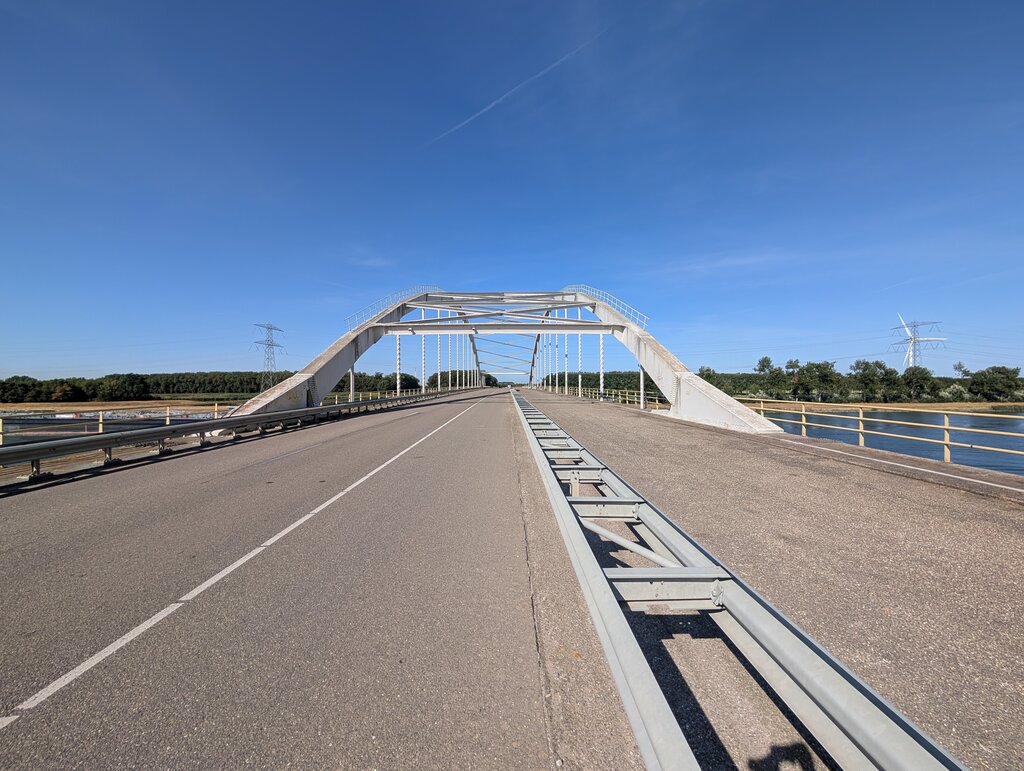
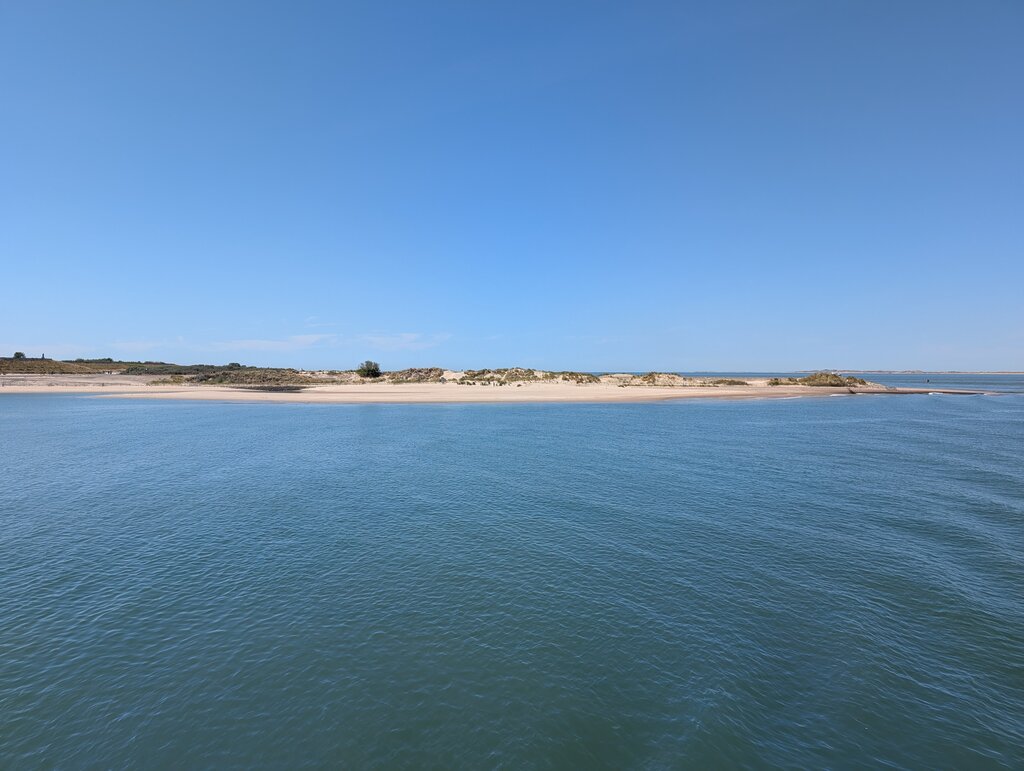
An “I’ve got plenty of time” morning start after a long, relaxed breakfast, and within minutes, I was crossing the bridge into Zeeland. Leaving the mainland behind, the landscape immediately opened up—vast skies, a crisp sea breeze, and that unmistakable coastal quietness. My nose couldn’t be mistaken: the heavy salt in the air clearly announced that the ocean was nearby.
Before getting into full cruising mode, I got completely derailed in Krabbendijke. What was supposed to be a quick glance at a local bakery turned into a 30-minute stop—hanging out in the morning sun, indulging in local sweets, and simply watching the water of the inlet. No regrets, no apologies for lost moving time; these mini-resets are an essential part of the deal outside races.
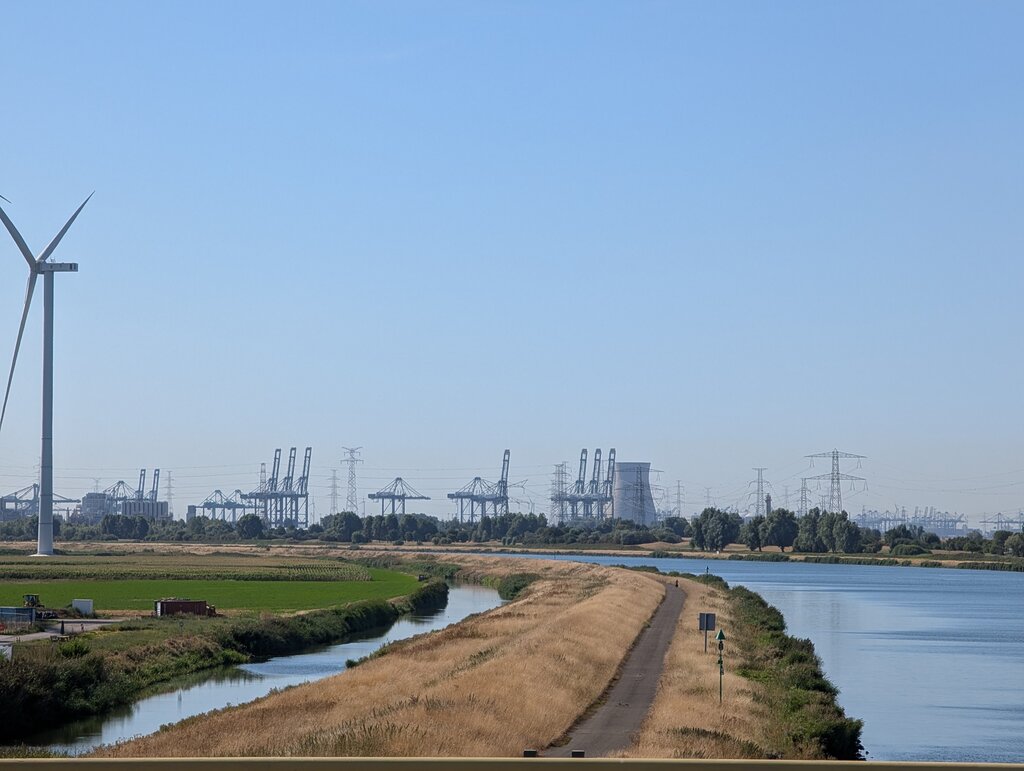
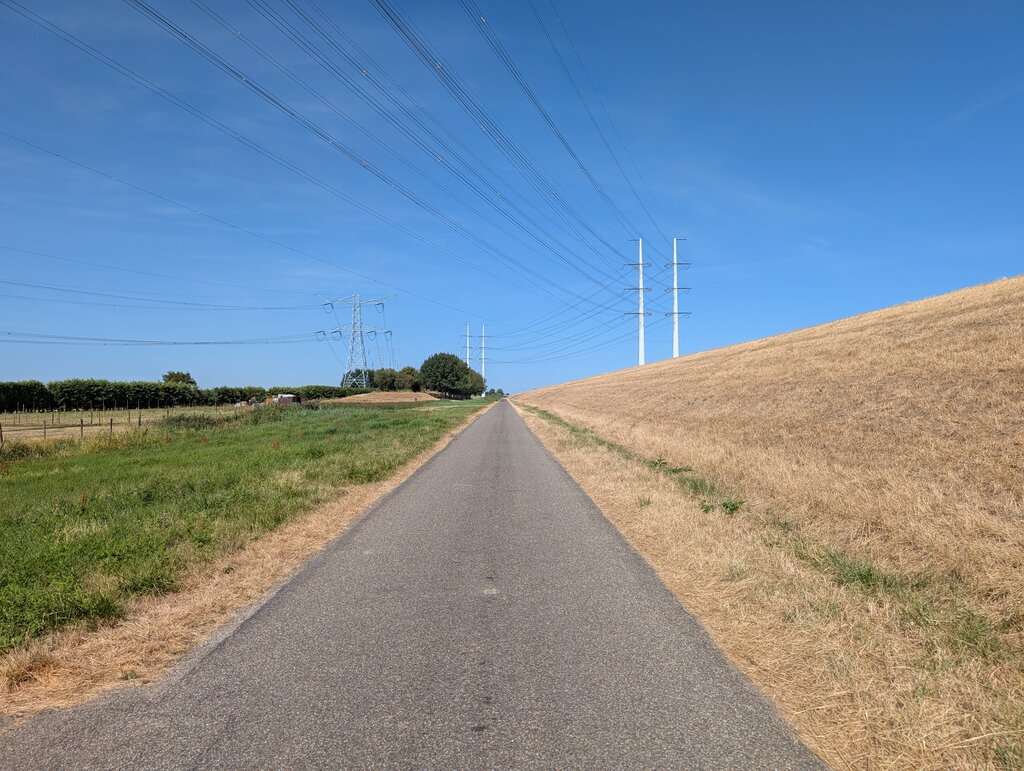
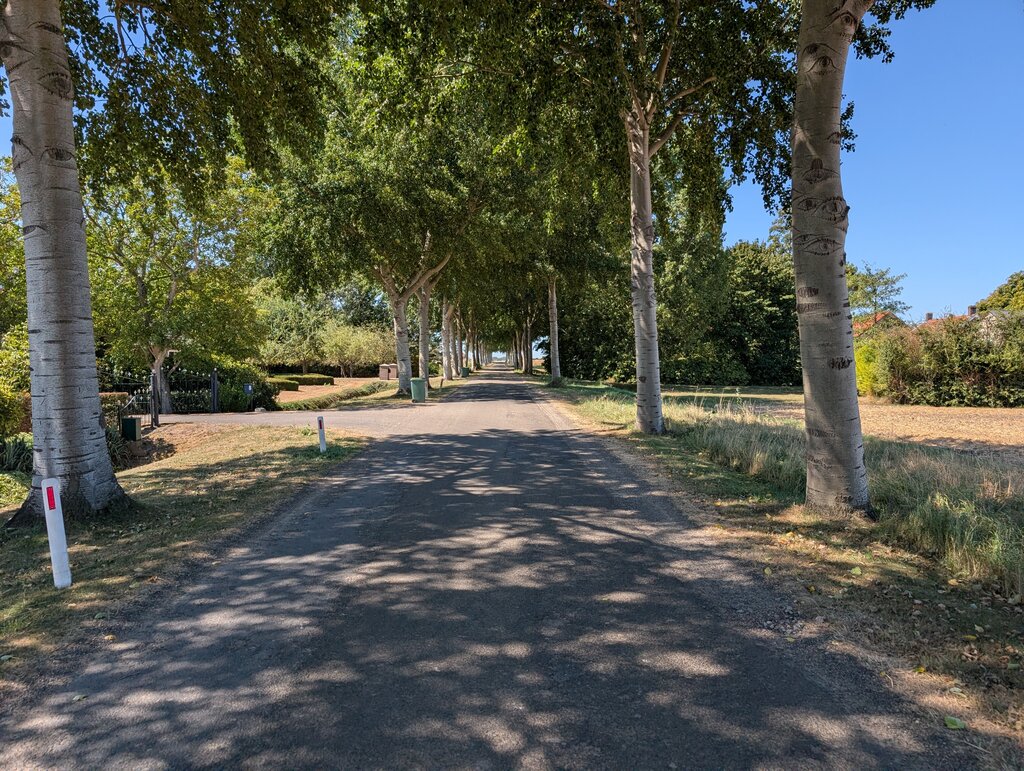
Back in the saddle, the route was a masterclass in Dutch infrastructure: a seamless mix of smooth country roads, narrow agricultural paths slicing through fields, and wide fietspaden leading straight toward Vlissingen. I realized once again that as soon as I cross west of the Dutch border, I completely stop ignoring cycle paths, because they are just great here, also when traveling with a road bike that goes much faster than the legendary 3-speed Gazelle.
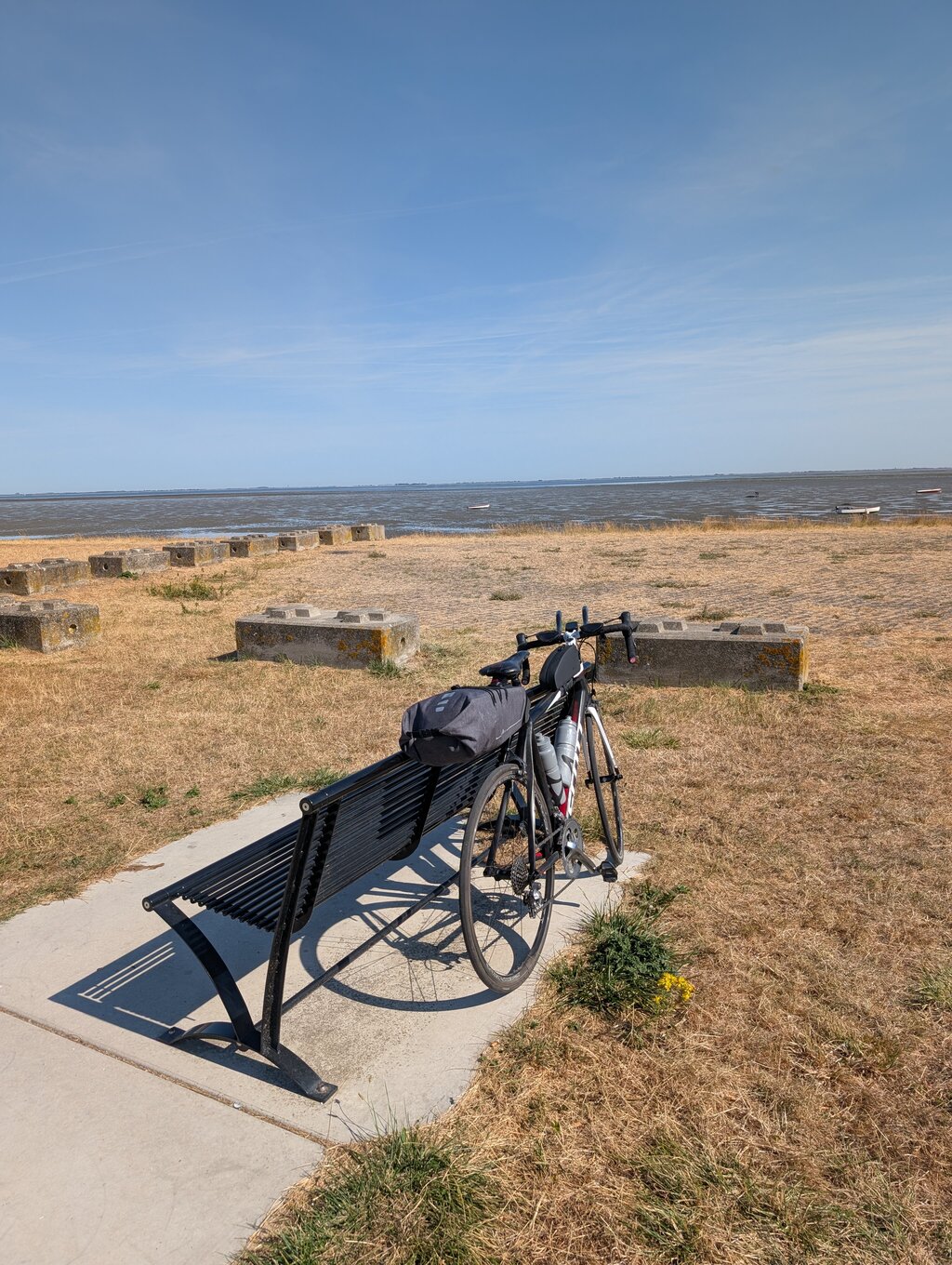
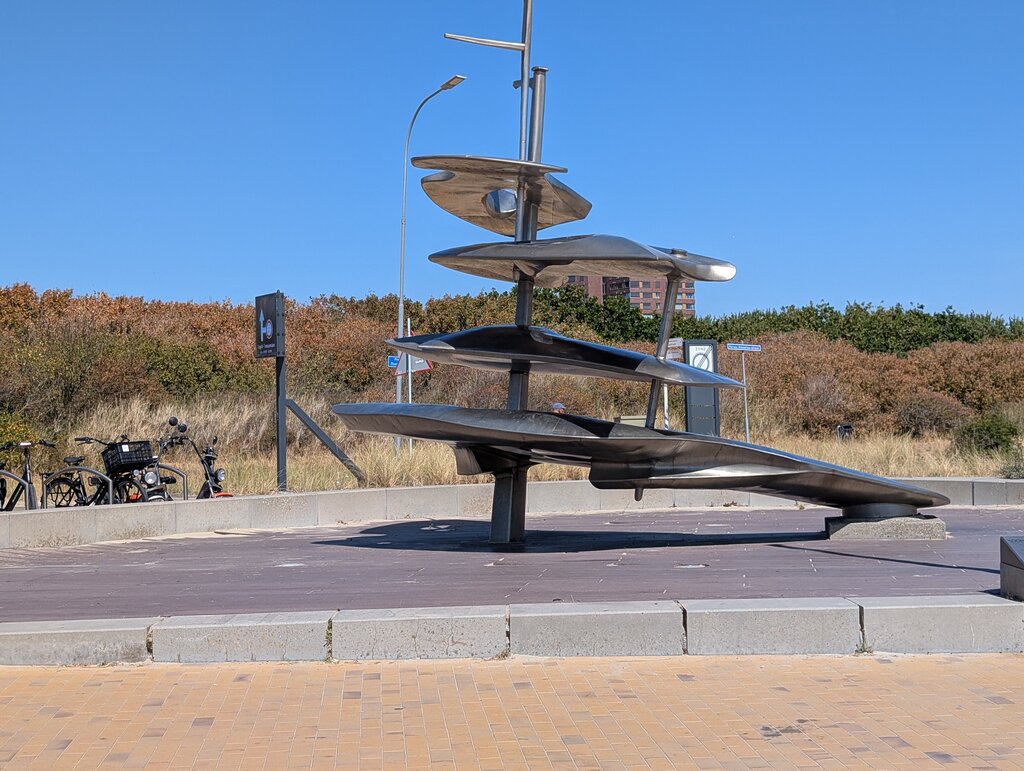
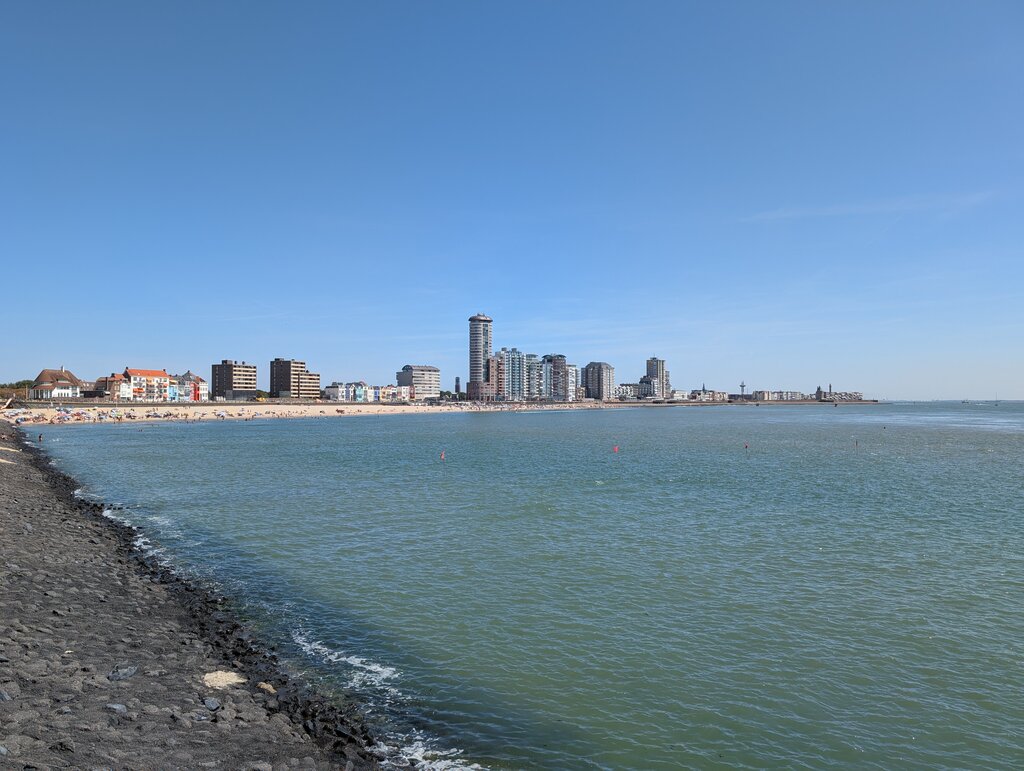
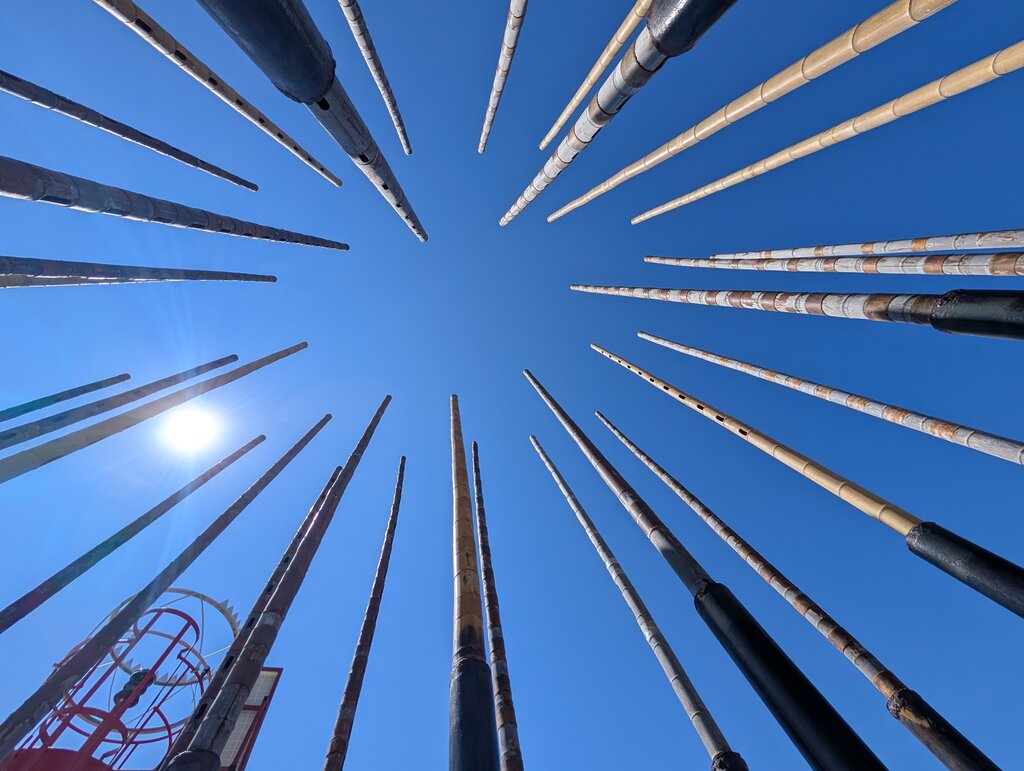
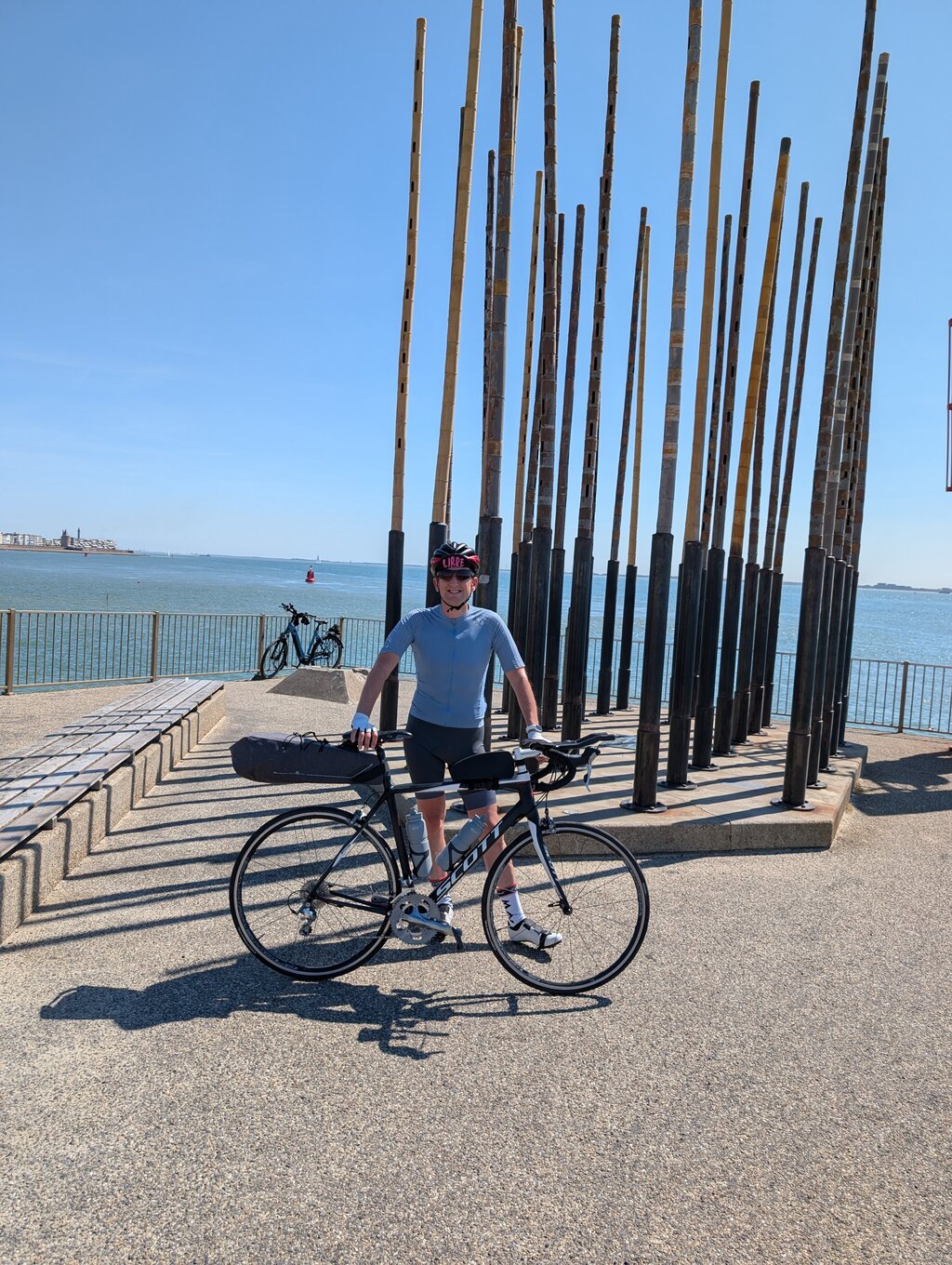
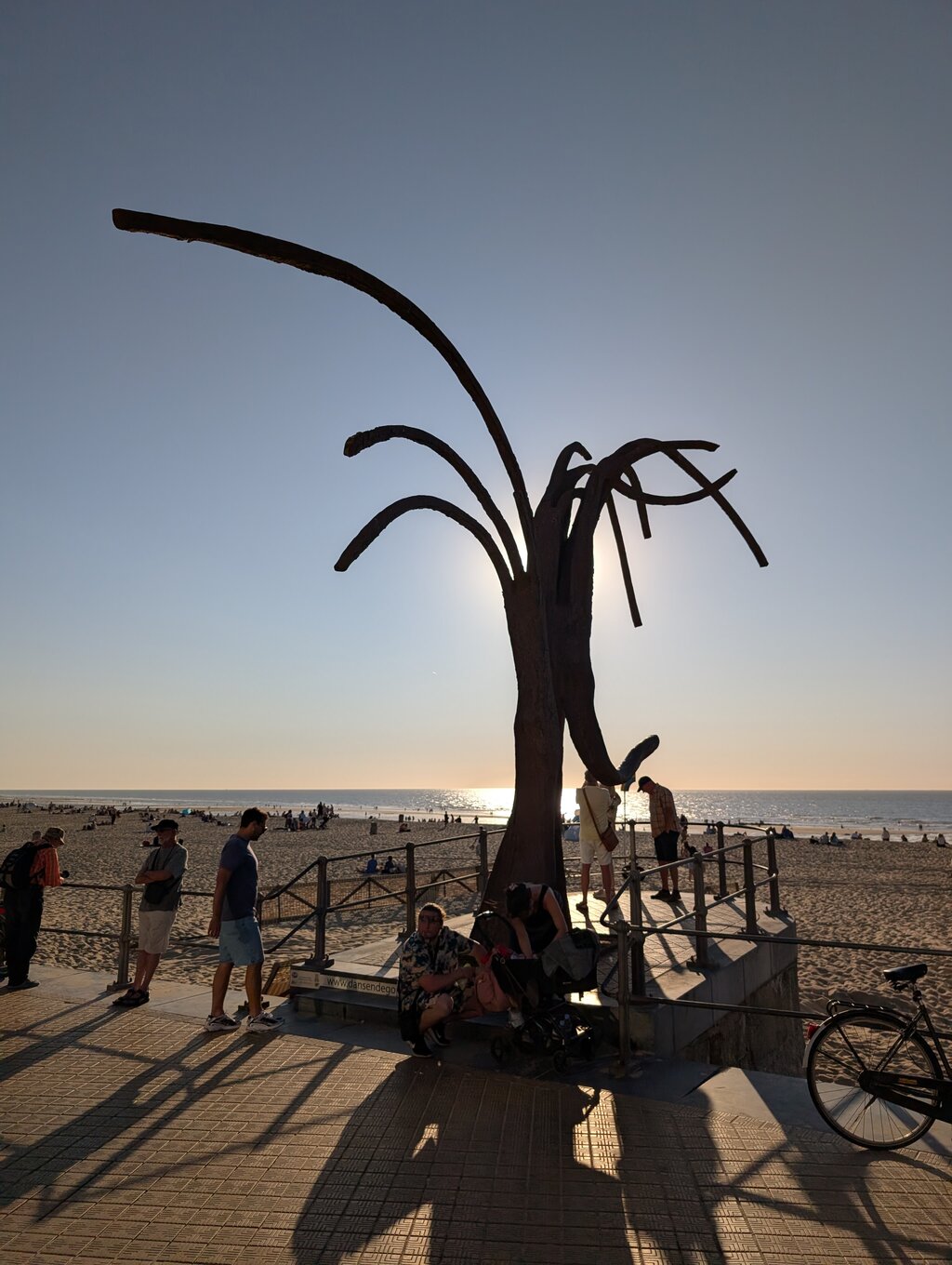
Reaching the coast, I rolled right alongside the beach. As I passed the giant wind organ on the boulevard, the sea breeze blowing through its vertical pipes added another 30 minutes to my off-bike tally. Acoustic artwork, born from a harmony of human craftsmanship and raw nature, never fails to captivate me. I already was here countless times, although by car. The beach was quite inviting for spending some hours in the sun, but since I wanted to reach my final destination in time, I went on towards Belgium.
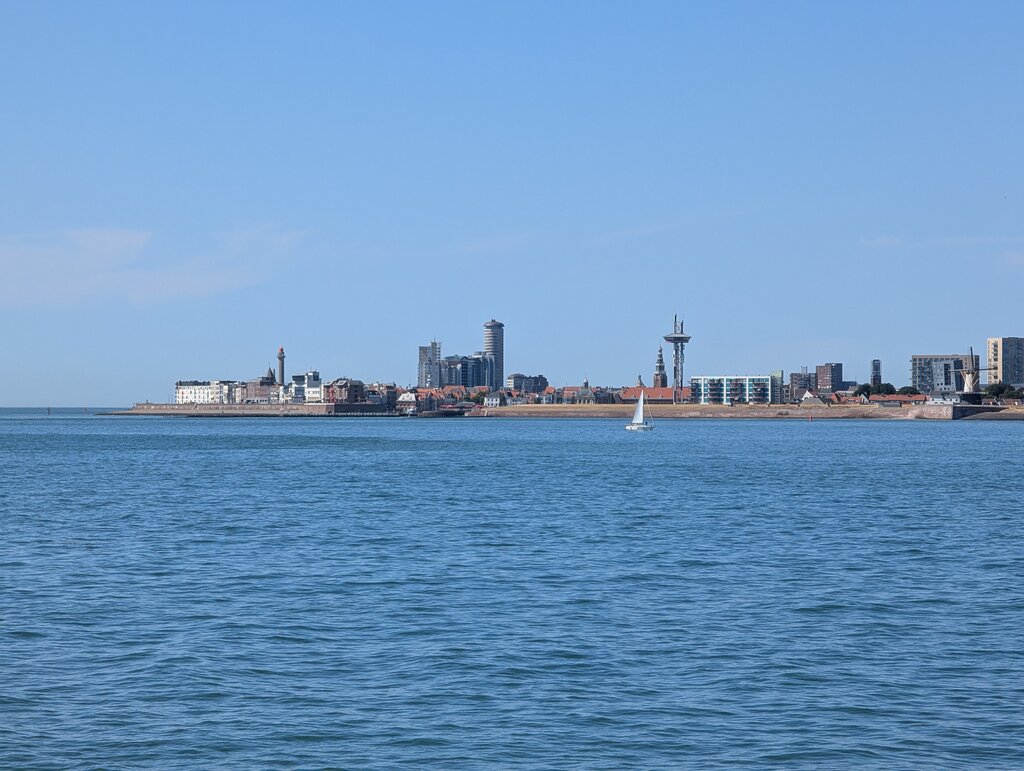
From Vlissingen, it was time to cross the Westerschelde by ferry. With my bike safely locked on the lower deck, I watched Vlissingen fade into the distance, eventually arriving at the southern shores of the estuary.
A few kilometers of cycle paths heading south, and then: suddenly, Belgium. Again.
In Flanders, the border shift between the Netherlands and Belgium is barely noticeable at first, as customs checkpoints are a thing of the past in whole Europe. What instantly catches the eye, however, is the cycling infrastructure taking a slight dip—not quite as bleak as in Germany, but noticeably below Dutch perfection. And, of course, the automotive license plates switch from vibrant yellow to red on white.
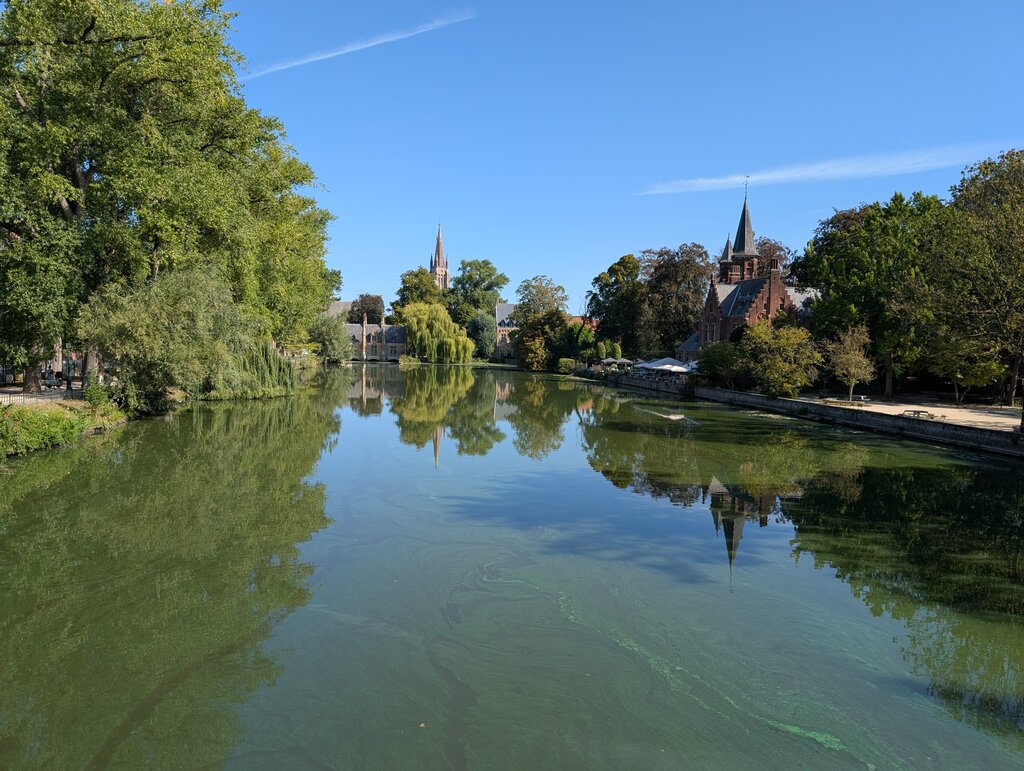
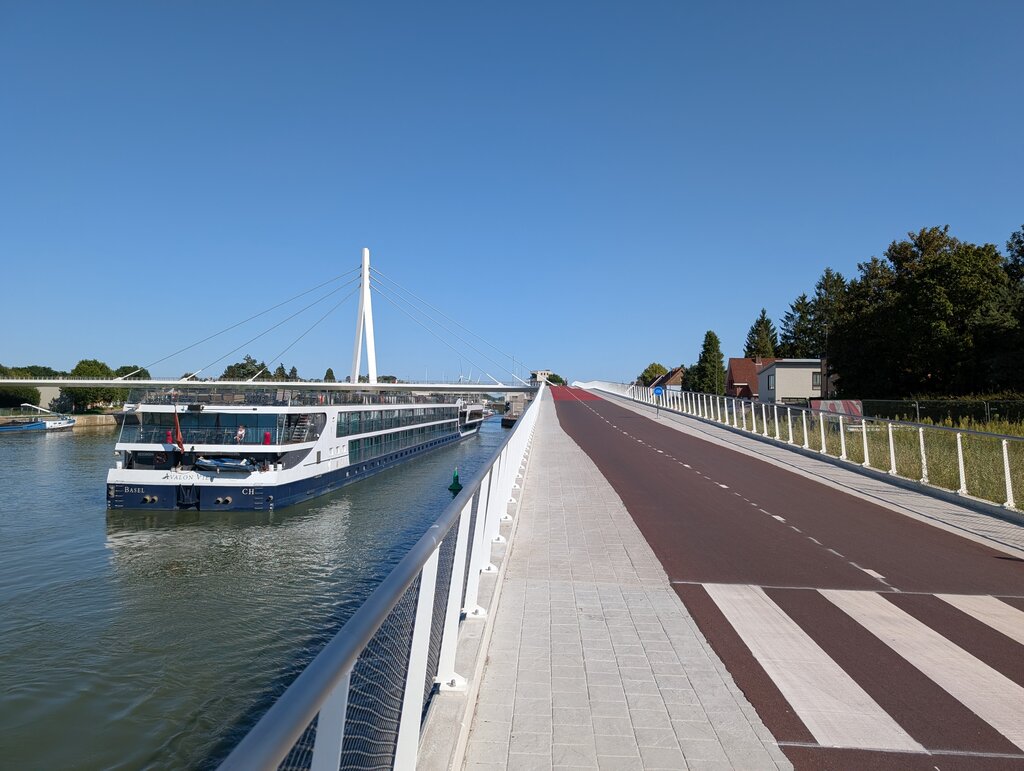
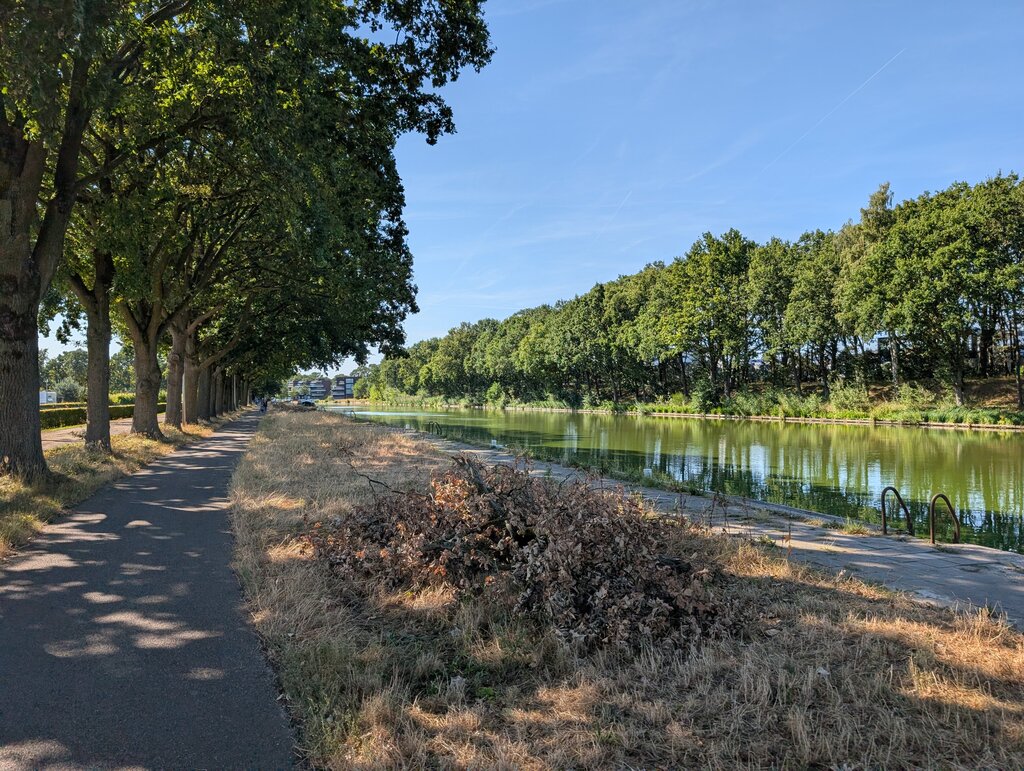
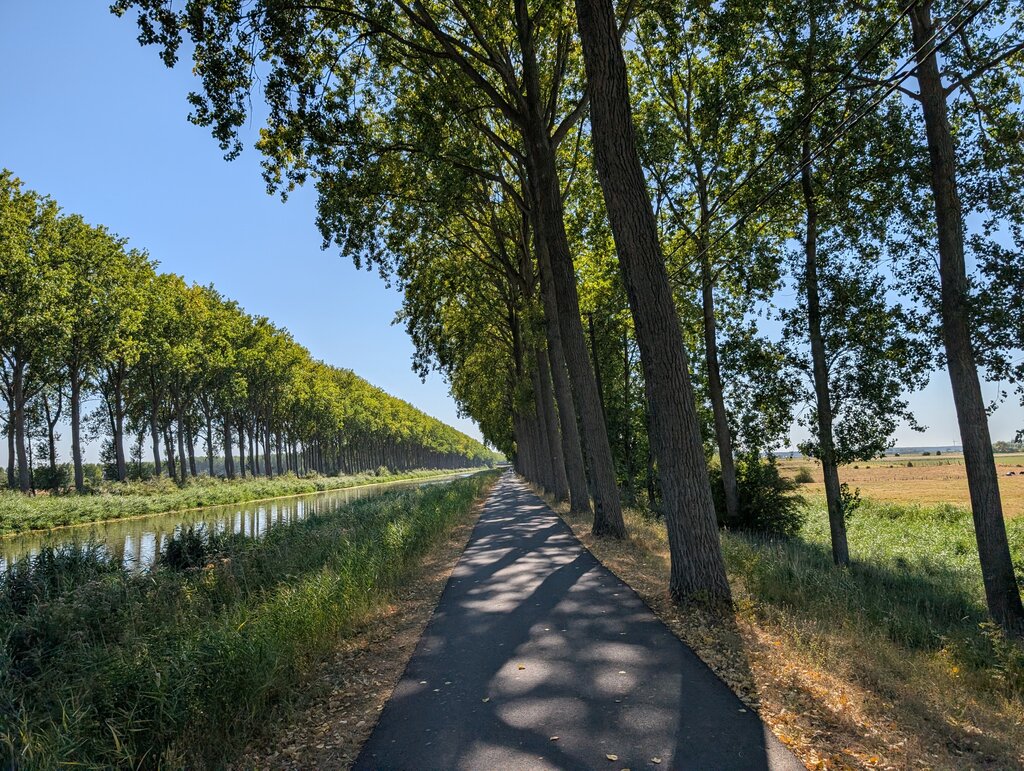
I headed straight for Bruges to check into my hotel, drop the heavy saddlebag, and reward myself with a proper Belgian ice cream. With the bike lightened up and feeling dangerously fast again, I set off on the final stretch of the day: the run down to the coast at Oostende. Riding from western Bruges to Oostende is very comfortable: Ride along the main road for a while, then take a high left turn to the cycle path along the channel, then ride a straight 20km to the west. After about half an hour, I reached the outskirts and the harbor of Oostende.
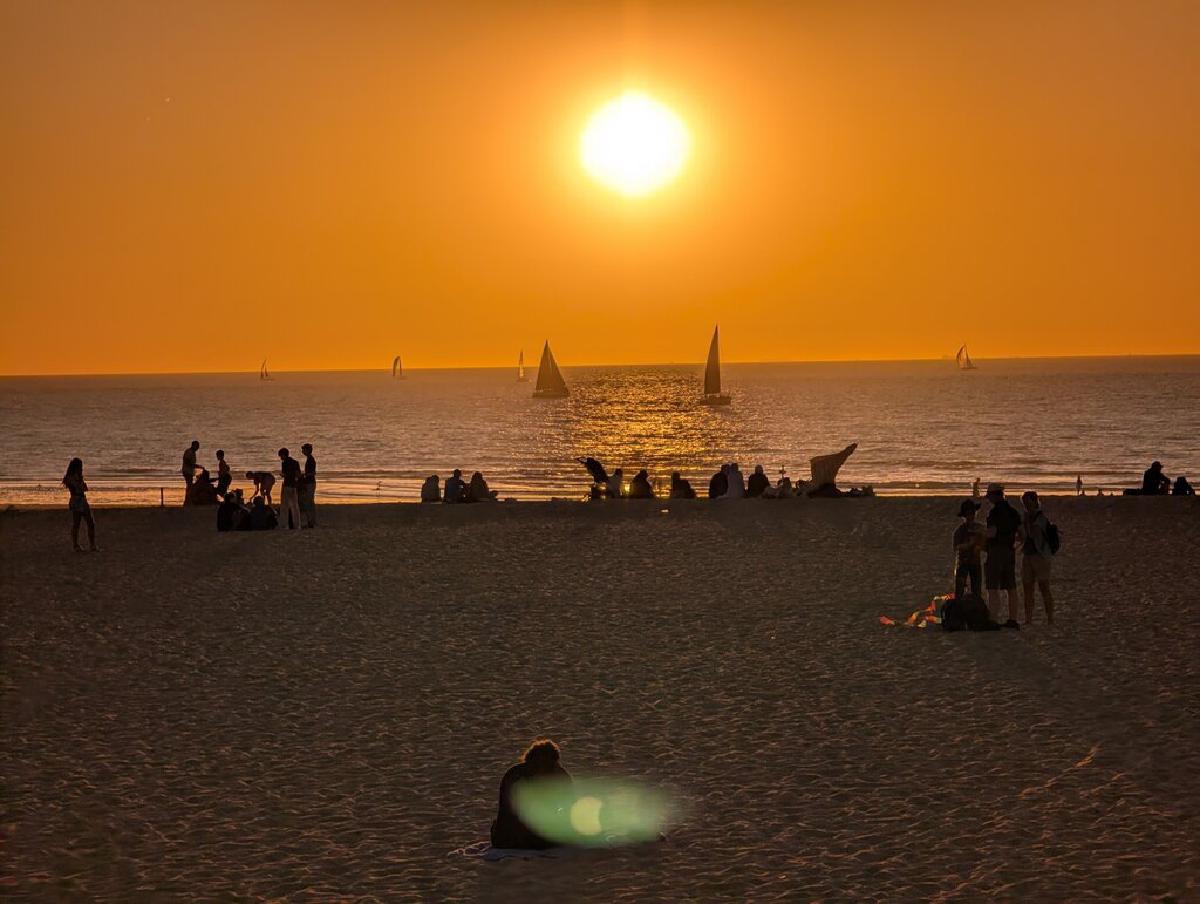
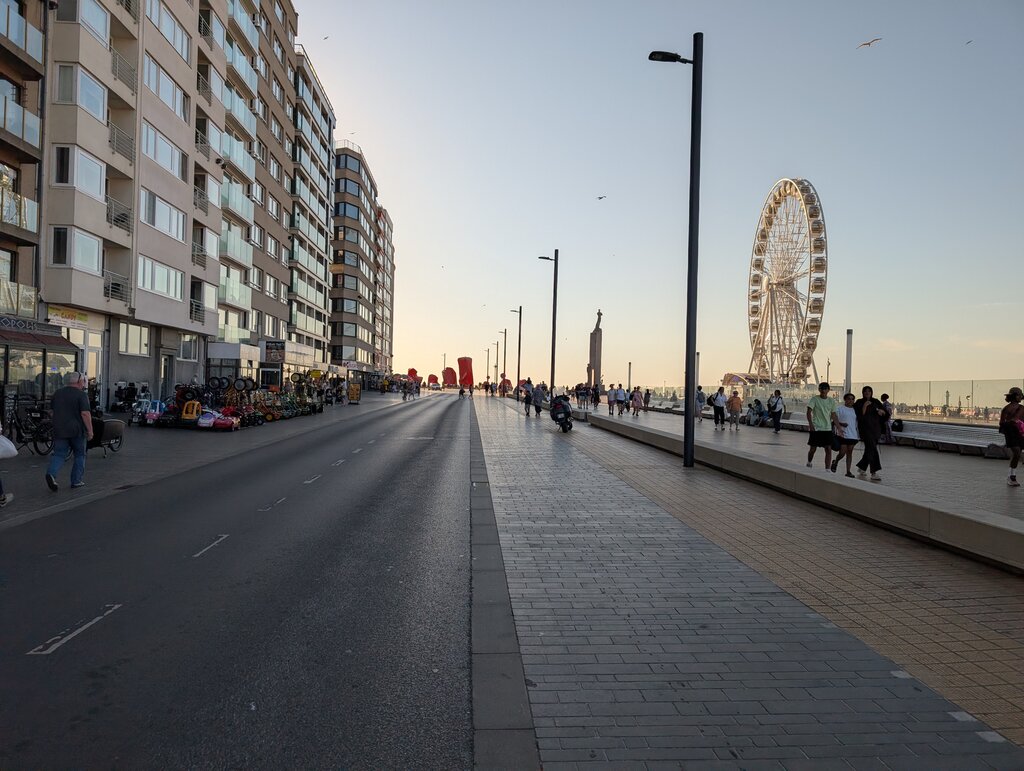
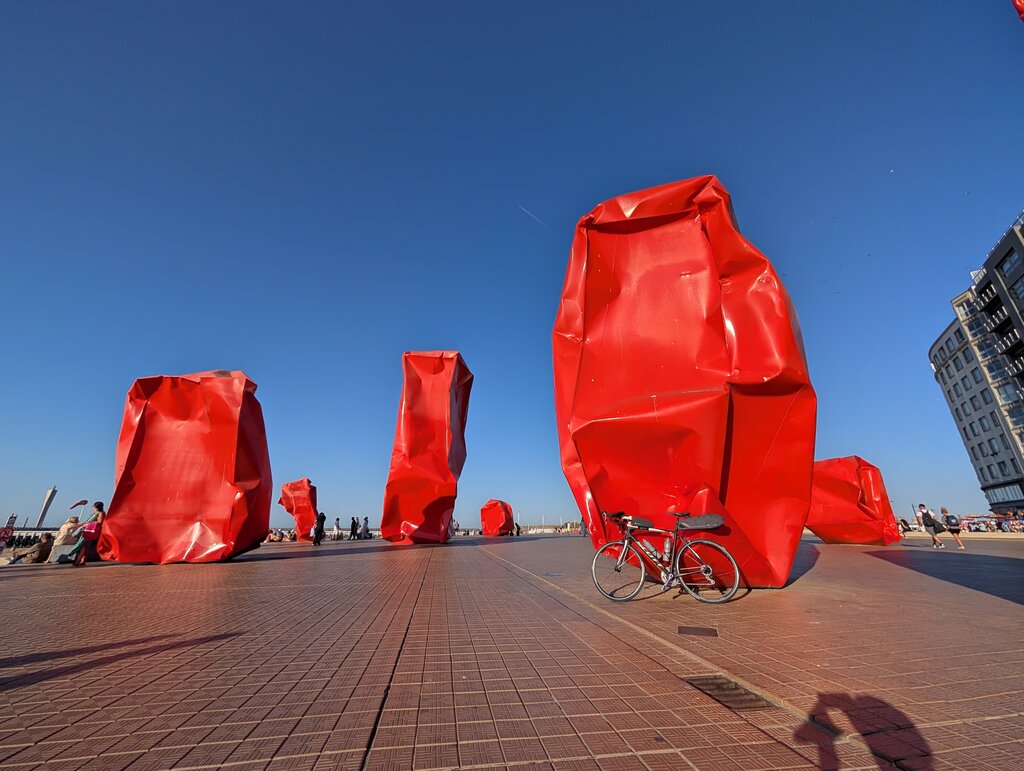
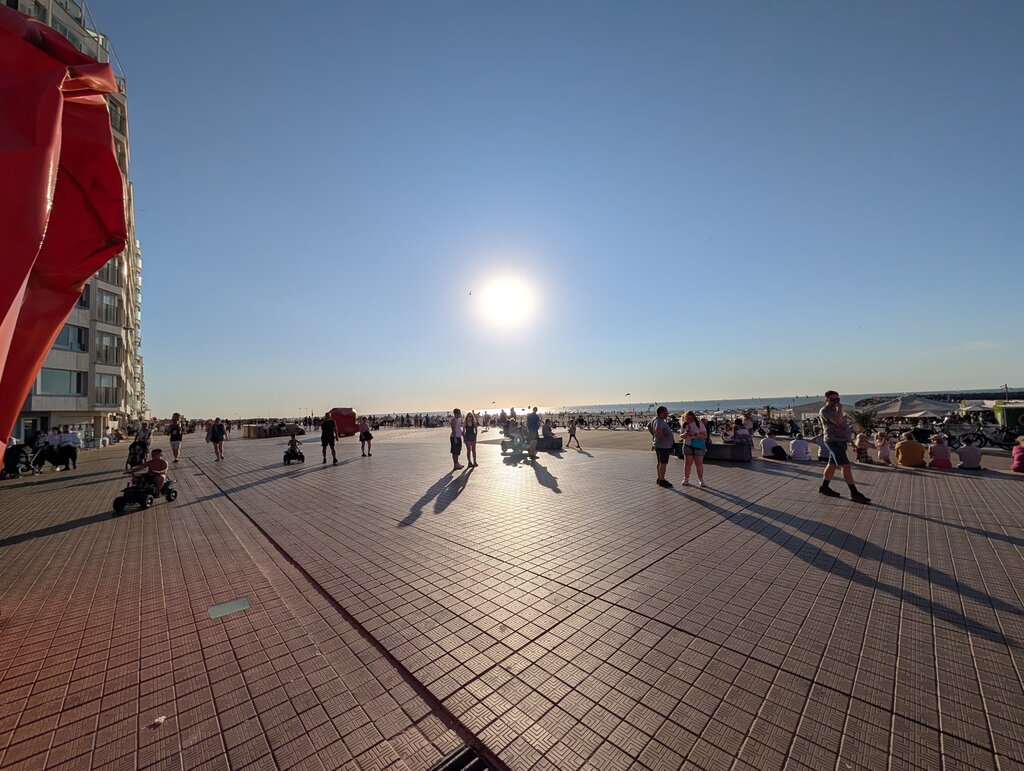
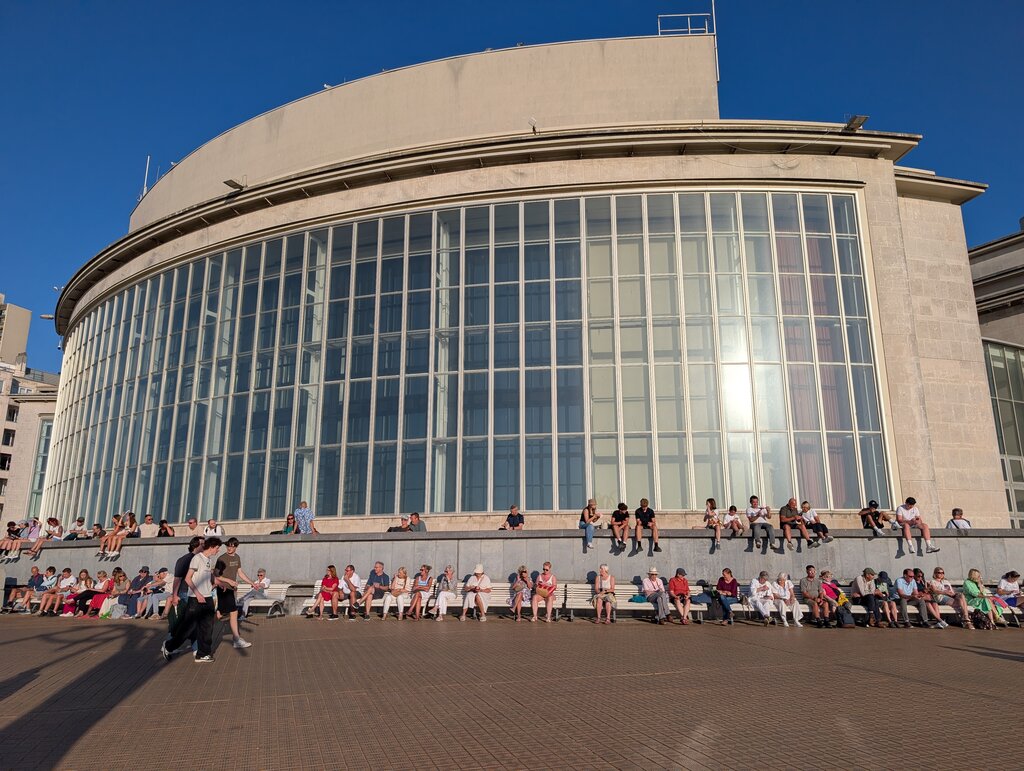
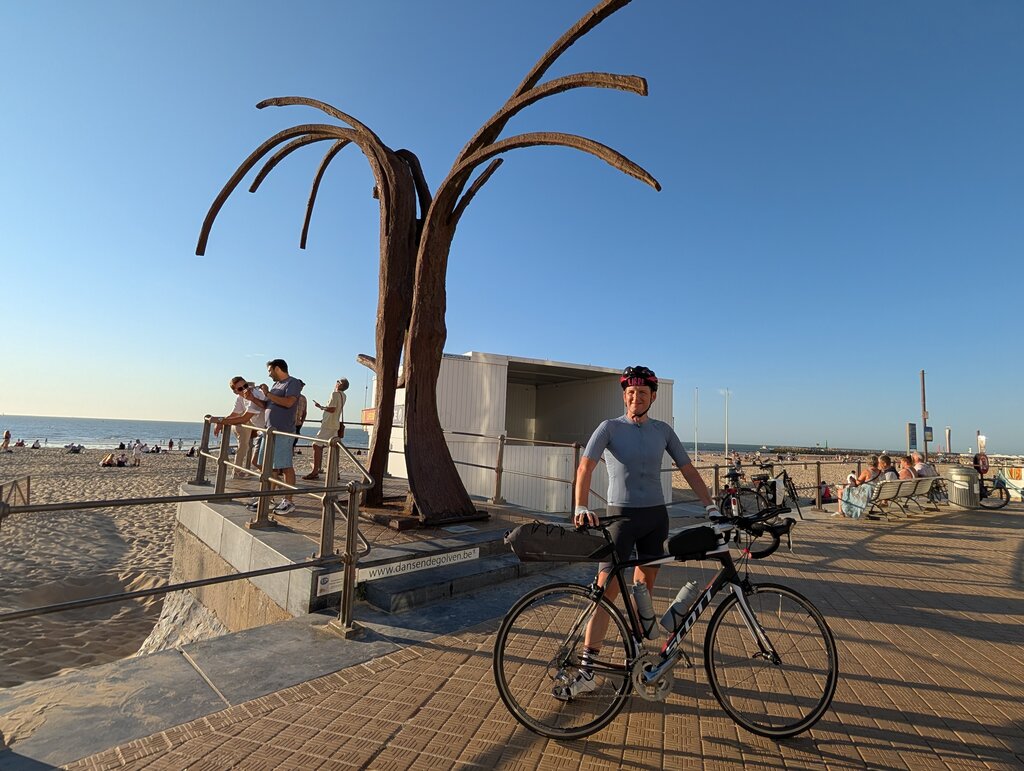
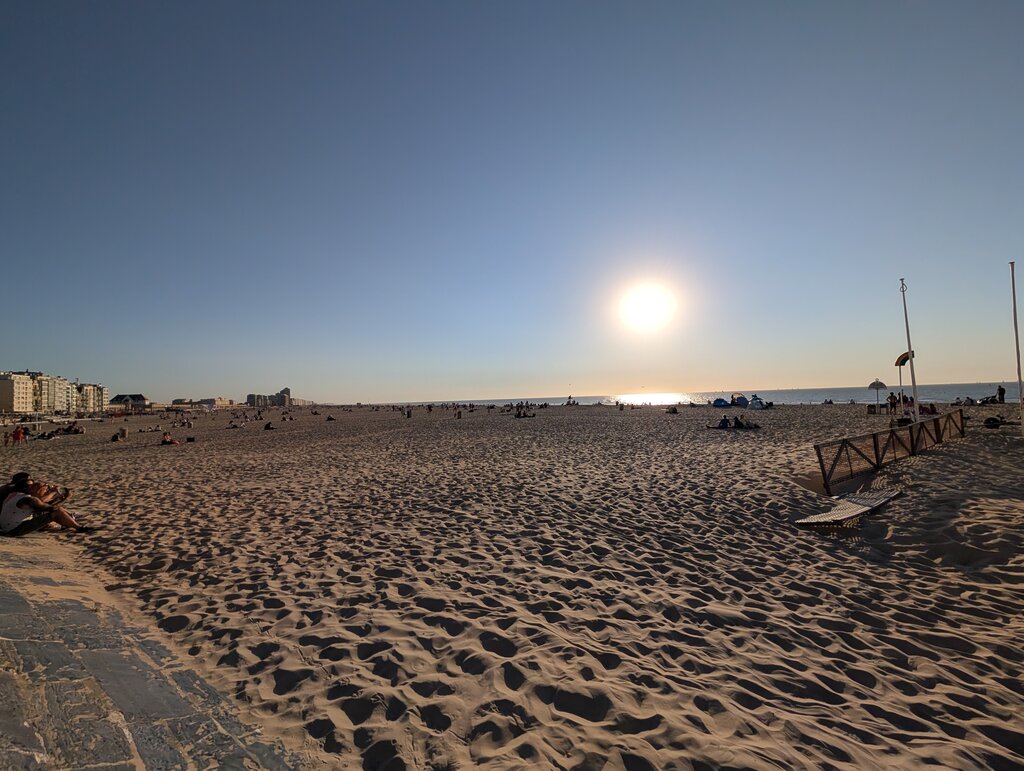
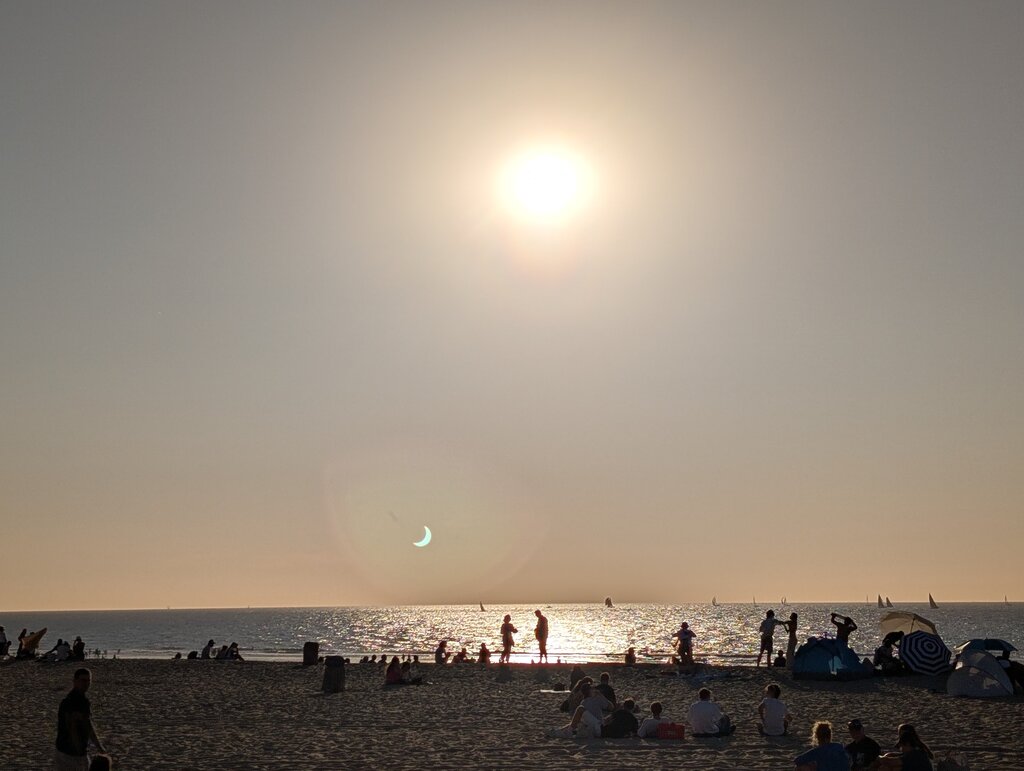
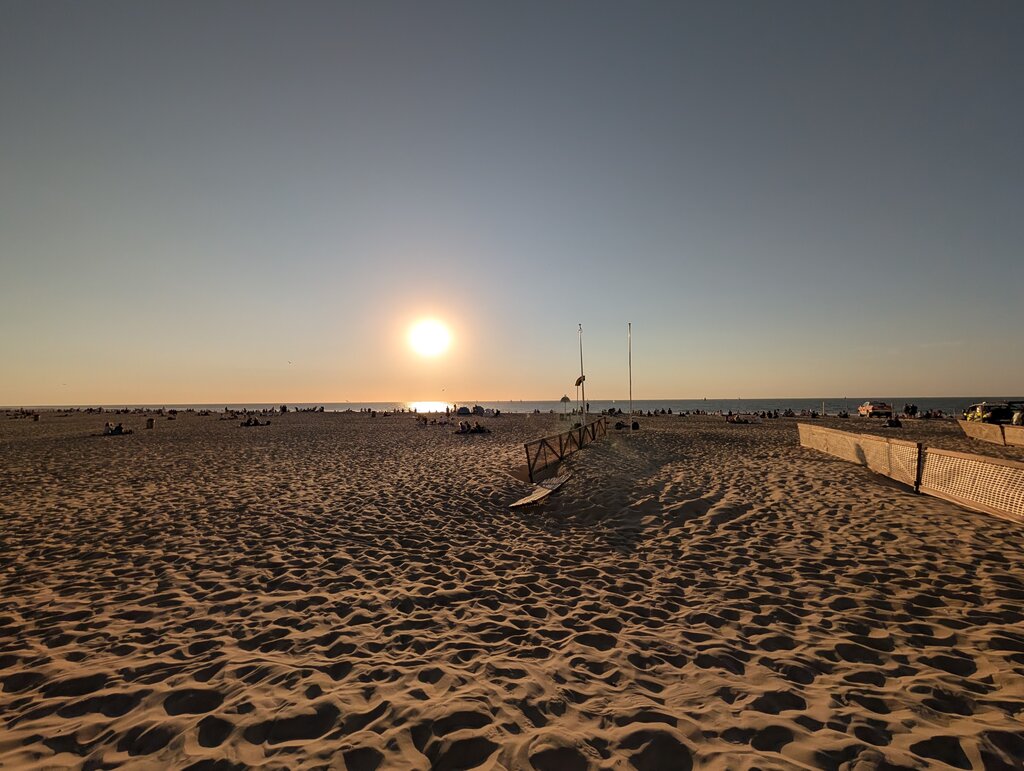
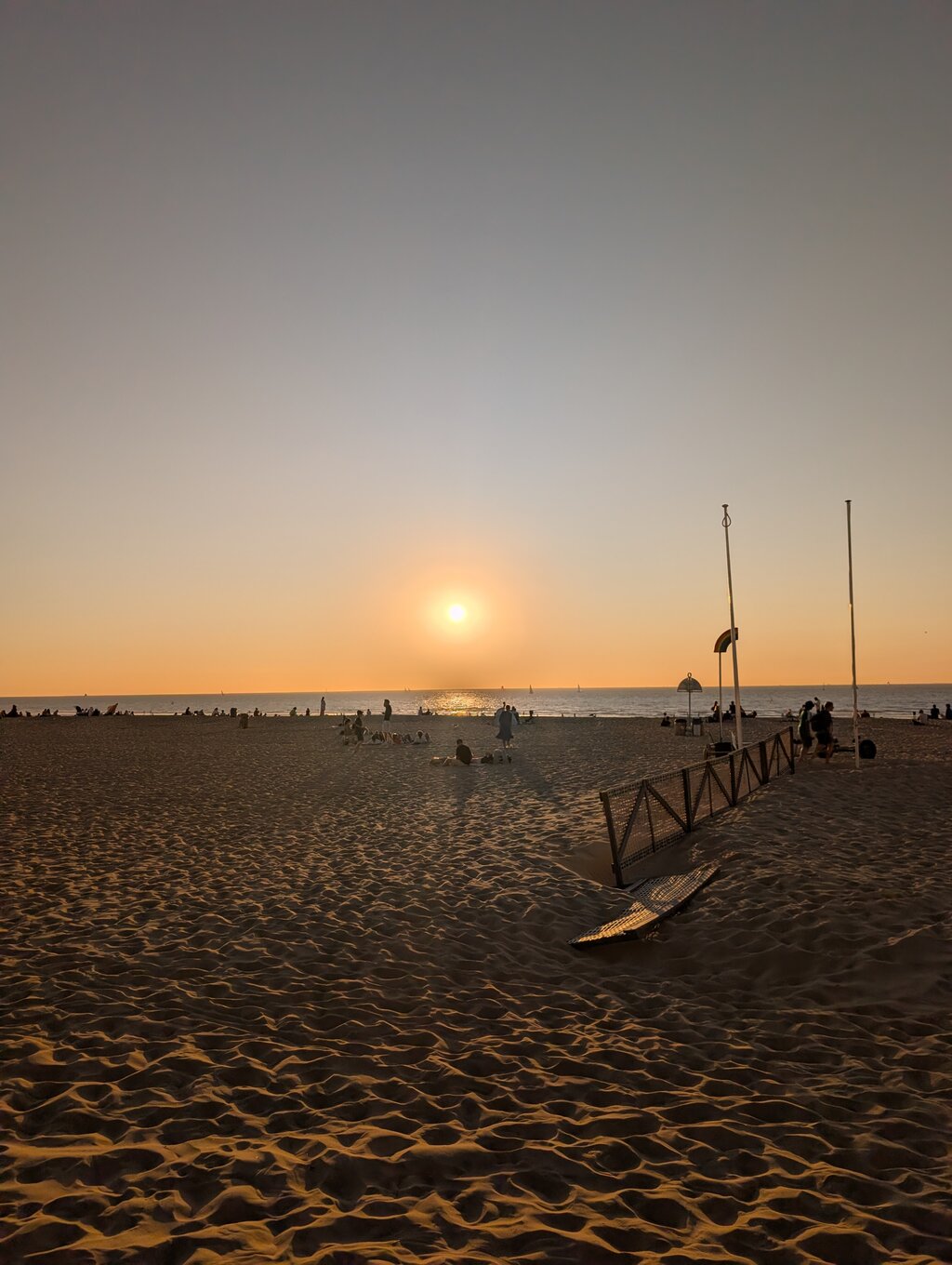
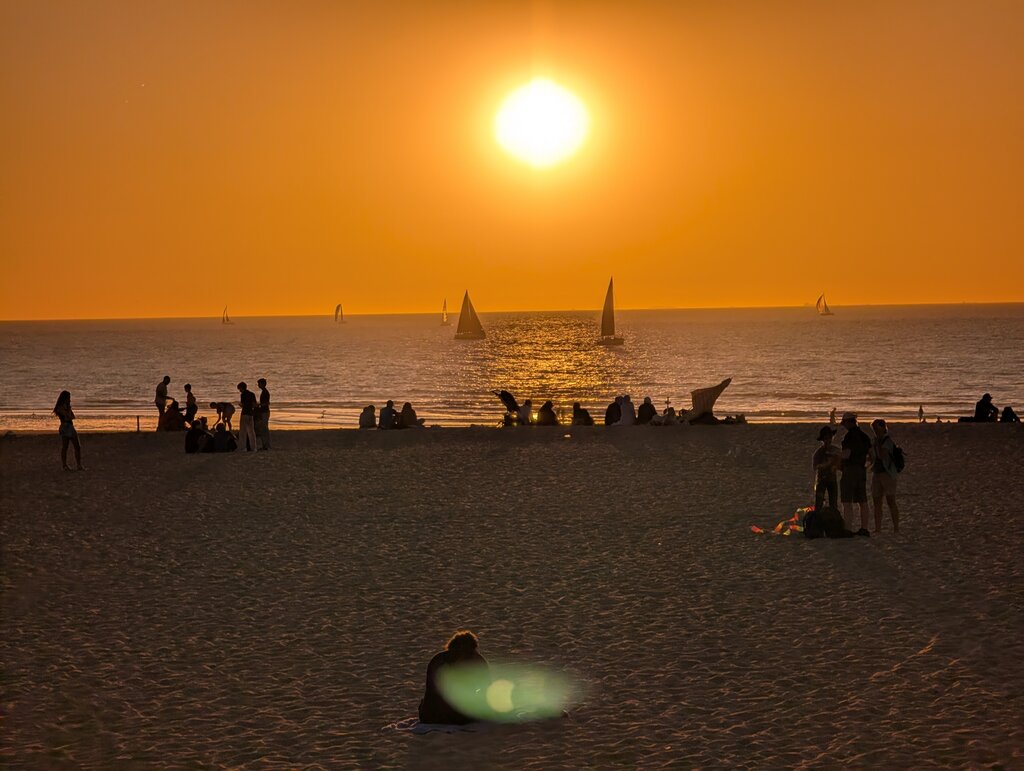
I arrived just in time. The light on the beach in Oostende was utterly breathtaking—golden, warm, with the saturation sliders pushed all the way towards deep red. Surreal. The partial totality was just beginning. I was here many times, including summer vacations as a kid, going to the beach with friends, or even hiding in the dunes with an outlaw bivy bag - but the sunset never looked like today.
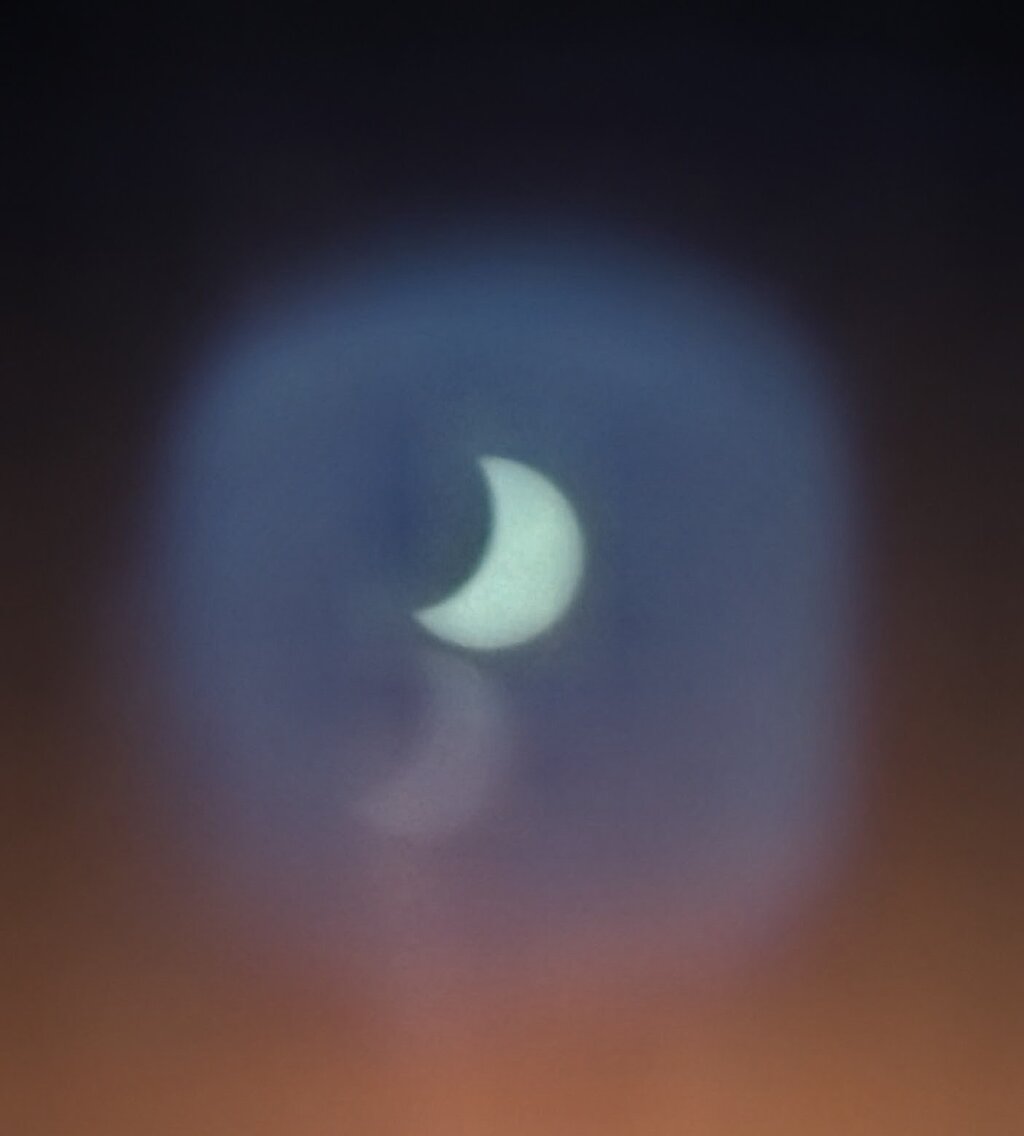
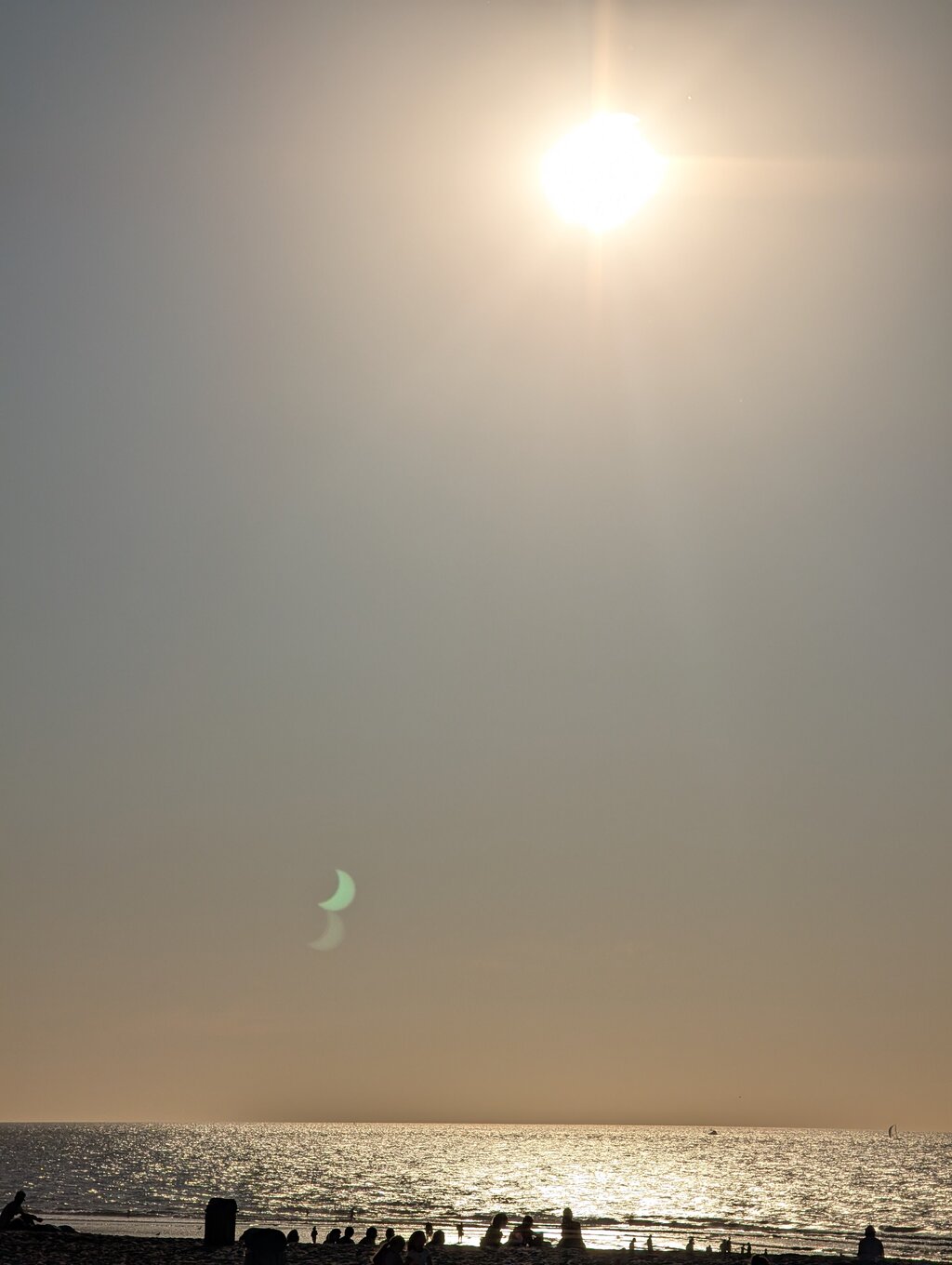
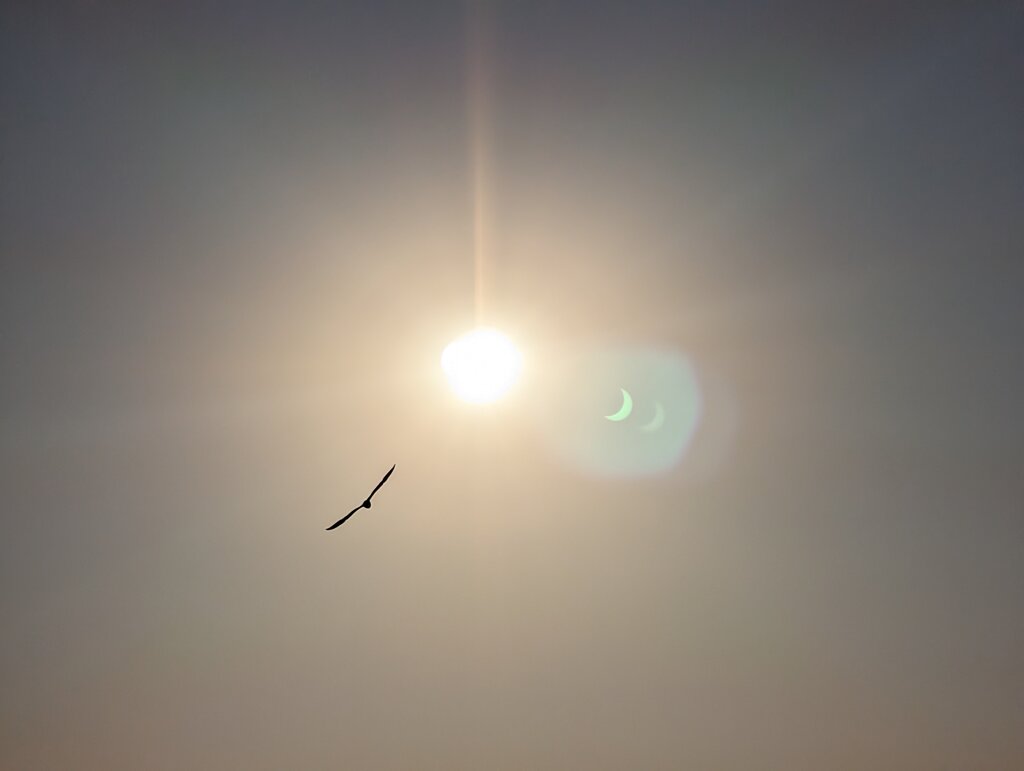
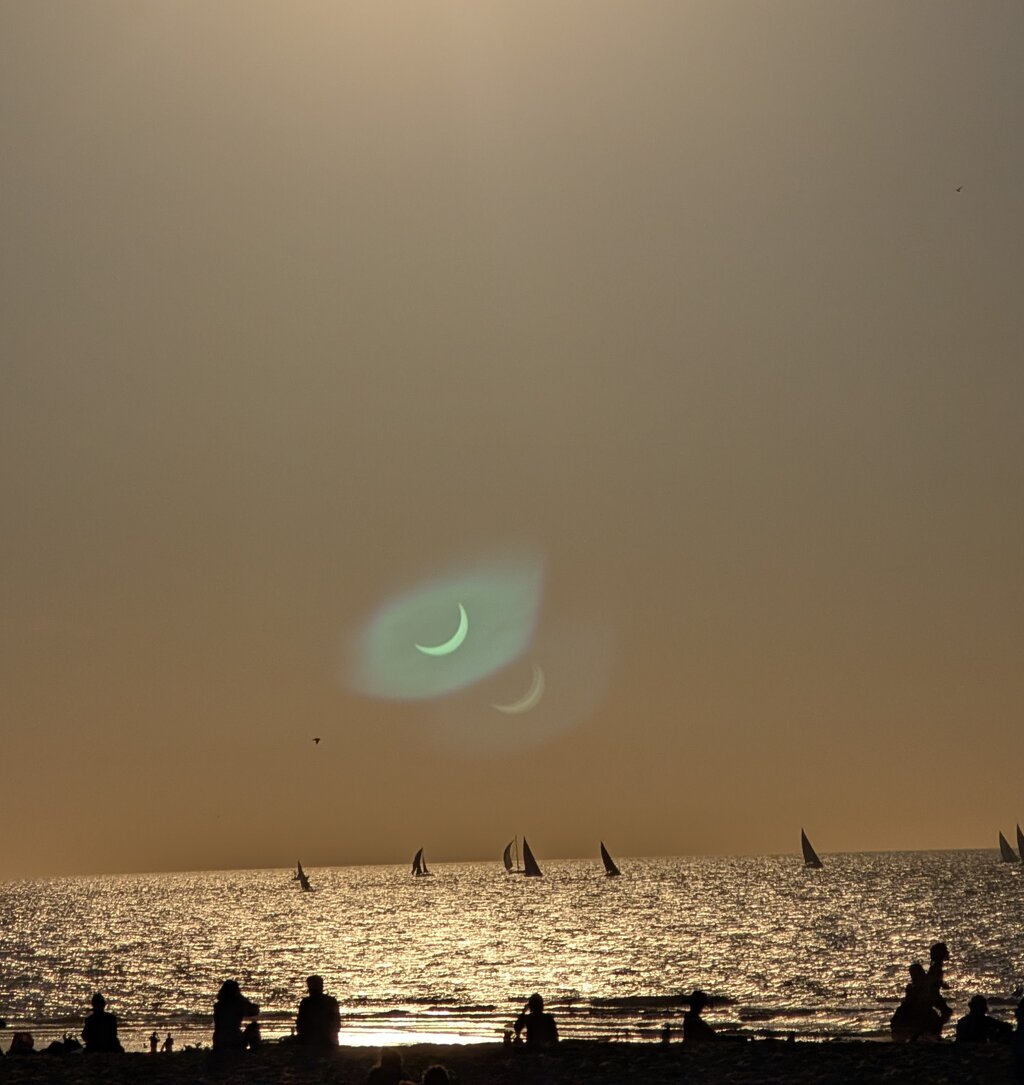
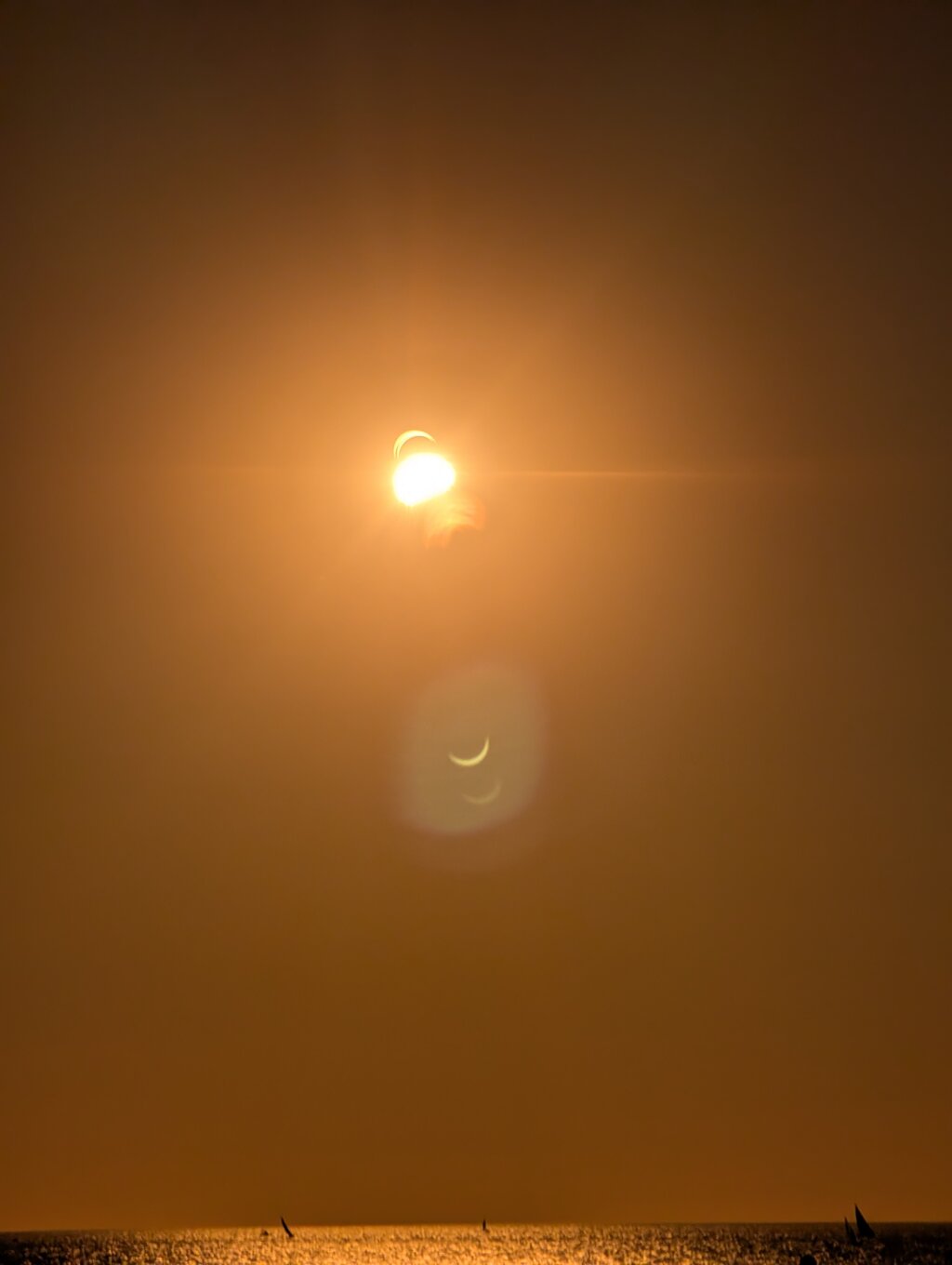
I pulled the bike onto the promenade, walked out onto the beach, and sat down in the sand. Lacking proper eclipse glasses, I discovered a neat optical trick: by capturing the sun through my phone’s camera lenses, the internal reflections (ghosting) projected a crystal-clear, miniature image of the eclipsed sun directly onto my screen.
Sitting there in the cool sand, the sensory shift was profound. The seabirds suddenly went quiet. The temperature dropped by a noticeable couple of degrees. The ambient light dimmed into an eerie, cool twilight as the sun temporarily lost its strength. And then, as the eclipse faded after an hour, it merged seamlessly into a classic, burning coastal sunset.
Watching the horizon glow, a subtle wave of hunger brought me back to reality. I hunted down a solid local pizza to replenish the day’s burn, loaded up on carbs, and clicked back into the pedals for the night ride back to Bruges.
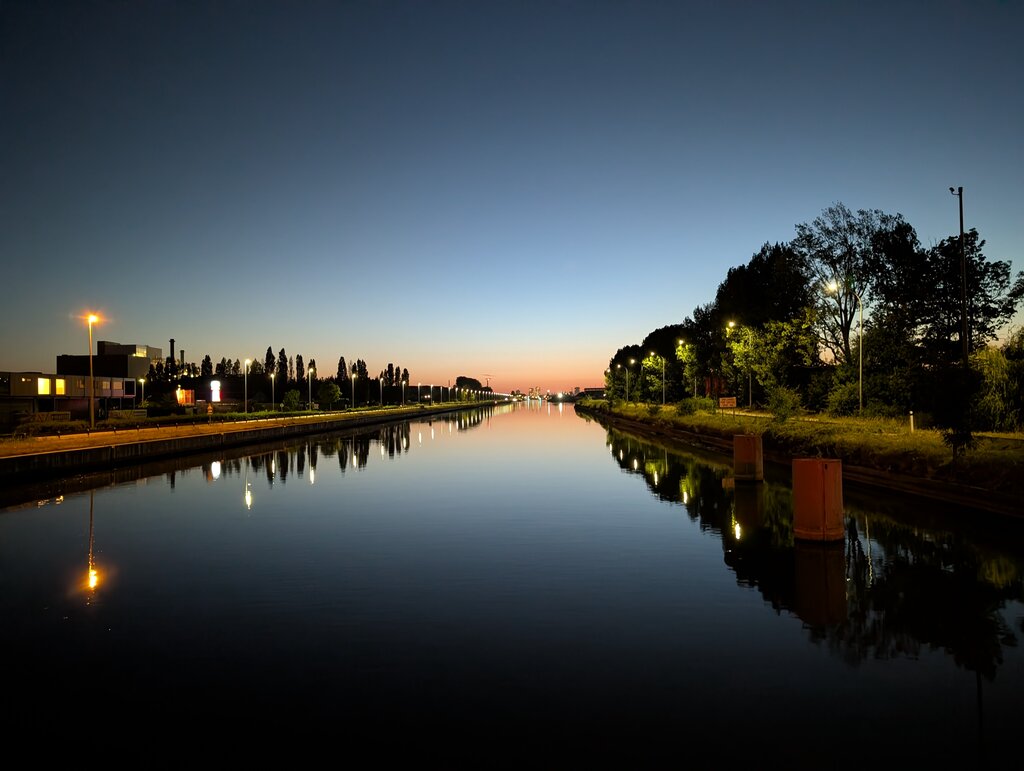
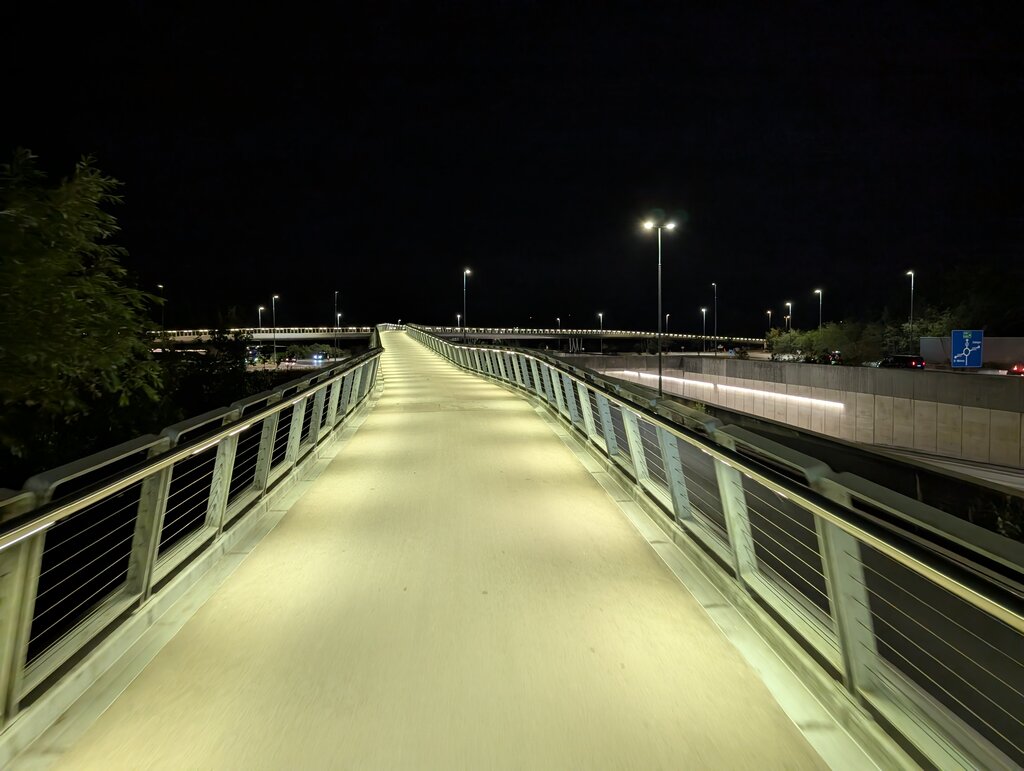
Riding through the Belgian night along pitch-black canal paths—essentially one arrow-straight waterway leading all the way back to Bruges—and empty country roads offers a special kind of mental disconnect. It’s the exact moment where you silently thank your past self for investing in proper bike lights that could be confused with automotive headlights.
I rolled back into Bruges late, exhausted, but with a head full of memories that felt like they belonged to a three-week expedition rather than a two-day ride.
Day 3 : The long way home: Oostende - Aachen #
The final chapter, nicknamed “Scharfrichter” in Germany: 270 kilometers standing between Bruges and Aachen, with the thermometer pushing past 30°C. A massive day on paper, demanding equal parts discipline, pacing, and willingness to embrace whatever the road throws at you.
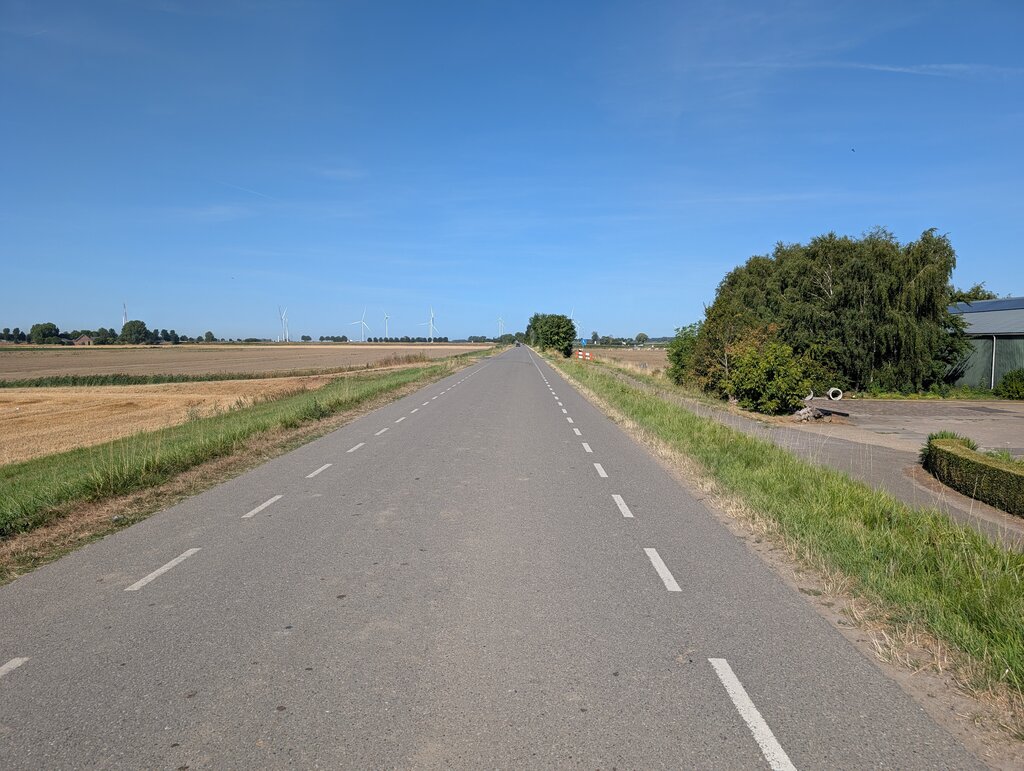
After crossing the city centre of Bruges, ignoring a bumpy cycle path and taking the main road heading northeast, I reached open roads. The sun was massive, fortunately I brought two big water bottles.
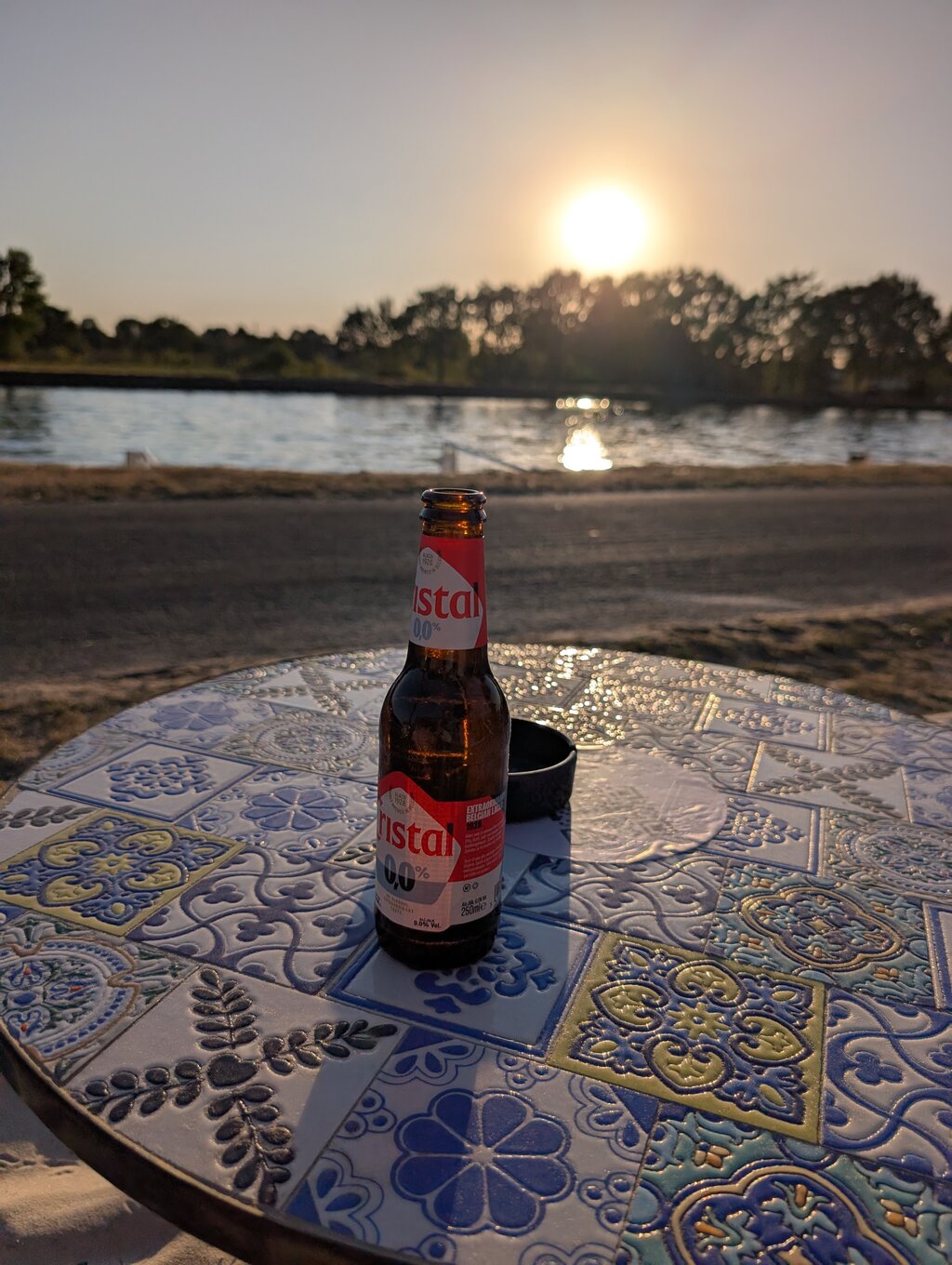
Early into the ride, I crossed paths with another cyclist taking part in the Borders of Belgium ultra-race. I hadn’t even known the event was happening. He was already OTL (Outside Time Limit) and clearly struggling against the heat and the wind. Without hesitation, I let him tuck into my wheel, pulling him all the way to the outskirts of Antwerp. I learned that OTL can also be a quite liberating event - we took the time to stop at a fast-food francise to have some fries (welcome to Belgium!) and a local non-alcoholic beer.
Just a few minutes later, we reached Antwerpen, and I got acquainted with the pedestrians/cyclist tunnel that brought me straight to Antwerpens city centre.
Navigating Antwerp itself was an ordeal—hellish traffic, stop-and-go congestion, and the intense midday heat radiating off the tarmac. But once clear of the urban maze without being killed, the route finally opened up to the crown jewel of Belgian flat-land cruising: the Albertkanaal.
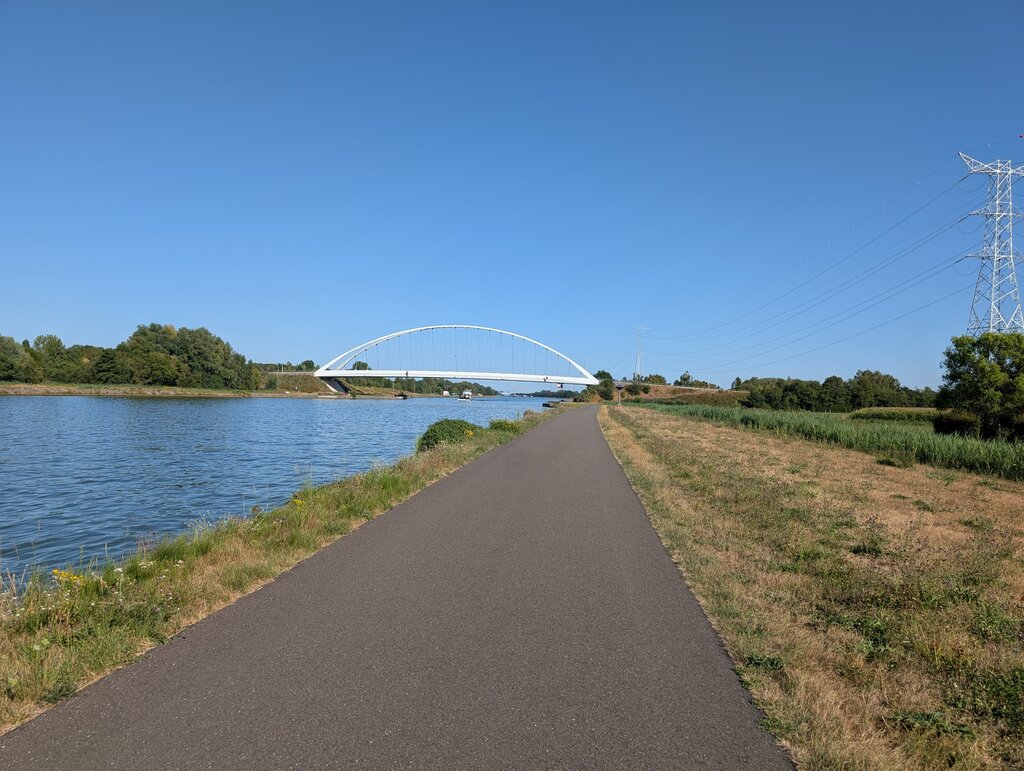
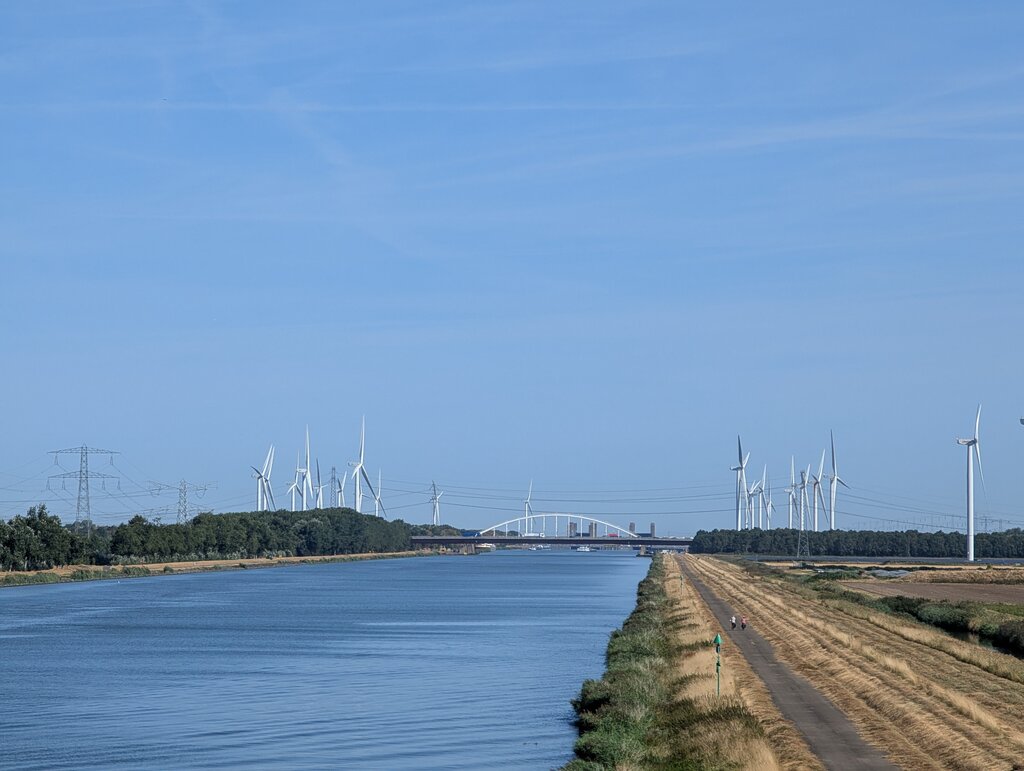
Riding alongside the canal is pure rhythm. Arrow-straight, traffic-free, and blisteringly fast. The miles melted away, but as the afternoon wore on, a familiar bikepacking reality set in: math doesn’t lie. Despite a solid pace, reaching Aachen before sunset was mathematically impossible. It’s one of those bitter-sweet realizations of long-distance riding—the surrounding landscape looks utterly idyllic in the late afternoon sun, but you know, with absolute certainty, that your day will end cold, tired, and in total darkness.
Instead of fighting the inevitable, I leaned into it. I rolled up to the canal banks near Hasselt just in time to watch a breathtaking sunset spill golden light across the water.
By the time I crossed the Dutch border into Maastricht, total darkness had enveloped the roads. The temperature plummeted a little, and the quiet of the night took over. One hour later, climbing up towards Vaals, I finally crossed the border back into Germany and onto home turf. The service station where we used to meet for our mountainbike rides in the 90s, having fun on trails nicknamed “Toblerone Trail” or “Jazztrail”, was already closed and dark. Aachen seemed to have fallen asleep.
To round off a 270 km day, I didn’t head straight for the train station. Instead, I took a gentle detour onto the Vennbahn cycle path, rolling through the cool night air to meet a friend in the outskirts for a well-deserved late-night beer.
Looking back at the stats, the maps, and the fatigue: 700 kilometers in three days. It was just a weekend on the calendar, but in the mind, it felt like an entire three-week odyssey.